AAIB: Reverse Thrust Selected by Habit Led to A300 Tail Strike at Heathrow
The UK AAIB has published its findings on the DHL A300 tail strike at Heathrow in October 2025: a bounced landing, reverse thrust and a late go-around.
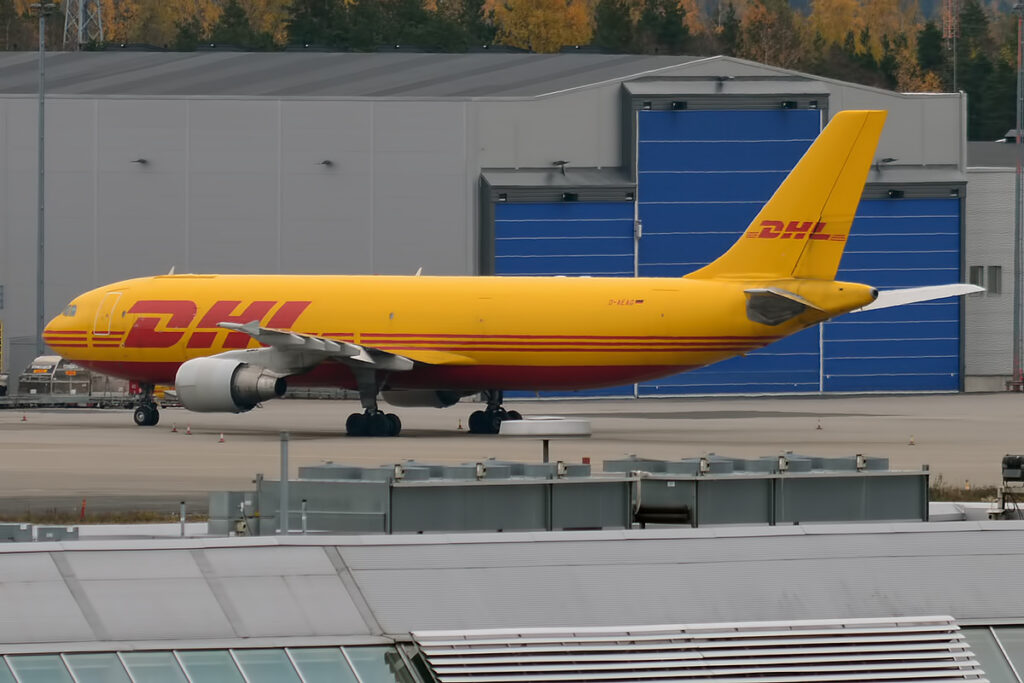
The UK Air Accidents Investigation Branch (AAIB) has published its findings on the A300 tail strike at London Heathrow on 12 October 2025, when a DHL-branded freighter struck its tail on the runway during a go-around. According to reporting by Simple Flying and FlightGlobal on 12 November 2026, the bulletin finds that reverse thrust was selected by habit after a bounced touchdown, slowing the go-around, while the extended ground spoilers added a nose-up effect. Nobody was hurt, but the aircraft was later written off.
What happened
- Date: 12 October 2025, late afternoon
- Aircraft: Airbus A300-600 freighter, registration D-AEAG, operated by European Air Transport Leipzig for DHL
- Flight: QY2212 from Leipzig/Halle to London Heathrow
- On board: two pilots; no injuries
The aircraft bounced on touchdown on runway 09L. The commander decided to go around, but as the aircraft pitched up to climb away, its tail struck the runway. The crew then flew a circuit and landed safely on the parallel runway.
What the AAIB found
As reported from the bulletin, the commander selected reverse thrust after the first touchdown, as on a normal landing, without calling it out, so the first officer did not notice or challenge it. When go-around thrust was then selected, the engines took longer to deliver power, and the aircraft lost speed. At the same time the ground spoilers, which had deployed on touchdown to dump lift, were still extended. The AAIB says the commander’s increase in pitch, combined with the spoilers’ pitch-up effect, caused the tail strike.
The damage was concentrated around frame 77 in the lower rear fuselage: the skin buckled inwards, rivets separated and the tail skid was scraped. After more than three months at Heathrow the aircraft received temporary repairs and made a final ferry flight, limited to 10,000 ft, to Lleida, Spain, on 31 January 2026 for storage. A full repair was judged too costly for a 33-year-old airframe, which first flew with a Japanese airline in 1992 and was converted to a freighter in 2011.
Why it matters
A bounced landing is one of the moments when a well-practised sequence (touch down, deploy spoilers, select reverse) can work against the crew. Once reverse thrust is selected, a go-around becomes much harder, and many operators’ procedures commit the crew to a full stop from that point. The case is a reminder of why landing and go-around calls must be spoken and cross-checked, and why a go-around after touchdown needs clear, briefed decision points. You can read more about the aircraft family on our Airbus A300-600F page and about the forces involved in our glossary entry on thrust.
Sources
- Simple Flying: Muscle memory: Heathrow tail strike wrote off 33-year-old Airbus A300 after aborted landing, 12 November 2026
- FlightGlobal: Pitch-up effect after bounced touchdown led A300 freighter to strike tail at London Heathrow, 12 November 2026
- UK Air Accidents Investigation Branch, bulletin on Airbus A300B4-622R(F) D-AEAG, London Heathrow, 12 October 2025
- Aviation Safety Network: tailstrike accident, Airbus A300B4-622R(F) D-AEAG