What Are Those Little Spikes Behind the Wing? Static Wicks
The small spikes on the trailing edges of an aircraft's wings and tail are static wicks, or static dischargers. They let the electric charge built up in flight leave the airframe quietly, so it does not interfere with the radios.
About This Video
The little spikes on the trailing edges of an aircraft’s wings and tail are static wicks, also called static dischargers. Flying through rain, snow, ice crystals, dust or volcanic ash, an aircraft picks up an electric charge on its skin. If nothing lets it go, the charge eventually escapes in bursts from the extremities, such as the wingtips, the horizontal stabilizer, the vertical stabilizer, antennas and propeller tips. Pilots hear it as crackling noise in their headsets, called precipitation static, and it can block radio communication and disturb navigation receivers.
Static wicks give the charge an easy, quiet way out through tiny points or carbon-coated rods, at a low voltage and through a resistor that suppresses the radio interference. The FAA’s Aeronautical Information Manual says good dischargers can cut the noise by about 50 decibels. They are placed on the outer trailing edges of the wings and horizontal tail and at the top of the fin, where charge collects, and they only work on an aircraft whose parts are properly bonded together electrically.
About the animation
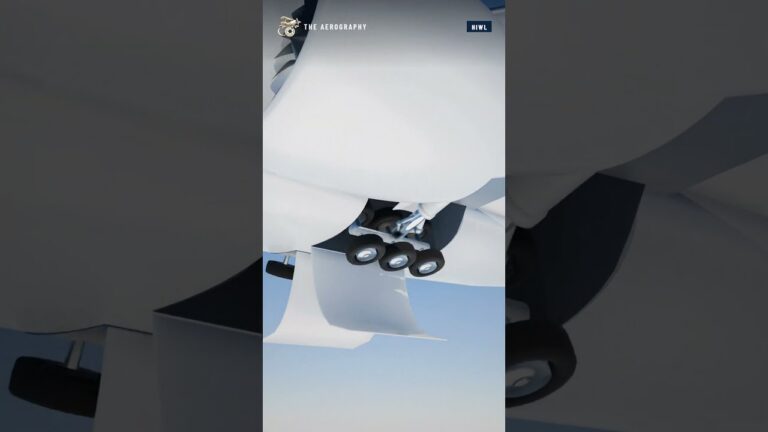
The video is illustrated. The wicks are drawn about 2.5 times their real size, and their number and positions vary between aircraft types. The sparks and glows are symbolic: the discharge is normally invisible. Static wicks do not stop an aircraft from charging up, and they do not protect it from lightning, which is a much more powerful event handled by the aircraft’s lightning protection design.
Sources
✈️ Subscribe to The Aero Graphy on YouTube, our video partner, for the latest aviation videos.



Start the discussion
Commenting on this video: What Are Those Little Spikes Behind the Wing? Static Wicks