Are Electric Commercial Planes Really Coming to the U.S.?
Are electric commercial planes coming to the US? Discover realistic timelines, FAA progress, battery limits, and frontrunners like Joby.
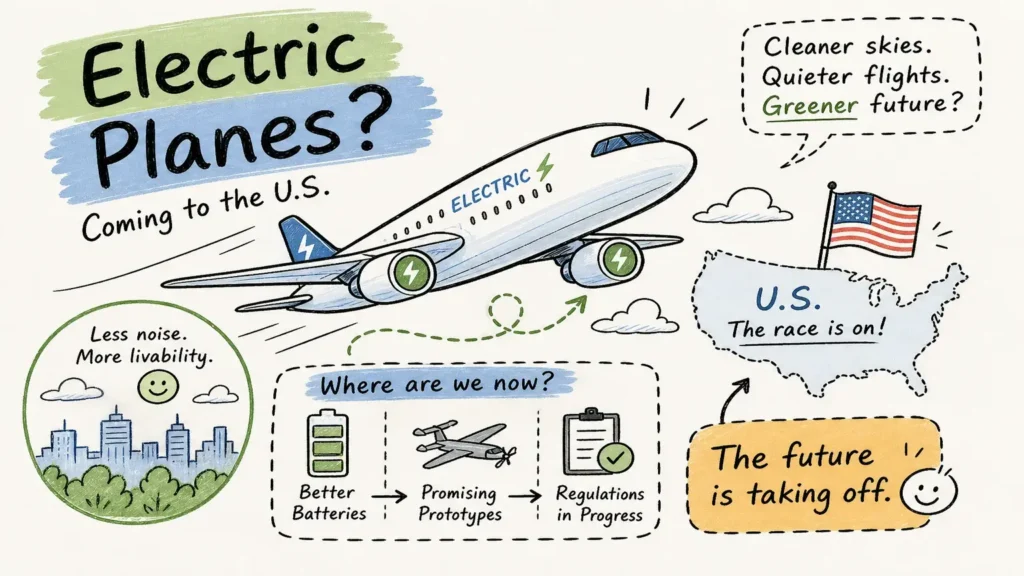
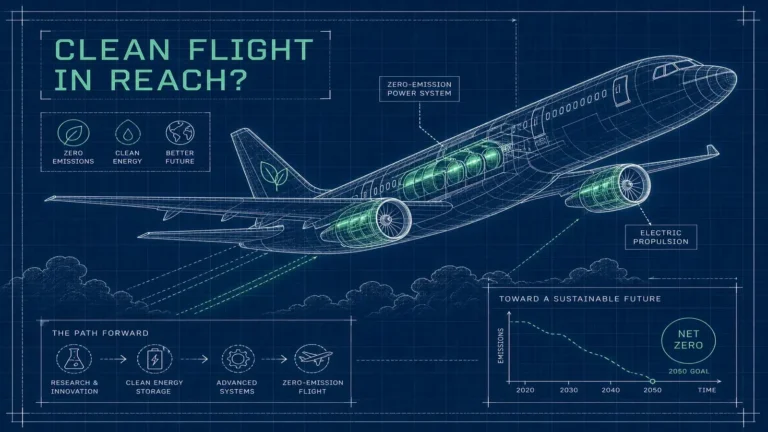
Are electric commercial planes coming to the US? The short answer is yes, but the version arriving first seats four people, not two hundred. The phrase “electric commercial planes” is doing a lot of heavy lifting right now, and most people using it aren’t talking about the same thing. Some picture a Boeing 737 quietly humming down a runway on battery power. Others think of a four-seat air taxi hopping between city centers. Both visions exist on a spectrum of reality, and where any given claim falls on that spectrum determines whether the headline you’re reading is genuine progress or well-funded optimism. The gap between those two extremes is exactly where the real story lives.
At Aviation Stream, we track this space continuously because conditions are shifting fast enough that what was a research footnote in 2024, such as the FAA’s powered-lift rule finalized in October 2024, is now a regulatory milestone shaping certification timelines in 2026. The central question worth answering isn’t whether electric commercial flight is coming to the U.S. It’s what type, how soon, and what still needs to go right before any of it touches down at an airport near you. This article separates what’s actually happening from the press-release version.
What “electric commercial aviation” actually means right now
Most of the confusion in this conversation comes from treating electric aviation as a single category. It isn’t. The category splits three ways, eVTOLs, hybrid-electric regional aircraft, and battery-electric commercial airliners, and each sits at a different maturity level, with its own regulatory clock and use case. Treating them as interchangeable is how you end up thinking United Airlines just ordered a fleet of quiet 737 replacements when they actually invested in a four-seat air taxi company.
eVTOLs vs. commercial airliners: not the same conversation
Electric vertical takeoff and landing aircraft, known as eVTOLs, carry four to five passengers on hops of 30 to 60 miles. They are in late-stage testing for eVTOL FAA certification right now, and they are not Boeing 737 replacements. Battery-electric regional jets that carry 30 to 70 passengers over 300-plus mile routes are a different animal entirely, one that current electric plane battery technology cannot yet power at commercial scale. Conflating these two categories leads to both overblown hype and unwarranted dismissal.
Why the distinction matters for reading every headline
When companies like Joby and Archer announce commercial operations targeting 2026 or 2027, they mean urban air taxi service between city centers and airports. They don’t mean scheduled airline routes from Dallas to Denver. This single distinction changes how you should interpret almost every major electric aviation headline from the past two years. The realistic sequence looks like this: air taxis first, hybrid-electric regional aircraft potentially in the early 2030s, and full battery-electric commercial airliners not before roughly 2035 based on current electric plane battery technology R&D trajectories.
Are electric commercial planes coming to the US? Meet the companies closest to making it happen
Progress is real, and the players worth watching have moved well beyond concept renderings. The frontrunners have airline money, FAA milestones, and actual aircraft completing actual flight tests. That said, every company still has a gap between where they are and revenue service with paying passengers.
Joby and Archer: the frontrunners with serious airline backing
Joby Aviation completed Stage 4 of the eVTOL FAA certification process in March 2026, moving its five-seat S4 aircraft into the final compliance demonstration phase. Delta Air Lines backed Joby with an $80 million investment, targeting air taxi service between JFK and Manhattan heliports, travel times that would shrink a 90-minute car ride to under 10 minutes. Archer Aviation, carrying a $1 billion conditional order from United Airlines, is targeting Los Angeles operations ahead of the 2028 Olympics and has received final airworthiness criteria from the FAA for its “Midnight” aircraft.
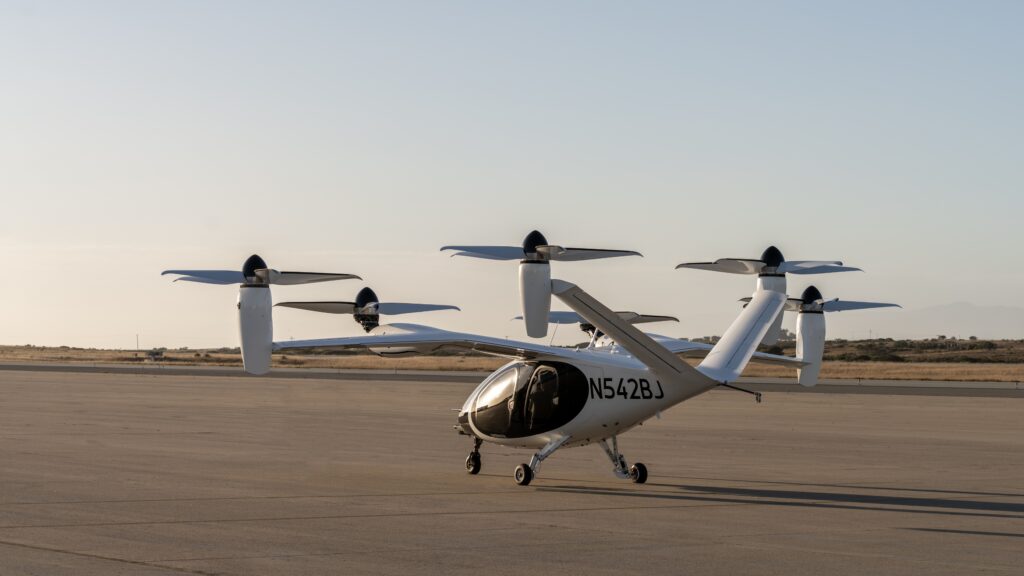
Both companies are building four-seat, short-range air taxi operations. Neither is replacing the flight from LAX to JFK. The airline investments reflect a different calculation: these aircraft replace the Uber ride to the airport, extending the airline’s service footprint without adding a single jetway gate.
Beta Technologies and the infrastructure builders
Beta Technologies is pursuing a two-track strategy that most coverage misses: building both the aircraft and the charging infrastructure. Its CX300/ALIA aircraft is in FAA certification with operations targeting 2026, and Beta has already installed rapid charging systems at more than 20 U.S. airports across New York, Los Angeles, the San Francisco Bay Area, and Texas, with 50 additional sites in development. Its Republic Airways partnership focuses on cargo and medical missions, which carry lower barriers compared to full passenger eVTOL FAA certification.
Wisk Aero, Boeing’s subsidiary, completed the first flight of its second-generation autonomous aircraft production prototype in May 2026, targeting what would be the first FAA-certified autonomous passenger aircraft in U.S. history, a milestone that would set a precedent well beyond the eVTOL market.
The hybrid-electric regional aircraft playing a longer game
Heart Aerospace’s ES-30 seats 30 passengers in a hybrid-electric configuration and is still in its commercial design phase. Its X1 demonstrator completed its first fully electric flight in 2025, which is meaningful progress, but the commercial aircraft is not close to U.S. service. ZeroAvia is validating hydrogen-electric propulsion on a 19-seat Dornier 228, and Electra Aeronautical’s hybrid EL9 has trials scheduled to begin in 2027. These programs represent genuine bridges between today’s eVTOL air taxis and tomorrow’s zero-emission regional jets. Those bridges just haven’t opened yet.
Inside the FAA’s certification path: how close is anyone?
The agency is building its regulatory framework for eVTOL FAA certification in real time, which is both reassuring and sobering. As of mid-2026, no crewed battery-electric commercial aircraft has received a full type certificate in the United States. The agency is evaluating applications case by case, using two main pathways: existing Part 23 standards for fixed-wing electric aircraft, and Special Class powered-lift criteria for eVTOLs. Both Joby and Archer have received special class airworthiness criteria, but neither holds a full type certificate yet.
The FAA approved eight pilot programs spanning 26 states in 2025 and 2026, creating a clear pathway for eVTOL FAA certification and allowing companies including Archer, Beta, Joby, and Wisk to begin large-scale testing. These programs compressed the typical eVTOL FAA certification timeline from seven years to under four, with operations permitted to start within 90 days of agreement. Joby is farthest along, with a full type certificate estimated 8 to 14 months from its Stage 4 completion, putting the optimistic window at late 2026 and the more likely landing zone at mid-2027. Industry analysts and FAA watchers broadly peg the first U.S. eVTOL type certificate no earlier than 2027, regardless of any company’s internal targets.
The battery ceiling that keeps bigger electric planes grounded

Here’s where the data pushes back against the popular narrative, and it pushes back hard. The current state of electric plane battery technology isn’t a temporary engineering inconvenience. They’re the honest constraint that sets the timeline for everything larger than an air taxi.
The energy density gap between what exists and what aviation needs
Current best-in-class lithium-ion batteries achieve roughly 250 Wh/kg at the cell level, enough to fly a nine-passenger electric aircraft about 140 kilometers on a full charge. To carry 50 to 70 passengers on a regional route of 300-plus miles, electric plane battery technology needs to hit 600 Wh/kg at the cell level. For narrow-body airliners, the requirement jumps to 820 Wh/kg. For wide-bodies, it reaches 1,280 Wh/kg. These numbers aren’t engineering challenges you solve in three years. They are generational improvements in fundamental materials science.
Why hybrid-electric and hydrogen fill the gap for now
Lithium-sulfur batteries could theoretically reach 400 to 500 Wh/kg at the cell level, which meets the minimum threshold for small regional aircraft. Commercial availability in aviation applications isn’t projected before 2030 to 2032, and cycle life remains a serious obstacle: current lithium-sulfur prototypes deliver 400 to 600 cycles before degradation, while commercial aviation demands 1,000 to 1,500 cycles. Lithium-air technology theoretically exceeds 1,000 Wh/kg, but it remains in early research and isn’t likely to be commercially viable before 2035 at the earliest. The practical near-term answer for anything larger than an air taxi is hybrid-electric propulsion using sustainable aviation fuel plus electric motors, or hydrogen-electric systems. These are real, viable technologies, just not the fully electric future that makes for cleaner marketing.
Airports and infrastructure: the overlooked bottleneck

Even when an aircraft is certified, the airport has to be ready. As of July 2026, there are zero operational vertiports in the United States and zero dedicated electric aircraft charging stations for eVTOL air taxis at U.S. airports. Eight sites are preparing for Advanced Air Mobility operations, and 92 cities and airports are in planning phases. The gap between “planning” and “operational” is wider than most coverage acknowledges.
Charging eVTOLs at commercial scale requires 1 to 3 megawatts of power delivery per vertiport. That means new substations, expanded underground electrical grids, and significant utility coordination that typically takes years to complete. Turnaround procedures need to account for 30-minute charging windows. Emergency response protocols require new training for thermal runaway scenarios, which carry a different risk profile from jet fuel fires.
Where progress is real: Charging networks and partnerships
Archer’s agreement with Signature Aviation covers more than 200 FBO locations nationwide, including Newark International and Chicago O’Hare. Florida is actively electrifying airport infrastructure for flight training, cargo, and regional traffic. The first commercial electric aircraft charging station in the U.S. was installed at Compton/Woodley Airport in Los Angeles County in 2019, serving smaller fixed-wing electric aircraft. As for Beta Technologies, its rapid-charging buildout, already live at more than 20 U.S. airports, with 50 additional sites in development, represents the most advanced eVTOL-focused charging network in the country today. The infrastructure buildout is happening, but it’s running behind the aircraft certification timelines.
Are electric commercial planes coming to the US, timeline and what to expect through 2035
From 2026 to 2028, the picture is eVTOL air taxis operating in specific U.S. cities. Joby is targeting commercial service in Los Angeles and New York, with routes connecting JFK to Manhattan heliports. Archer is targeting Los Angeles operations ahead of the 2028 Olympics. These are 4-seat, 30 to 60-mile hops. The airlines backing them are investing in airport connectors, not transcontinental route competition.
By the early 2030s, hybrid-electric aircraft with 9 to 30 seats could begin entering service on short regional routes: intra-state California, the Northeast Corridor, island-hopping in Hawaii. Heart Aerospace’s ES-30 and Electra’s EL9 are targeting this window, assuming electric plane battery technology and certification timelines cooperate. Full battery-electric commercial aircraft carrying 50-plus passengers on meaningful routes won’t arrive until batteries reach 600-plus Wh/kg at the cell level. Based on current R&D pipelines tracked by organizations including ICAO and NASA, that threshold is unlikely before 2035, and several analyses place it later still.
The bottom line on electric commercial flight in the US
So, are electric commercial planes coming to the US? They are, and the leading edge is closer than most people realize. The version arriving first seats four people and connects you to the airport faster than a cab. The technology is advancing faster than skeptics admit and slower than promoters claim, and the agency is building its eVTOL FAA certification architecture in real time around aircraft that didn’t exist as regulatory categories a decade ago. The battery physics set the honest ceiling for everything larger, and that ceiling isn’t moving on anyone’s press release schedule.
For readers who want to follow every development as it actually happens, Aviation Stream covers the electric commercial aviation space continuously. From Joby’s type certificate progress and Archer’s Los Angeles buildout to ZeroAvia’s hydrogen-electric milestones and the longer arc of zero-emission regional aviation, the updates are ongoing and the details matter. Electric commercial planes are coming to the US. The question is how far the industry moves in the next five years versus the next fifteen, and that answer changes every few months.
Frequently asked questions about electric commercial planes in the US
Yes, but in stages. Small eVTOL air taxis carrying four to five passengers are the nearest-term category, with Joby and Archer targeting limited commercial service in 2027. Hybrid-electric regional aircraft could follow in the early 2030s. Full battery-electric airliners carrying 50-plus passengers are not expected before 2035 based on current battery energy-density projections.
Joby Aviation is the current frontrunner. As of mid-2026, the company has completed Stage 4 of the FAA’s five-stage type certification process and is in the final compliance demonstration phase. A full type certificate is estimated 8 to 14 months out from that milestone.
Battery energy density. Current lithium-ion batteries achieve roughly 250 Wh/kg, enough for short-hop air taxis, but far short of the 600 Wh/kg needed for 50-seat regional aircraft and the 820 Wh/kg required for narrow-body jets. Closing that gap requires advances in materials science that take years, not product cycles.
As of July 2026, there are no dedicated eVTOL charging stations at U.S. airports in operational status, though eight sites are actively preparing for Advanced Air Mobility operations. Beta Technologies has installed rapid-charging equipment at more than 20 airports for its own aircraft program, with 50 additional sites in development.