Airbus A321 (A321ceo)
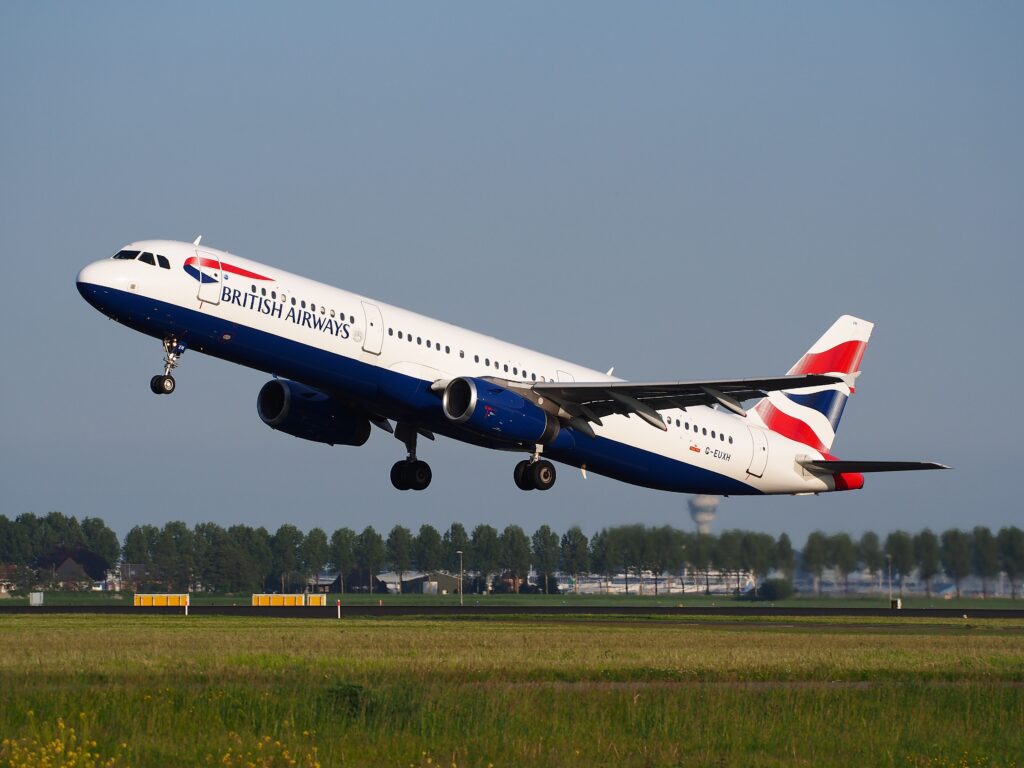
The Airbus A321 is the longest member of the original A320 family, about 7 m longer than the A320. Lufthansa put it into service in 1994, and it became the basis of the even more successful A321neo.
| General Characteristics | |
| Type | Narrow-body airliner, Civil and Commercial Aircraft |
|---|---|
| National Origin | Multi-national |
| Manufacturer | Airbus |
| Variants | A321-100, A321-200, A321neo, A321LR, A321XLR, A321P2F |
| Status | In service |
| First Flight | 11 March 1993 |
| Introduction | 18 March 1994 with Lufthansa |
| Primary Users | American Airlines, Lufthansa, China Southern Airlines, Turkish Airlines, Vietnam Airlines |
| Developed From | Airbus A320 |
| Capacity & Dimensions | |
| Cockpit Crew | Two |
| Typical Seating | 185 (two-class), 199 (one-class) |
| Max Seating | 230 (one-class, high density) |
| Overall Length | 44.51 m (146 ft 0 in) |
| Wing Span | 35.80 m (117 ft 5 in) with sharklets |
| Wing Sweep | 25° |
| Wing Area | 128 m² (1,378 sq ft) |
| Overall Height | 11.76 m (38 ft 7 in) |
| Weights, Powerplant & Performance | |
| MTOW | 93,500 kg (206,100 lb) |
| OEW | 48,500 kg (106,900 lb) |
| Fuel Capacity | 30,030 L (7,930 US gal) |
| Engines | 2 × CFM International CFM56-5B or IAE V2500-A5 |
| Max. Thrust | 133–147 kN (30,000–33,000 lbf) each |
| Typical Cruise Speed | Mach 0.78 |
| Max. Speed | Mach 0.82 (MMO) |
| Range | 5,930 km (3,200 nmi) |
| Service Ceiling | 11,900–12,500 m (39,100–41,000 ft) |
The Airbus A321 is the stretched version of the A320 and the largest member of the original A320 family. It carries about 35 more passengers than the A320 with the same cockpit and the same two-pilot crew, which makes it one of the cheapest aircraft to operate per seat on short and medium routes. Its success led directly to the A321neo, which today outsells every other version of the family.
Airbus A321 General Characteristics
Airbus launched the A321 in November 1989, and it was the first Airbus aircraft to be assembled in Hamburg, Germany, instead of Toulouse. The maiden flight of the first of two prototypes came on 11 March 1993. Lufthansa and Alitalia were the launch customers, and Lufthansa started commercial service on 18 March 1994.
To make the longer fuselage work, Airbus added fuselage plugs in front of and behind the wing, strengthened the landing gear and structure, and redesigned the wing’s trailing edge with double-slotted flaps. These give the A321 the extra lift it needs to take off and land at a much higher weight while using runways of a similar length. The flight deck and the fly-by-wire controls are the same as on the A320, so pilots can fly both aircraft on the same type rating. You can read how those controls work in our article on flight envelope protection.
Airbus A321 Cabin and Seating
The A321 keeps the A320’s cabin cross-section, with six-abreast economy seating. A typical two-class cabin has 185 seats, and a one-class layout about 199. With slim seats at a tight pitch, up to 230 passengers can be carried. Four pairs of doors serve the long cabin on the original version, and the hold takes ten LD3-45 containers, three more than the A320.
Airbus A321 Dimensions
The A321 is 44.51 m (146 ft 0 in) long, almost 7 m longer than the A320. Its wingspan with sharklets is the same 35.80 m (117 ft 5 in), and its height is 11.76 m (38 ft 7 in). Because of the modified flaps, its wing area is slightly larger at 128 m². The long fuselage means pilots must be careful with pitch attitude on take-off and landing to avoid a tail strike.
Airbus A321 Engines and Performance
The A321 uses the same engine families as the A320, but in more powerful versions: the CFM56-5B and the IAE V2500-A5, rated between 133 and 147 kN (30,000 to 33,000 lbf). Maximum take-off weight is 93.5 tonnes (206,100 lb). With a typical load of passengers and bags, the A321 can fly about 5,930 km (3,200 nmi), enough for flights across Europe, within Asia or across the United States. Cruise speed is about Mach 0.78.
Operational Role and Market
At first the A321 was used mainly on busy short routes where airlines needed more seats per departure. Later versions with higher weights and extra fuel tanks extended it to longer sectors, and the A321neo with its LR and XLR versions now flies some transatlantic routes. Large fleets fly with American Airlines, Lufthansa, Turkish Airlines and Chinese carriers. Many older A321s are now being converted into freighters as the A321P2F.
Frequently Asked Questions
How many passengers does the A321 carry? About 185 in two classes and up to 230 in a high-density layout.
How long is the Airbus A321? 44.51 m (146 ft 0 in).
What replaced the A321? The re-engined Airbus A321neo, which entered service in 2017.
Airbus A321 Summary
The A321 proved that a stretched single-aisle aircraft with the same cockpit as its smaller siblings could carry many more passengers at a low cost per seat. Compare it with the Airbus A320neo, the A321neo and Boeing’s rival, the 737 MAX 8.
Start the discussion
Commenting on this aircraft: Airbus A321 (A321ceo)