







Last Updated: 4 days ago
← Back to Aircraft Database| General Characteristics | |
| Type | Civil and Commercial Aircraft, Narrow-body airliner |
|---|---|
| National Origin | Multi-national |
| Manufacturer | Airbus |
| Status | In service |
| First Flight | 9 February 2016 |
| Introduction | 27 January 1994 with Lufthansa |
| Primary Users | American Airlines Delta Air Lines, IndiGo, China Southern Airlines |
| Number Built | 3,536 as of 30 June 2025 |
| Capacity & Dimensions | |
| Weights, Powerplant & Performance | |
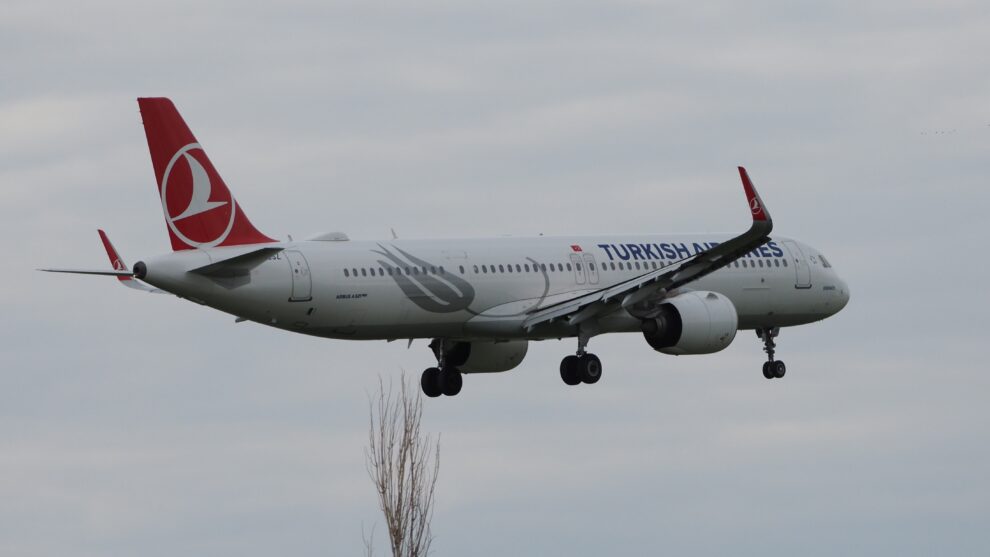
The Airbus A321-271NX is a modern member of the Airbus A321neo family. It combines the long fuselage of the A321 with new-generation engines, aerodynamic improvements and an updated single-aisle cabin concept. As a result, it gives airlines more range, more efficiency and higher passenger capacity than older A321ceo models.
This aircraft belongs to the Airbus A320neo family, yet it serves the upper end of the single-aisle market. Airlines often choose it when they need more seats than an A320neo can offer, but they still want the operating economics of a narrow-body aircraft. Therefore, the Airbus A321-271NX works well on busy domestic routes, regional international services and longer single-aisle missions.
The “neo” name means “new engine option.” In this variant, the aircraft uses Pratt & Whitney PW1100G-JM geared turbofan engines rather than CFM LEAP engines. The “NX” suffix is commonly associated with later A321neo configurations, including Airbus Cabin Flex arrangements. Because of these updates, the aircraft can support dense cabin layouts, improved range capability and more flexible airline operations.
Airbus A321-271NX General Characteristics
| Feature | Specification |
|---|---|
| Aircraft Type | Narrow-body twin-engine jet airliner |
| Main Category | Civil and Commercial Aircraft |
| Additional Category | Narrow-body airliner |
| Manufacturer | Airbus |
| National Origin | Multi-national |
| Aircraft Family | Airbus A320neo family |
| Variant | Airbus A321-271NX |
| Base Model | Airbus A321neo |
| Engine Family | Pratt & Whitney PW1100G-JM |
| Typical Role | Short-, medium- and selected long-range commercial routes |
| ICAO Code | A21N |
| Status | In production and in service |
The Airbus A321-271NX keeps the familiar A320 family cockpit philosophy, fly-by-wire flight control system and narrow-body layout. However, it adds more seating capacity and longer-range capability compared with smaller A320neo family members. In addition, its commonality with other A320 family aircraft helps airlines simplify pilot training, maintenance planning and fleet scheduling.
A321-271NX Cabin and Seating
The A321neo family offers one of the largest cabins in the single-aisle market. In a typical two-class layout, the aircraft can seat around 180 to 220 passengers. In a high-density layout, the maximum seating capacity can reach 244 passengers, depending on airline configuration and certification limits.
| Feature | Specification |
|---|---|
| Cockpit Crew | Two pilots |
| Typical Seating | 180–220 passengers |
| Maximum Seating | Up to 244 passengers |
| Cabin Type | Single-aisle cabin |
| Cabin Width | About 3.70 m maximum cabin width |
| Common Use | High-density short-haul and longer single-aisle routes |
This capacity makes the aircraft attractive for network airlines, low-cost carriers and leisure operators. Moreover, the longer fuselage gives airlines more flexibility when they design cabin layouts. Some operators use a premium cabin with business class seating, while others focus on maximum passenger capacity.
Because the Airbus A321-271NX can carry more passengers than smaller A320neo variants, it helps airlines increase capacity without adding more flight frequencies. Consequently, the aircraft can improve route economics on busy airport pairs where slots are limited.
Airbus A321-271NX Dimensions
The A321 is the longest member of the A320 family. Therefore, the aircraft has a distinctive stretched fuselage while keeping the same general single-aisle design language as the A319, A320 and other A321 variants.
| Feature | Specification |
|---|---|
| Overall Length | 44.51 m |
| Cabin Length | 34.44 m |
| Fuselage Width | 3.95 m |
| Maximum Cabin Width | 3.70 m |
| Wingspan | 35.80 m |
| Height | 11.76 m |
| Wheelbase | 16.90 m |
| Track | 7.59 m |
The long fuselage gives the aircraft its high seating capacity. However, it still remains compatible with many airports that already handle A320 family aircraft. In addition, Sharklet wingtip devices help improve aerodynamic efficiency and reduce fuel burn compared with earlier wingtip fence configurations.
Engines and Performance
The A321-271NX uses Pratt & Whitney geared turbofan engines from the PW1100G-JM family. These engines represent one of the key differences between neo and ceo generation aircraft. They help reduce fuel consumption, lower emissions per seat and improve overall operating efficiency.
| Feature | Specification |
|---|---|
| Engines | 2 × Pratt & Whitney PW1100G-JM geared turbofan engines |
| Engine Type | High-bypass geared turbofan |
| Maximum Takeoff Weight | Up to 97.0 tonnes, depending on weight variant |
| Maximum Landing Weight | Up to 79.2 tonnes, depending on weight variant |
| Maximum Zero Fuel Weight | Up to 75.6 tonnes, depending on weight variant |
| Maximum Fuel Capacity | Up to 32,940 litres |
| Maximum Operating Mach | M0.82 |
| Range | Up to 4,000 nautical miles / 7,400 km |
The Airbus A321-271NX can serve a wide range of missions. It can operate short domestic flights, dense regional sectors and longer international routes. Meanwhile, its range allows airlines to open longer thin routes that may not justify a wide-body aircraft.
Although exact performance depends on airline configuration, payload, fuel policy and route conditions, the A321neo family gives operators a strong balance of capacity and efficiency. Therefore, it has become one of the most important aircraft types in the modern single-aisle market.
Why Airlines Choose This A321neo Variant
Airlines choose this aircraft because it offers a practical mix of capacity, range and commonality. It carries more passengers than the A320neo, yet it keeps the benefits of the A320 family platform. As a result, airlines can increase route capacity without introducing a completely different aircraft type.
In addition, the aircraft supports several business models. Full-service airlines can use it with a mixed premium and economy cabin. Low-cost carriers can configure it with a dense single-class layout. Leisure airlines can use it for holiday routes where passenger demand and baggage volume are high.
The Airbus A321-271NX also helps airlines manage airport slot limitations. If an airport has limited takeoff and landing slots, using a larger single-aisle aircraft can add seats without adding extra flights. Consequently, the aircraft becomes valuable on high-demand routes.
Operational Role
The aircraft works well on routes that need more capacity than smaller narrow-body jets can provide. Airlines use A321neo variants for domestic trunk routes, transcontinental sectors, regional international flights and selected longer missions. Because of its range and capacity, it can sometimes replace older wide-body aircraft on thinner routes.
The Airbus A321-271NX also fits into fleets that already use A319, A320 or A321 aircraft. This helps airlines keep crew training and maintenance processes more consistent. Moreover, common cockpit philosophy across the A320 family supports operational flexibility.
However, the aircraft is not simply a larger A320neo. Its longer fuselage, higher passenger capacity and range-focused variants require careful route planning, weight planning and turnaround management. Even so, its efficiency and flexibility make it one of the strongest narrow-body choices in current airline service.
Comparison with Other A321neo Versions
The A321neo family includes different engine and configuration options. Variants with “25” in the designation generally use CFM LEAP-1A engines, while variants with “27” identify Pratt & Whitney PW1100G-JM engine options. Therefore, the Airbus A321-271NX should be understood as a Pratt & Whitney-powered A321neo variant.
The A321LR and A321XLR extend the single-aisle concept even further. The A321LR can fly up to 4,000 nautical miles with additional fuel tanks, while the A321XLR pushes the concept toward even longer routes. However, the A321-271NX remains part of the broader A321neo family and may vary by airline configuration and certified weight variant.
Frequently Asked Questions
Is the Airbus A321-271NX an A321neo?
Yes. It is a variant of the Airbus A321neo family.
What engines does the Airbus A321-271NX use?
It uses Pratt & Whitney PW1100G-JM geared turbofan engines.
Is the A321-271NX powered by CFM LEAP engines?
No. The “271” designation indicates the Pratt & Whitney-powered A321neo line. CFM-powered A321neo variants usually use “251,” “252” or “253” designations.
How many passengers can it carry?
The aircraft can typically carry 180 to 220 passengers in a two-class layout. In a high-density configuration, the A321neo family can carry up to 244 passengers.
What is the range of the aircraft?
The A321neo family can reach up to about 4,000 nautical miles, depending on configuration, payload and fuel arrangement.
Airbus A321-271NX Summary
The Airbus A321-271NX is a Pratt & Whitney-powered A321neo variant designed for efficient high-capacity single-aisle operations. It combines a long fuselage, modern geared turbofan engines, Sharklet wingtips and A320 family commonality. With up to 244 seats, strong range capability and flexible airline configuration options, it has become an important aircraft for modern short-, medium- and longer-range narrow-body routes.
Did you knowAviationStream.com has a YouTube channel? Check out TheAeroGraphyOfficial and subscribe to watch fun, highly engaging aviation Shorts!