FAA Orders Fuel Tank Sealant Checks on 60 US Boeing 787s
The FAA has ordered sealant inspections in the Boeing 787 fuel tank area of 60 US aircraft, after checks were missed in production. What the AD requires.
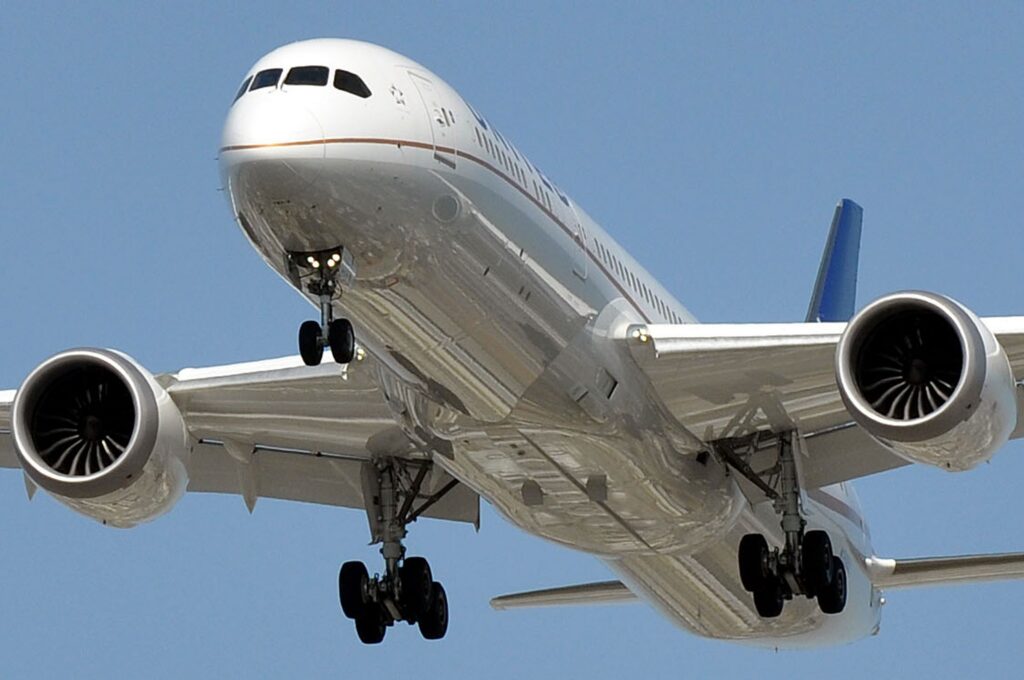
The US Federal Aviation Administration (FAA) has ordered inspections of sealant inside the Boeing 787 fuel tank structure of 60 US-registered aircraft. Airworthiness directive (AD) 2026-22-05, published in the Federal Register on 2 November 2026 and effective on 7 December 2026, covers certain 787-8, 787-9 and 787-10 aircraft. It follows a report that sealant installations in the centre wing fuel tank of these aircraft did not receive the visual and adhesion inspections required during production.
What the FAA found
Fuel tanks are sealed with layers of sealant along joints, fasteners and edges. On a composite aircraft such as the 787, the sealant also plays a part in protecting the tank against sparks if the aircraft is struck by lightning. According to the AD, the problem is not a known defect in service but missing quality checks: for the affected aircraft, there is no evidence that the required inspections were carried out in the factory.
The FAA states that the unsafe condition, if not addressed, could result in an ignition source developing inside the fuel tank and “a risk of a fuel tank explosion during a lightning strike event”. The agency said it has confirmed that the inspections are now being performed in production on aircraft outside the scope of the AD.
What airlines must do
Operators must carry out a detailed inspection of specific sealant installations in the left, right and centre wing side-of-body areas, test the adhesion of the sealant and repair any defects, following Boeing Alert Requirements Bulletin B787-81205-SB570053-00 RB, dated 5 November 2025. The compliance times are set out in that bulletin.
The FAA estimates the work at 34 hours per aircraft, or about $2,890, and $173,400 for the US fleet, not counting any repairs. Boeing told the FAA that some or all of the costs may be covered under warranty.
Comments from airlines and Boeing
The FAA first proposed the directive in February 2026. The Air Line Pilots Association and United Airlines supported it. At the request of Boeing and American Airlines, the final rule allows sealant repairs that follow Boeing’s existing 787 airworthiness limitations for the fuel system to be used without separate FAA approval.
Why it matters
Fuel tank safety has been a major focus of regulators since the loss of TWA Flight 800 in 1996, and the 787 was certified with a nitrogen generation system and special lightning protection for its composite tanks. This directive is a precaution to confirm that production work meets the design. Read more about how aircraft are protected in our explainer on why planes survive lightning strikes and our Boeing 787-9 profile.
Start the discussion
Commenting on this story: FAA Orders Fuel Tank Sealant Checks on 60 US Boeing 787s