NTSB: Fire Retardant Corroded Two Airtankers in One Season
An NTSB investigation found that a new fire retardant badly corroded an MD-87 and a BAe 146 airtanker in 2023. It wants the US Forest Service to test better.
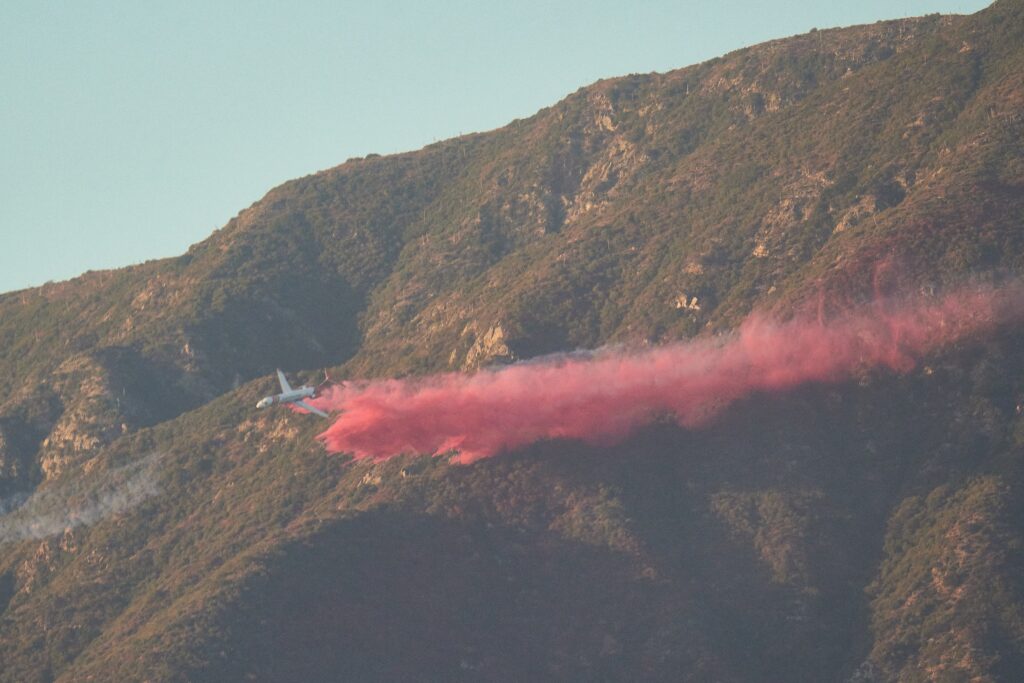
A fire retardant approved for use by US firefighting aircraft caused extensive corrosion on two large airtankers during a single fire season, the US National Transportation Safety Board (NTSB) said on 17 November 2026. In a report on fire retardant corrosion, the board found that the US Forest Service’s approval process did not properly test how the chemical would affect real aircraft structures, and it issued two safety recommendations to the agency.
What the NTSB found
The investigation looked at a British Aerospace BAe 146 operated by Neptune Aviation Services and a McDonnell Douglas MD-87 operated by Aero Air. Both took part in a Forest Service evaluation of a new magnesium chloride-based retardant during the 2023 season. At first they dropped only the new product; later they alternated it with a conventional phosphate-based retardant.
During the season the operators recorded corrosion and deposits. Later inspections found extensive damage to primary wing structure, fuselage parts, electrical connectors, control cables and engines. According to the NTSB, comparable aircraft that had not carried the new retardant showed no similar corrosion. The report warns that chemical corrosion can “weaken aircraft structures and, if left undetected or uncorrected, lead to structural failure.”
AeroTime, which reviewed the report, said the product was Fortress FR-200 and that on the MD-87 corrosion had eaten through more than half the thickness of a doubler on the wing spar, the main load-bearing member of the wing. More than 90 electrical connectors, several control cables and a section of fuselage structure had to be replaced.
Why the tests missed it
Investigators found that the Forest Service’s qualification process relied mainly on corrosion tests of isolated metal samples. Those tests did not reproduce the mix of metals, fasteners, joints and assembled structures found in an aircraft, or the effect of mixing two chemically different retardants in the same tank.
The Forest Service suspended the qualification of the new retardant and a related product in May 2024 and removed both from its list of approved products in December 2024. The NTSB concluded that this did not fix the underlying weakness in the approval process.
The recommendations
The NTSB asked the Forest Service to work with corrosion experts, airtanker operators and retardant manufacturers to develop more realistic corrosion tests, and to make those tests part of its qualification requirements for future retardants.
Why it matters
Airtankers fly low, heavy and in turbulent air over fires, so their structures already work hard. Many, like the MD-87 and BAe 146, are converted airliners several decades old. Damage that goes unnoticed in a hidden spar or a corroded control cable could turn into a structural failure in flight, which is why the NTSB treated a maintenance finding with no accident as a safety issue.
Sources
- NTSB press release: NTSB calls for stronger corrosion testing of fire retardants used in aerial firefighting, 17 November 2026
- NTSB report AIR-26-06: Require Adequate Corrosion Testing and Qualification of Long-Term Fire Retardants Used in Aerial Firefighting
- AeroTime: Fire retardant caused corrosion in firefighting aircraft, NTSB finds
Start the discussion
Commenting on this story: NTSB: Fire Retardant Corroded Two Airtankers in One Season