





Last Updated: 4 days ago
← Back to Aircraft Database| General Characteristics | |
| Type | Civil and Commercial Aircraft, Wide-body jet airliner |
|---|---|
| National Origin | Multi-national |
| Manufacturer | Airbus |
| Variants | Airbus A310, MRTT Airbus CC-150 Polaris |
| Status | In limited service |
| First Flight | 3 April 1982 |
| Introduction | April 1983 with Swissair |
| Primary Users | Mahan Air, ULS Airlines Cargo, Iran Air, Ariana Afghan Airlines |
| Number Built | 255 |
| Developed From | Airbus A300 |
| Capacity & Dimensions | |
| Cockpit Crew | 2 |
| Typical Seating | 243 |
| Max Seating | 243 |
| Overall Length | 46.66 m |
| Wing Span | 43.90 m |
| Wing Sweep | 28 degrees |
| Wing Area | 219.00 m2 |
| Overall Height | 15.867 m |
| Weights, Powerplant & Performance | |
| MTOW | 164,000 kg |
| OEW | 79,166 kg |
| Fuel Capacity | 61,070 L |
| Engines | 2 × Pratt & Whitney PW4156A |
| Max. Thrust | 249.08 kN2g |
| Typical Cruise Speed | Mach 0.80 |
| Max. Speed | Mach 0.84 |
| Range | 9,540 km |
| Takeoff Distance | N/A |
| Service Ceiling | 12,530 m |
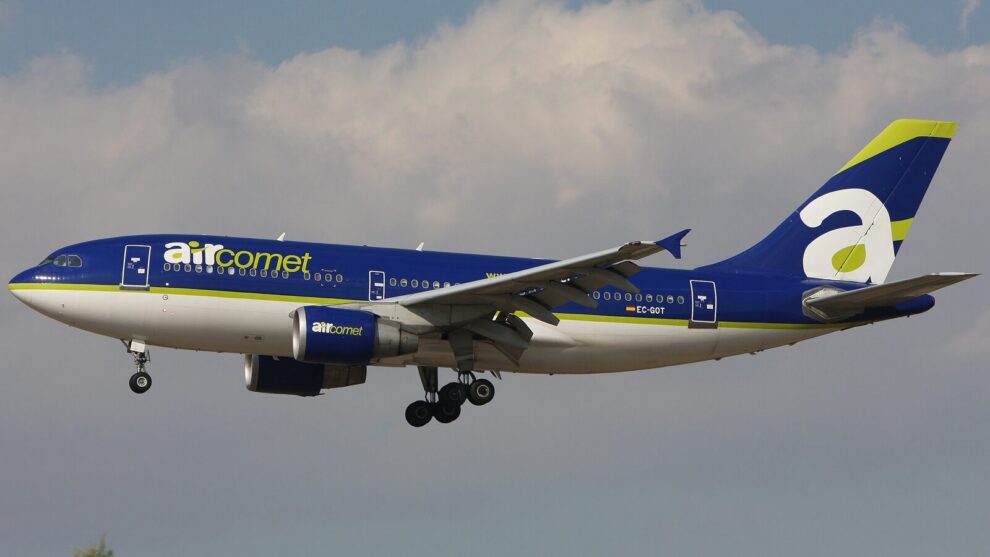
The Airbus A310 is a twin-engine wide-body airliner developed from the Airbus A300 family. It gave airlines a shorter fuselage, improved range and a more modern cockpit concept while keeping the wide-body comfort and twin-engine efficiency that made the A300 important.
Airbus launched the A310 as a smaller and longer-range companion to the A300. Therefore, the aircraft served airlines that needed wide-body capability but did not always need the full size of the A300. This made the A310 useful on medium-haul routes, regional international services and selected long-range missions.
The Airbus A310 first flew in April 1982 and entered airline service in 1983. It became the second major Airbus commercial aircraft after the A300. Moreover, it helped Airbus strengthen the idea of aircraft family commonality, because A300-600 and A310 operations shared many design and cockpit principles.
Airbus A310 General Characteristics
| Feature | Specification |
|---|---|
| Aircraft Type | Twin-engine wide-body jet airliner |
| Main Category | Civil and Commercial Aircraft |
| Additional Category | Wide-body jet airliner |
| Manufacturer | Airbus |
| National Origin | Multi-national |
| Aircraft Family | Airbus A300/A310 family |
| First Flight | April 1982 |
| Introduction | 1983 |
| Main Variants | A310-200 and A310-300 |
| Cockpit Crew | Two pilots |
| ICAO Codes | A310 / A312 / A313, depending on variant |
| Primary Role | Medium- and long-range passenger transport |
| Status | Out of production, mostly retired from passenger service |
The Airbus A310 should not be treated as a simple shortened A300. Although it came from the same family, Airbus used the aircraft to introduce important improvements. These included a new wing design, a two-crew cockpit and wider use of composite materials compared with earlier wide-body aircraft.
Because of these improvements, the A310 became an important step between the original A300 and later Airbus wide-body aircraft. In addition, it helped Airbus build a stronger product family instead of relying on one single wide-body model.
A310 Cabin and Seating
The A310 cabin offers a twin-aisle wide-body layout. In typical airline service, seating depended on the operator, route structure and cabin class arrangement. Airbus data for the A310-300 lists 243 passengers in standard single-class seating, while two-class layouts often carried around 220 passengers.
| Feature | Specification |
|---|---|
| Typical Two-Class Seating | Around 220 passengers |
| Standard Single-Class Seating | Up to 243 passengers on A310-300 |
| Cabin Type | Twin-aisle wide-body cabin |
| Passenger Compartment Volume | About 454 m³ / 16,032 ft³ |
| Cockpit Volume | About 12 m³ / 424 ft³ |
| Typical Economy Layout | Eight-abreast seating in many airline configurations |
The wide-body cabin gave passengers more space than narrow-body aircraft on similar routes. In addition, the twin-aisle layout helped improve boarding and deboarding compared with single-aisle aircraft. Therefore, the A310 worked well on routes where airlines needed passenger comfort and medium-capacity wide-body service.
The aircraft also gave airlines useful lower-deck cargo space. Even in passenger service, operators could carry baggage and freight under the cabin. As a result, the A310 supported both passenger and belly cargo revenue.
Airbus A310 Dimensions
The Airbus A310 has a shorter fuselage than the A300, but it retains the same wide-body fuselage cross-section. This design gave airlines a smaller aircraft with a spacious cabin and strong route flexibility.
| Feature | Specification |
|---|---|
| Overall Length | About 46.7 m / 153 ft |
| Wingspan | About 43.9 m / 144 ft |
| Overall Height | About 15.8 m / 52 ft |
| Fuselage Type | Wide-body fuselage |
| Wing Layout | Low-wing swept configuration |
| Engine Layout | Two underwing turbofan engines |
| Landing Gear | Retractable tricycle landing gear |
The shorter fuselage helped the A310 serve lower-demand routes more efficiently than the larger A300. However, the aircraft still carried the wide-body advantages of passenger comfort, cabin volume and lower-deck cargo capacity.
Moreover, the A310 introduced a more advanced wing compared with the early A300 design. This helped improve aerodynamic performance and supported the aircraft’s longer-range mission profile.
A310 Engines and Performance
The A310 used different high-bypass turbofan engine options depending on variant and customer selection. A310-200 aircraft used General Electric CF6-80 or Pratt & Whitney JT9D engine options. Later A310-300 aircraft could also use Pratt & Whitney PW4000 series engines, depending on the specific model.
| Feature | Specification |
|---|---|
| Engine Options | General Electric CF6-80, Pratt & Whitney JT9D or Pratt & Whitney PW4000 |
| Engine Type | High-bypass turbofan |
| Number of Engines | Two |
| A310-200 MTOW Range | About 132,000–144,000 kg, depending on weight variant |
| A310-300 MTOW Range | About 138,600–164,000 kg, depending on weight variant |
| Usable Fuel Capacity | About 61,070 litres / 16,132 US gallons |
| Maximum Operating Mach | About Mach 0.84 |
| Typical Cruise Speed | About Mach 0.80 |
| Maximum Range | Up to about 9,600 km in representative long-range configuration |
The A310-300 gave airlines the best long-range capability in the family. Therefore, operators used it on routes that required more range than many earlier A300 variants could offer. Some airlines also used the aircraft for transatlantic services, especially when demand did not justify a larger wide-body.
Although later aircraft such as the Airbus A330 offered more modern efficiency and greater capability, the A310 remained important because it helped prove the value of smaller wide-body twinjets.
Lower Cargo Capacity
| Feature | Specification |
|---|---|
| Usable Cargo Compartment Volume | About 112.2 m³ / 3,962 ft³ |
| Forward Cargo Compartment | About 55 m³ / 1,943 ft³ |
| Aft Cargo Hold Compartment | About 36.2 m³ / 1,278 ft³ |
| Bulk Cargo Compartment | About 21 m³ / 741 ft³ |
| Lower Deck Role | Passenger baggage and belly freight |
The lower cargo compartments gave the A310 useful commercial flexibility. Airlines could carry passenger baggage and revenue cargo on the same flight. Consequently, the aircraft worked well on routes where both passenger and cargo demand existed.
This cargo capability also explains why some A310 aircraft later moved into freighter or military transport roles. However, the standard Airbus A310 database entry should remain focused on the passenger wide-body aircraft unless the specific aircraft is an A310F or A310 MRTT.
Why Airlines Chose the Airbus A310
Airlines chose the Airbus A310 because it offered wide-body comfort in a smaller package than the A300. It could serve routes that needed more capacity than a narrow-body aircraft but less capacity than a larger wide-body. Therefore, the A310 filled an important market gap.
The aircraft also gave airlines range flexibility. The A310-300, in particular, could operate longer routes and helped carriers open thinner international services. As a result, airlines could offer wide-body service without using aircraft that were too large for the route.
In addition, the two-crew cockpit reduced cockpit crew requirements compared with earlier three-crew wide-body designs. This helped operators modernize their fleets and reduce operational complexity. Moreover, commonality with the A300-600 family gave airlines training and maintenance advantages.
Operational Role
The Airbus A310 mainly served medium- and long-range passenger routes. Airlines used it on regional international services, transcontinental flights and selected long-haul markets. Because of its smaller size, it could operate routes that did not need a larger A300, A330 or Boeing 767-class aircraft.
The aircraft also found roles beyond normal passenger airline service. Some operators converted A310 aircraft into freighters, while military operators used adapted versions for transport, VIP service and multi-role tanker transport missions. However, those versions should be handled separately when building a detailed aircraft database.
In passenger service, the A310 gradually disappeared as airlines moved toward newer wide-body aircraft. Nevertheless, its role in Airbus history remains important. It helped Airbus develop the family concept, modern cockpit design and efficient twin-engine wide-body operations.
Comparison with the Airbus A300
The Airbus A310 is shorter than the A300 but generally offers improved range in key variants. The A300 served as the original twin-engine wide-body airliner, while the A310 gave airlines a smaller and more flexible version for medium- and longer-range missions.
The A300 offered more cabin capacity. In contrast, the A310 offered a smaller wide-body platform with modernized systems and better route flexibility. Therefore, the two aircraft complemented each other rather than serving exactly the same market.
The A310 also helped prepare Airbus for later aircraft families. Its cockpit and systems philosophy influenced future Airbus wide-body development, especially the move toward commonality and reduced crew workload.
Comparison with the Airbus A300-600
The A310 and A300-600 share important commonality, but they differ in size and route focus. The A300-600 kept the larger A300 fuselage length and improved the original design. The A310 used a shorter fuselage and focused more strongly on range flexibility.
Because of this, airlines could use the A300-600 on denser routes and the A310 on thinner routes. This made the two aircraft useful as part of a wider Airbus wide-body fleet strategy.
Frequently Asked Questions
What is the Airbus A310?
The Airbus A310 is a twin-engine wide-body jet airliner developed from the Airbus A300 family.
Is the A310 smaller than the A300?
Yes. The A310 has a shorter fuselage than the A300, but it keeps the same wide-body fuselage cross-section.
How many passengers can the Airbus A310 carry?
The aircraft usually carries around 220 passengers in a two-class layout. Airbus data lists up to 243 passengers in standard single-class seating for the A310-300.
What engines does the Airbus A310 use?
The aircraft can use General Electric CF6-80, Pratt & Whitney JT9D or Pratt & Whitney PW4000 engine options, depending on variant.
Is the Airbus A310 still in passenger service?
Most A310 aircraft have retired from passenger service. However, some aircraft continued in cargo, government, military or special mission roles.
Airbus A310 Summary
The Airbus A310 is an important twin-engine wide-body aircraft in Airbus history. It combined a shorter fuselage, longer-range capability, wide-body comfort, two-crew cockpit operation and useful belly cargo capacity. Although newer Airbus aircraft later replaced it in most airline fleets, the A310 helped establish the Airbus family concept and remains a key aircraft in the development of modern wide-body twinjets.
Did you knowAviationStream.com has a YouTube channel? Check out TheAeroGraphyOfficial and subscribe to watch fun, highly engaging aviation Shorts!