Boeing 737-900ER (Next Generation)
The Boeing 737-900ER is the largest member of the 737 Next Generation family. With an extra pair of exit doors and more fuel, it entered service with Lion Air in 2007 and gave airlines a narrow-body that could replace some 757s.
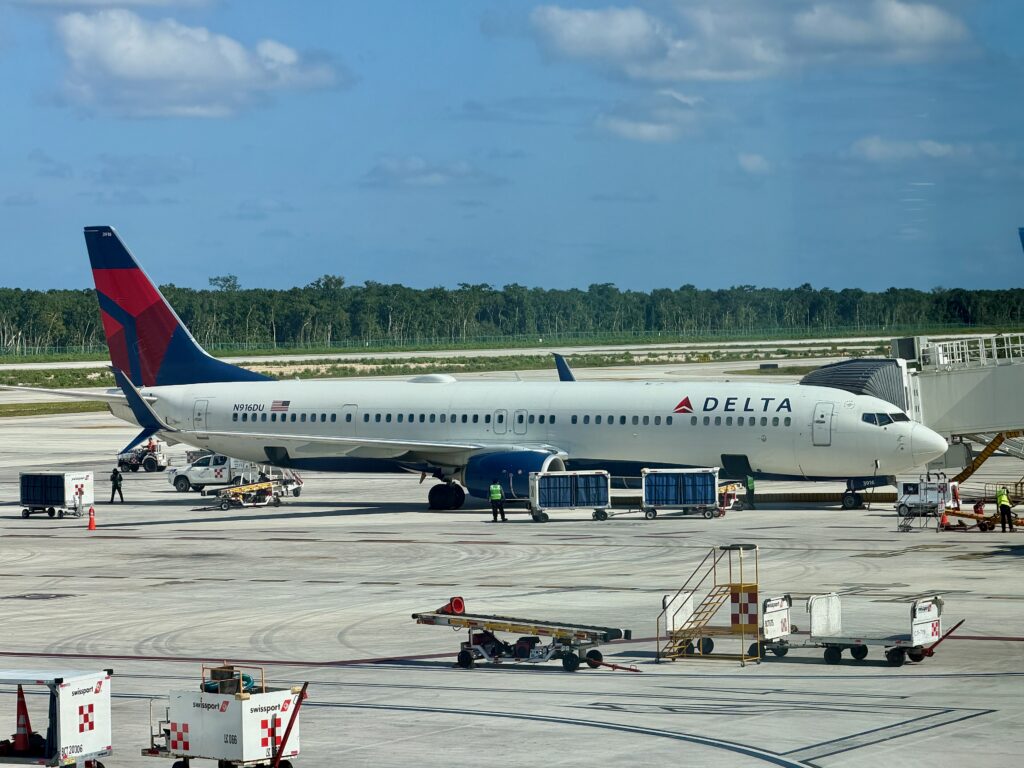
| General Characteristics | |
| Type | Narrow-body airliner, Civil and Commercial Aircraft |
|---|---|
| National Origin | United States |
| Manufacturer | Boeing |
| Variants | 737-900, 737-900ER, BBJ3 |
| Status | In service |
| First Flight | September 2006 |
| Introduction | April 2007 with Lion Air |
| Primary Users | United Airlines, Delta Air Lines, Alaska Airlines, Lion Air |
| Number Built | 505 |
| Developed From | Boeing 737-900 |
| Capacity & Dimensions | |
| Cockpit Crew | Two |
| Typical Seating | 178 (two-class) |
| Max Seating | 220 (exit limit) |
| Overall Length | 42.11 m (138 ft 2 in) |
| Wing Span | 35.79 m (117 ft 5 in) with winglets |
| Wing Sweep | 25° |
| Wing Area | 124.6 m² (1,341 sq ft) |
| Overall Height | 12.55 m (41 ft 2 in) |
| Weights, Powerplant & Performance | |
| MTOW | 85,139 kg (187,700 lb) |
| OEW | 44,677 kg (98,495 lb) |
| Fuel Capacity | 29,660 L (7,837 US gal) with two auxiliary tanks |
| Engines | 2 × CFM International CFM56-7B |
| Max. Thrust | 110–120 kN (24,000–27,000 lbf) each |
| Typical Cruise Speed | Mach 0.785 |
| Max. Speed | Mach 0.82 (MMO) |
| Range | 5,460 km (2,950 nmi) with 178 passengers |
| Takeoff Distance | 3,000 m (9,800 ft) at MTOW |
| Service Ceiling | 12,500 m (41,000 ft) |
The Boeing 737-900ER is the longest and heaviest member of the 737 Next Generation family. Boeing launched it in July 2005, the first aircraft flew in September 2006, and the launch customer, Indonesia’s Lion Air, received its first aircraft on 27 April 2007. Boeing delivered 505 of them before the 737 MAX took over the production line.
Why the 737-900ER Was Needed
The original 737-900 of 2001 had the same length as the 900ER but the same emergency exits as the shorter 737-800. Because the number of seats is limited by the exits, the -900 could carry no more passengers than an -800, so few airlines bought it. Boeing fixed this in the 900ER with an extra pair of exit doors behind the wing and a flat rear pressure bulkhead, which freed space at the back of the cabin. Maximum seating rose to 220. Airlines that seat 189 or fewer passengers can have the extra doors deactivated.
The “ER” stands for Extended Range. Two optional auxiliary fuel tanks in the cargo hold raise total fuel to 29,660 litres, and the structure and landing gear were strengthened for a maximum take-off weight of 85,139 kg (187,700 lb).
Design
The 737-900ER is 42.11 m (138 ft 2 in) long, 2.6 m longer than the Boeing 737-800. It keeps the Next Generation wing of 124.6 m² with 25 degrees of sweep, and most aircraft have blended winglets or split-scimitar winglets. The two-crew flight deck uses six large displays and is common to all 737NG models, so airlines can fly the -700, -800 and -900ER with the same pilots. Because the fuselage is long and the landing gear short, the aircraft has a tail skid to protect the rear fuselage if the nose is raised too far on take-off.
Engines and Performance
Two CFM International CFM56-7B engines, rated between about 110 and 120 kN (24,000 to 27,000 lbf), power the aircraft. With 178 passengers in two classes, Boeing quotes a range of about 5,460 km (2,950 nmi). The long body makes take-off runs longer than on the -800: at maximum weight the aircraft needs about 3,000 m (9,800 ft). The 737-900ER therefore works best on busy domestic trunk routes rather than from short or high runways.
A 757 Replacement?
Large US airlines used the 737-900ER to replace part of their Boeing 757 fleets on domestic routes. United, Delta and Alaska Airlines became the biggest operators. It cannot match the Boeing 757-200 on range or runway performance, but it burns noticeably less fuel per seat and shares parts and pilots with the rest of the 737 fleet. Boeing later developed the 737 MAX 9 and MAX 10 as its successors.
Cabin and Passenger Experience
The 737-900ER has the same 3.54 m-wide cabin as other 737s, with six seats across in a 3-3 layout. Many aircraft were delivered with the Boeing Sky Interior, introduced in 2010, which brought LED mood lighting, sculpted sidewalls and larger pivoting overhead bins. Because the fuselage is long, the aircraft can carry a large first or business class and still keep about 150 economy seats, a layout that suited US airlines on long domestic routes such as New York to Los Angeles. The extra doors behind the wing also speed up boarding and disembarking on busy hub flights.
Frequently Asked Questions
How many seats does a Boeing 737-900ER have? About 178 in two classes, with a maximum of 220.
What is the difference between the 737-900 and 737-900ER? The 900ER has an extra pair of exit doors, a flat rear bulkhead, more fuel and a higher take-off weight.
What is the range of the 737-900ER? About 5,460 km (2,950 nmi) with 178 passengers.
Start the discussion
Commenting on this aircraft: Boeing 737-900ER (Next Generation)