







| General Characteristics | |
| Type | Civil and Commercial Aircraft |
|---|---|
| National Origin | United States |
| Manufacturer | Boeing |
| Variants | Boeing Business Jet , Boeing C-40 Clipper , Boeing E-7 Wedgetail , Boeing P-8 Poseidon |
| Status | In service, military variants in production |
| First Flight | February 9, 1997; 29 years ago (1997-02-09) |
| Introduction | December 17, 1997 with Southwest Airlines |
| Primary Users | Southwest Airlines Ryanair , United Airlines , American Airlines |
| Number Built | 7,120 as of January 2026 |
| Developed From | Boeing 737 Classic |
| Capacity & Dimensions | |
| Cockpit Crew | Two |
| Typical Seating | 162 |
| Max Seating | 184 |
| Overall Length | 129 ft 6 in (39.47 m) |
| Wing Span | 112 ft 7 in (34.32 m) |
| Wing Sweep | 25.02° |
| Wing Area | 1,341 sq ft (124.60 m²) |
| Overall Height | 41 ft 2 in (12.55 m) |
| Weights, Powerplant & Performance | |
| MTOW | 174,200 lb (79,016 kg) |
| OEW | 91,300 lb (41,413 kg) |
| Fuel Capacity | 6,875 US gal (26,022 L) |
| Engines | 2 x CFM56-7B24/26/27 |
| Max. Thrust | 24,000–27,300 lbf (110–121 kN) each |
| Typical Cruise Speed | 838 km/h (453 kn) at altitude |
| Max. Speed | 876 km/h (473 kn) (Mach 0.82) |
| Range | 2,935 nmi (5,436 km; 3,378 mi) |
| Takeoff Distance | 7,598 ft (2,316 m) |
| Service Ceiling | 41,000 ft (12,500 m) |
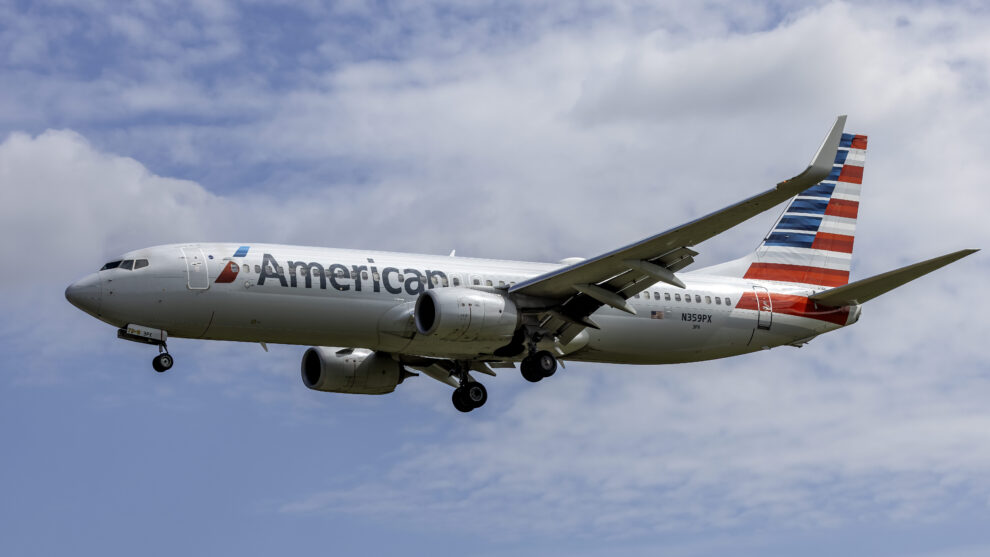
The Boeing 737-800 is one of the most successful narrow-body jetliners in modern commercial aviation. It belongs to the Boeing 737 Next Generation family, also known as the 737 NG series, and was developed to offer more capacity, better range and improved operating efficiency compared with earlier 737 Classic models.
The aircraft became popular because it gives airlines a strong balance between passenger capacity, route flexibility and operating cost. In a typical two-class layout, it can carry around 160 to 180 passengers. In a high-density single-class configuration, the maximum seating capacity is 189 passengers. Therefore, the Boeing 737-800 became a preferred choice for scheduled airlines, charter operators and low-cost carriers.
Although newer aircraft such as the 737 MAX 8 now offer more advanced fuel efficiency, this NG model remains widely used around the world. As a result, it continues to be one of the most recognizable aircraft at major airports, regional airports and holiday destinations.
Boeing 737-800 General Characteristics
| Feature | Specification |
|---|---|
| Aircraft Type | Narrow-body twin-engine jet airliner |
| Aircraft Family | Boeing 737 Next Generation |
| Manufacturer | Boeing Commercial Airplanes |
| National Origin | United States |
| Status | In service |
| First Flight | July 31, 1997 |
| First Delivery | 1998 |
| ICAO Code | B738 |
| Main Role | Short- and medium-haul passenger aircraft |
The Boeing 737-800 was designed as a stretched member of the 737 NG family. Compared with the smaller 737-700, it offers more seating capacity while keeping the single-aisle layout and airport compatibility that made the 737 family popular with airlines.
Capacity and Cabin Layout
The aircraft was built for busy routes where airlines needed more seats than smaller narrow-body aircraft could provide. Therefore, it became especially useful on domestic services, regional international flights and leisure routes.
| Feature | Specification |
|---|---|
| Cockpit Crew | Two pilots |
| Typical Seating | 160–180 passengers |
| Maximum Seating | 189 passengers |
| Cabin Layout | Single-aisle narrow-body cabin |
| Common Use | Domestic, regional and leisure routes |
Cabin layout depends on the airline. Some operators use a two-class cabin with business and economy seating, while others use a single-class layout to maximize capacity. In addition, the 189-seat limit made the aircraft highly attractive for low-cost airline operations.
Dimensions of the Boeing 737-800
| Feature | Specification |
|---|---|
| Overall Length | 129 ft 6 in / 39.5 m |
| Wingspan | 117 ft 5 in / 35.8 m |
| Overall Height | About 41 ft 2 in / 12.5 m |
| Fuselage Type | Stretched narrow-body design |
The aircraft’s fuselage is longer than the 737-700, which allows more passengers to be carried on each flight. However, it still remains compact enough for efficient airport operations. Because of this, airlines can use the aircraft on many different route types without needing wide-body infrastructure.
Engines and Performance
The aircraft is powered by two CFM International CFM56-7B turbofan engines. These engines are an important part of the 737 NG program because they provide reliable performance, efficient operation and strong global maintenance support.
| Feature | Specification |
|---|---|
| Engines | 2 × CFM International CFM56-7B turbofans |
| Engine Type | High-bypass turbofan |
| Maximum Takeoff Weight | 174,200 lb / 79,010 kg |
| Range | Up to 2,800 nautical miles / 5,190 km |
| Cruise Speed | About Mach 0.785 |
| Service Ceiling | About 41,000 ft |
The performance figures make the Boeing 737-800 suitable for a wide range of airline missions. It can operate short domestic sectors, medium-haul international routes and high-frequency city pairs. Meanwhile, its range gives airlines enough flexibility for many regional networks.
Why Airlines Use This 737 NG Model
Airlines selected this model because it offers a practical combination of capacity, reliability and operating efficiency. It carries more passengers than the 737-700, yet it remains easier to operate than larger aircraft on many short- and medium-haul routes.
In addition, the aircraft fits well into existing 737 fleets. Airlines already operating Boeing 737 aircraft can benefit from fleet commonality, familiar procedures and established maintenance support. Consequently, this reduces operational complexity and helps airlines control costs.
Another major advantage is flexibility. The aircraft can be used for morning business routes, holiday flights, domestic trunk routes and regional international services. This versatility helped make it one of the most important narrow-body aircraft of its generation.
Operational Role
In daily service, the aircraft is commonly used by network airlines, charter operators and low-cost carriers. It works well on routes where demand is too high for smaller narrow-body aircraft but not high enough for a wide-body jet.
The type also played a major role in the growth of low-cost airline operations. With a maximum capacity of 189 passengers, it helped operators reduce seat-mile costs and increase aircraft utilization. As a result, it became closely associated with efficient short-haul airline service.
Although production has ended, many examples remain active. Some continue to carry passengers, while others are being converted for cargo operations. This shows the strength of the original design and its continuing value in aviation.
Comparison Within the 737 Next Generation Family
Within the 737 Next Generation family, the Boeing 737-800 sits between the smaller 737-700 and the longer 737-900. The 737-700 offers fewer seats and slightly different route flexibility. On the other hand, the 737-900 provides more capacity but may require different cabin and route planning.
This middle position helped the aircraft become the most balanced member of the NG family for many airlines. It offered enough seats for busy routes, enough range for most medium-haul missions and enough flexibility for different airline networks.
Frequently Asked Questions
Is the Boeing 737-800 part of the 737 MAX family?
No. It is part of the Boeing 737 Next Generation family. The 737 MAX 8 is a newer aircraft from the later MAX generation.
How many passengers can it carry?
It typically carries around 160 to 180 passengers in a two-class layout. In a high-density single-class layout, it can carry up to 189 passengers.
What engines does it use?
It uses two CFM International CFM56-7B turbofan engines.
What is its range?
The aircraft has a range of up to about 2,800 nautical miles, depending on payload, configuration and operating conditions.
Is it still in service?
Yes. It remains in service with many airlines worldwide and continues to be one of the most common narrow-body aircraft in commercial aviation.
Boeing 737-800 Summary
The Boeing 737-800 is a key member of the 737 Next Generation family. With its 189-passenger maximum capacity, CFM56-7B engines, useful range and efficient narrow-body design, it became one of the most important commercial aircraft of its generation. Even today, it remains a major part of global airline operations.
Did you know AviationStream.com has a YouTube channel? Check out TheAeroGraphyOfficial and subscribe to watch fun, highly engaging aviation Shorts!