Boeing 747-200B
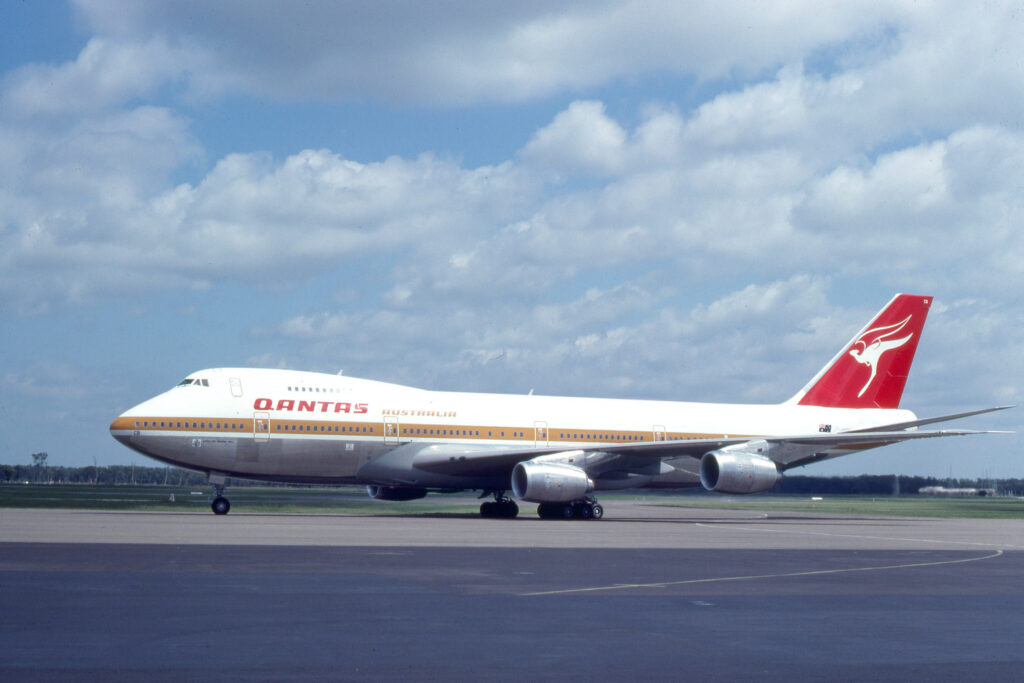
The Boeing 747-200B was the long-range passenger version of the classic 747. It first flew on 11 October 1970, entered service with KLM in 1971 and was the first 747 offered with engines from all three major manufacturers.
| General Characteristics | |
| Type | Wide-body jet airliner, Civil and Commercial Aircraft |
|---|---|
| National Origin | United States |
| Manufacturer | Boeing |
| Variants | 747-200B, 747-200C, 747-200F, 747-200M; VC-25A and E-4 military derivatives |
| Status | Out of production (last delivered 1991); retired from passenger service |
| First Flight | 11 October 1970 |
| Introduction | February 1971 with KLM (first delivery 16 January 1971) |
| Primary Users | KLM (launch customer), Northwest Airlines, Qantas, British Airways (historical) |
| Number Built | 393 747-200s, of which 225 were 747-200B (including the two VC-25A) |
| Developed From | Boeing 747-100 |
| Capacity & Dimensions | |
| Cockpit Crew | Three (two pilots and a flight engineer) |
| Typical Seating | 366 (Boeing typical layout) |
| Overall Length | 70.66 m (231 ft 10 in) |
| Wing Span | 59.64 m (195 ft 8 in) |
| Wing Sweep | 37.5° |
| Wing Area | 511 m² (5,500 sq ft) |
| Overall Height | 19.33 m (63 ft 5 in) |
| Weights, Powerplant & Performance | |
| MTOW | 351.5–377.8 t (775,000–833,000 lb) |
| OEW | 170.6–176.0 t (376,170–388,010 lb) |
| Fuel Capacity | 196,970–198,390 L (52,035–52,410 US gal) |
| Engines | 4 × Pratt & Whitney JT9D, General Electric CF6-50 or Rolls-Royce RB211-524 turbofans |
| Max. Thrust | 206–243.5 kN (46,300–54,750 lbf) each |
| Typical Cruise Speed | Mach 0.84 |
| Range | 12,150 km (6,560 nmi) with 366 passengers and baggage |
| Takeoff Distance | 3,320 m (10,900 ft) |
The Boeing 747-200B is the long-range passenger version of the classic Boeing 747. Outwardly it looks almost exactly like the 747-100, but more powerful engines, more fuel and a much higher take-off weight let it fly about 40% further with a full load of passengers. It first flew on 11 October 1970, and KLM received the first one on 16 January 1971. For more than a decade the 747-200B was the backbone of long-haul fleets around the world.
Why Boeing Built It
The first 747-100s, with the early JT9D-3A engines, carried plenty of passengers but could not fly them far enough for the longest routes. Airlines wanted to cross the Pacific or fly from Europe to Asia with full cabins. Boeing answered with the 747-200 series, strengthening the structure, adding fuel and raising the maximum take-off weight. Its design was also influenced by the KSSU group of European airlines (KLM, SAS, Swissair and UTA), which bought aircraft with common specifications.
The prototype 747-200B was an aircraft built for Northwest Orient. After certification it entered service with KLM, which flew its first revenue flight from Amsterdam to New York in February 1971.
Engines: a Choice for the First Time
The 747-200 was the first 747 offered with engines from all three major makers. It was launched with Pratt & Whitney JT9D-7 engines, and improved JT9D versions followed during production. General Electric certified its CF6-50 on the type, and the first CF6-powered aircraft went to KLM in 1975. Rolls-Royce followed with the RB211-524, and British Airways received its first RB211-powered 747 in June 1977. Depending on the engine, each produces between 206 and 243.5 kN (46,300 and 54,750 lbf) of thrust.
Performance
The maximum take-off weight rose to between 351.5 and 377.8 t (775,000 and 833,000 lb), and the fuel capacity to about 197,000 to 198,000 litres (52,000 US gal). Boeing quotes a range of 12,150 km (6,560 nmi) with 366 passengers and their baggage, compared with 8,560 km (4,620 nmi) for the 747-100. Some 747-200Bs were given extra fuel tanks; Japan Airlines used two such aircraft for non-stop flights between Tokyo and New York in the 1980s. At maximum weight the aircraft needs about 3,320 m (10,900 ft) of runway for take-off.
The flight deck still has three crew members: two pilots and a flight engineer. Most 747-200Bs were built with ten windows on each side of the upper deck, a layout that became standard from the 147th 747 built, an aircraft for Qantas.
The 747-200 Family
The 747-200 was built in four commercial versions. Of the 393 delivered by the end of production in 1991, 225 were 747-200B passenger aircraft, 73 were -200F freighters with a nose cargo door, 13 were -200C convertibles and 78 were -200M combis that carried passengers in the front and freight at the rear of the main deck. Military derivatives include the two VC-25A aircraft used as Air Force One and the E-4 airborne command post. The 747-200 was also the basis for the stretched upper deck that became standard on the 747-300.
Retirement
From the 1990s the two-crew 747-400 replaced the 747-200B in most fleets, because it needed no flight engineer and burned less fuel. Many 747-200Bs were converted to freighters and kept flying for years with cargo airlines. Iran Air retired the last 747-200 in passenger service in May 2016, 36 years after it was delivered. The two VC-25As remain in US Air Force service while their replacements, based on the 747-8, are prepared.
Start the discussion
Commenting on this aircraft: Boeing 747-200B