Tabletop Runway Disaster: Air India Express Flight 812 Crash
Air India Express Flight 812 Crash
The catastrophic overrun of Air India Express Flight 812 at Mangalore International Airport remains one of the most significant case studies in modern aviation safety regarding pilot fatigue, spatial disorientation, and the unique challenges of tabletop runways.
Operating as a scheduled international passenger service from Dubai International Airport (DXB) to Mangalore International Airport (IXE), the Boeing 737-800 overshot the runway during landing, plunged down a steep hillside, and burst into flames. The accident resulted in 158 fatalities, sparking a global conversation about cockpit crew rest requirements and stabilized approach parameters.
Flight Profile, Aircraft Data, and Weather Matrix
On May 22, 2010, Air India Express Flight 812 was utilizing a Boeing 737-800, a high-efficiency narrow-body commercial airliner with an excellent structural safety history.
- The Flight Crew: The flight deck was commanded by Captain Zlatko Glušica, a seasoned pilot with over 10,000 flight hours, alongside First Officer Harbinder Singh Ahluwalia.
- The Environment: Weather conditions at Mangalore were stable, with good visibility, calm winds, and a dry runway surface. There were no mechanical anomalies reported with the aircraft prior to the landing phase.
Inside the Cockpit: Sleep Apnea and Spatial Disorientation
Data recovered from the Cockpit Voice Recorder (CVR) and the Flight Data Recorder (FDR) exposed a severe human factors crisis during the cruise portion of the flight.
The CVR captured prolonged audio of the captain snoring deeply for nearly 110 minutes of the short flight. This extended sleep during a routine short-haul route strongly indicated sleep debt or undiagnosed sleep apnea. When the captain awoke shortly before initiating the descent into Mangalore, he suffered from profound sleep inertia—a temporary state of impaired cognitive performance and spatial disorientation that occurs immediately after waking.
The Descent: Ignoring the First Officer’s Warnings
Mangalore International Airport is famous for its tabletop runway, an architectural design where the runway is built on top of a plateau or hill with steep drops at either end. These runways leave zero margin for error; if an aircraft fails to stop, it drops off a cliff rather than skidding into a flat runway safety area.
Despite the first officer explicitly shouting for a go-around and the automated Ground Proximity Warning System (GPWS) flashing warning indicators, the captain attempted to force the aircraft down. Due to the excessive altitude and speed, the Boeing 737 touched down past the halfway point of the runway, leaving insufficient stopping distance.
The Impact and Emergency Response
Realizing the aircraft would not stop, the captain suddenly attempted to execute a desperate, late go-around by applying full thrust. However, the aircraft had already struck the localizer antenna at the end of the runway and crashed through the boundary fence.
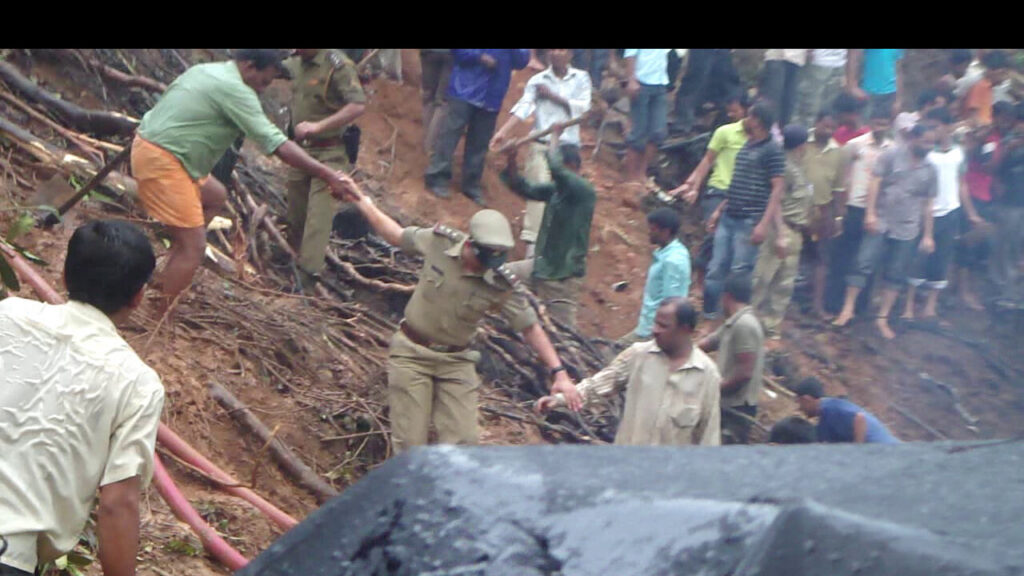
The airframe plummeted down a 300-foot gorge, breaking apart on impact. The rupture of the fuel tanks caused an immediate, intense fire. Because of the rugged, steep terrain of the ravine, emergency rescue vehicles faced extreme difficulty accessing the wreckage. Out of the 166 passengers and crew members on board, only 8 passengers survived the initial impact and fire.
Industry Takeaways: How Flight 812 Changed Aviation Safety
The final report issued by the Indian Ministry of Civil Aviation and international safety boards led to immediate, mandatory reforms across commercial aviation:
- Stricter Controlled Napping Policies: The accident forced airlines to completely overhaul their fatigue risk management systems (FRMS), introducing rigid rules regarding when pilots can sleep during a flight and ensuring they have sufficient time to shake off sleep inertia before landing.
- Tabletop Runway Safety Upgrades: Regulatory bodies mandated the installation of Engineered Material Arrestor Systems (EMAS)—lightweight concrete blocks placed at the end of runways that intentionally collapse under the weight of an aircraft, safely decelerating an overrunning plane.
- Enforcing Cockpit Authority: Training programs for Crew Resource Management (CRM) were rewritten to empower first officers to take physical control of an aircraft if a captain completely ignores safety limits or becomes behaviorally incapacitated.
Conclusion
The loss of Air India Express Flight 812 was not an engineering failure, but a classic tragedy of human error compounded by environmental layout. The structural safety of modern commercial flight is only as secure as the crew’s adherence to stable landing protocols, making this disaster a permanent reminder of why a go-around must always be executed when an approach turns unstable.
Related Historical Aviation Accidents Events
More significant events from aviation history
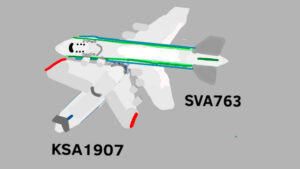
1996 Charkhi Dadri Collision: The Deadliest Mid-Air Crash
🗓 12 November, 1996 📍 Charkhi Dadri, Haryana, India, 28°33′38″N 76°18′15″E / 28.56056°N 76.30417°E / 28.56056; 76.30417 ★★★★☆ Read full story →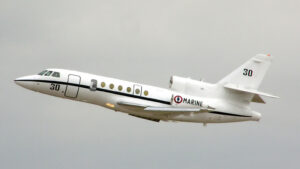
Assassination of Juvénal Habyarimana and Cyprien Ntaryamira: The 1994 Aircraft Shootdown in Rwanda
🗓 6 April, 1994 📍 Presidential Palace gardens, near Kigali International Airport, Kigali, Rwanda, 1°58′32″S 30°10′26″E / 1.9756°S 30.1739°E / -1.9756; 30.1739 ★★★★☆ Read full story →
United Airlines Flight 736: The Crash That Changed Aviation
🗓 21 April, 1958 📍 Clark County, Nevada, United States ★★★★☆ Read full story →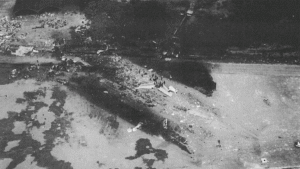
China Airlines Flight 140: The 1994 Airbus A300 Crash in Nagoya
🗓 26 April, 1994 📍 Nagoya Airport, Nagoya, Japan, 35°14′43″N 136°55′56″E / 35.2453°N 136.9323°E / 35.2453; 136.9323 ★★★☆☆ Read full story →