1996 Charkhi Dadri Collision: The Deadliest Mid-Air Crash
1996 Charkhi Dadri collision is the deadliest mid-air crash in history. Discover how this tragedy transformed global flight safety
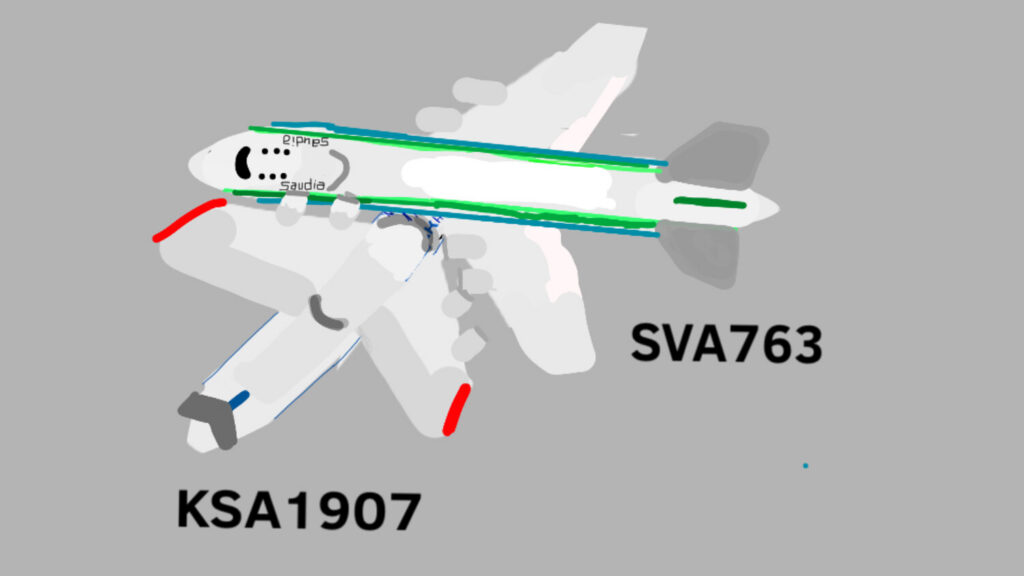
Initially, the Charkhi Dadri collision shocked the entire world on 12 November 1996. Specifically, Saudia Flight 763 and Kazakhstan Airlines Flight 1907 collided mid-air. Consequently, this tragic event occurred about 100 km west of Delhi. Ultimately, the crash killed all 349 people on board both massive planes. Indeed, this disaster remains the world’s deadliest mid-air collision in history. Furthermore, investigators revealed that the Kazakh crew failed to maintain their correct altitude. Basically, poor English language skills caused inadequate interpretation of air traffic control directions. In addition, the Indian airport lacked a modern secondary surveillance radar. Therefore, the official report suggested urgent technical enhancements to prevent future disasters.
Investigation of the 1996 Aviation Disaster
First, the Lahoti Commission thoroughly investigated the 1996 aviation disaster. Specifically, they took official depositions from air traffic controllers and both airlines. Next, expert investigators decoded the flight data recorders (FDR) in Moscow and England. Ultimately, the investigation found the primary cause of the Charkhi Dadri collision. Basically, the Kazakhstan Airlines pilot failed to follow strict ATC instructions.
Consequently, the commission determined the Kazakhstani crew caused the accident. Specifically, FDR evidence showed they descended far below their assigned 15,000 feet. Indeed, they dropped to 14,000 feet and even lower. Therefore, the report ascribed this serious breach to poor English skills. Basically, the pilots relied entirely on Radio Operator Repp for communications. Furthermore, the First Officer might have misunderstood the final radio call. As a result, they wrongly assumed the Saudi 747’s altitude was their own. Additionally, the Kazakhstan Airlines crew lacked enough foot-marked altimeters. Ultimately, this severely limited their overall situational awareness.
The Crew’s Role in the Deadliest Mid-Air Crash
However, Kazakh officials initially blamed severe cloud turbulence for the unauthorized descent. Nevertheless, investigators quickly disproved this misleading theory about the deadliest mid-air crash. Specifically, meteorological reports and eyewitness accounts from a US military crew contradicted the claim. Furthermore, conclusive analysis showed the Kazakh flight data record relied on faulty equipment. Therefore, turbulence did not cause the crash.
Additionally, the large five-person crew struggled to coordinate their actions effectively. Suddenly, just a few seconds before impact, Repp realized their critical altitude error. Immediately, he brought it to the pilots’ attention. Consequently, the captain ordered full throttle to climb. Tragically, the plane climbed only to hit the oncoming Saudi Arabian jet. Ultimately, the Kazakhstani plane’s tail clipped the left wing of the Saudi 747 during the Charkhi Dadri collision.
Radar Flaws and the 1996 Aviation Disaster
Furthermore, the investigation team noted severe infrastructure flaws at the airport. Specifically, the Indira Gandhi International Airport lacked a secondary surveillance radar. Basically, their primary radar could not read critical aircraft altitude data. In addition, departures and arrivals shared a single civilian airspace corridor. Consequently, this dangerous setup heavily contributed to the 1996 aviation disaster. Moreover, neither plane possessed a traffic collision avoidance system (TCAS).
Due to the crash, the report recommended major changes to airspace infrastructure:
- First, the separation of inbound and outbound aircraft through ‘air corridors’.
- Second, the installation of secondary air-traffic control radars for altitude data.
- Third, mandatory collision avoidance equipment on commercial aircraft.
- Finally, the reduction of exclusive military airspace over New Delhi.
Aftermath of the Charkhi Dadri Collision
Subsequently, India made airborne collision avoidance systems mandatory for all aircraft. Indeed, this bold move set a worldwide precedent for aviation safety. Currently, local officials are planning a memorial park for the victims of the Charkhi Dadri collision. Specifically, the district administration wants to honor the 349 lives lost. However, they are still awaiting final government approval for the memorial project.
Documentaries Covering the Deadliest Mid-Air Crash
Finally, several networks produced detailed documentaries about the disaster. For example, a company based in Gurugram produced Head On! for the National Geographic Channel. Furthermore, the internationally distributed series Mayday covered the deadliest mid-air crash in their 2009 episode “Sight Unseen”.
Related Historical Aviation Accidents Events
More significant events from aviation history
Assassination of Juvénal Habyarimana and Cyprien Ntaryamira: The 1994 Aircraft Shootdown in Rwanda
🗓 6 April, 1994 📍 Presidential Palace gardens, near Kigali International Airport, Kigali, Rwanda, 1°58′32″S 30°10′26″E / 1.9756°S 30.1739°E / -1.9756; 30.1739 ★★★★☆ Read full story →
United Airlines Flight 736: The Crash That Changed Aviation
🗓 21 April, 1958 📍 Clark County, Nevada, United States ★★★★☆ Read full story →
The Tragedy of Lauda Air Flight 004
🗓 26 May, 1991 📍 Phu Toei National Park, Suphan Buri province, Thailand, 14°56′48″N 99°27′10″E / 14.94667°N 99.45278°E / 14.94667; 99.45278 ★★★☆☆ Read full story →
The Tragic Mystery of China Northern Airlines Flight 6136
🗓 7 May, 2002 📍 Bohai Bay, near Dalian Zhoushuizi International Airport, Dalian, Liaoning, China, 39°00′N 121°48′E / 39°N 121.8°E / 39; 121.8 ★★★☆☆ Read full story →