China Airlines Flight 140: The 1994 Airbus A300 Crash in Nagoya
On April 26, 1994, China Airlines Flight 140 crashed at Nagoya Airport after an autopilot-pilot conflict, killing 264 of 271 aboard.
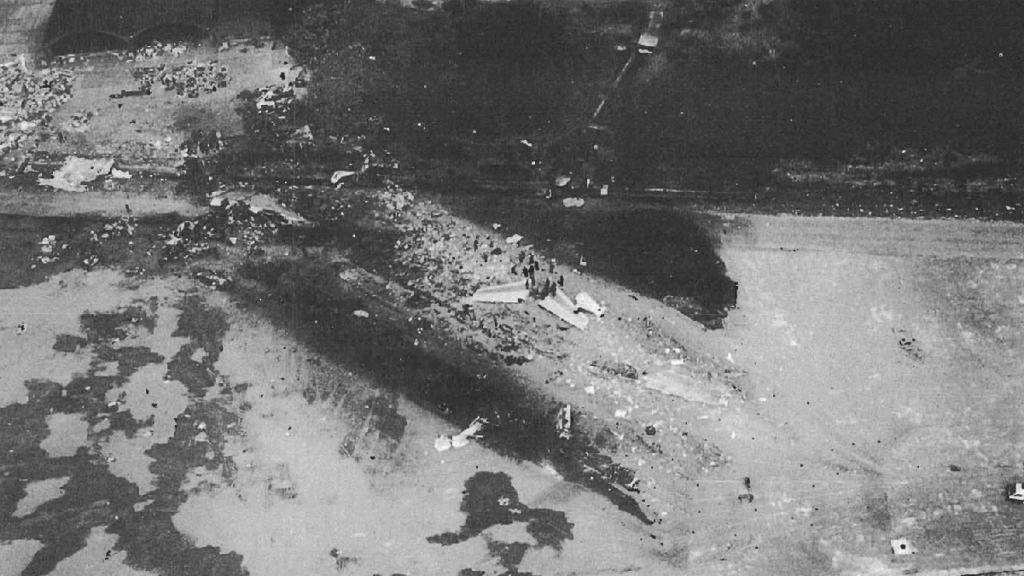
China Airlines Flight 140 was a fatal aviation accident that occurred on April 26, 1994, at Nagoya Airport in Japan. The Airbus A300B4-622R, registered B-1816, was flying a scheduled route from Taipei to Nagoya. As a result, the aircraft crashed on final approach, killing 264 of the 271 people on board. Today, it remains the second-deadliest aviation accident in Japanese history.
Overview of China Airlines Flight 140
China Airlines Flight 140 carried 256 passengers and 15 crew members. The captain sat in the right seat. Meanwhile, a first officer under supervision flew from the left seat. This was a common training setup at the time. As the aircraft descended toward Runway 34, conditions were calm and routine. No bad weather was reported that day.
What Went Wrong During the China Airlines Flight 140 Approach
The trouble began when the first officer accidentally triggered the autopilot’s go-around mode. The aircraft was still set up for landing at the time. Instead of disengaging the autopilot, the crew tried to continue the approach by hand. So, the first officer pushed the control column forward, fighting the autopilot’s climb command.
This set up a direct conflict between the pilot and the machine:
- The autopilot was still active. As a result, it read the forward pressure as resistance and began trimming the tail nose-up to compensate
- The crew’s forward push kept the nose low. Consequently, it hid how far the trim had shifted
- When the crew finally switched off the autopilot, the built-up nose-up trim took hold at once
The Crash at Nagoya Airport
Because the tail was trimmed so far nose-up, the elevators could no longer hold the nose down. The aircraft pitched up hard, climbed steeply, lost speed, and stalled close to the ground. It then hit the runway tail-first, broke apart, and caught fire. Only 7 of the 271 people aboard survived. Most sat toward the back of the cabin.
China Airlines Flight 140 Investigation Findings
Japan’s Aircraft Accident Investigation Commission studied the crash closely. In the end, they found the main cause was simple: the crew failed to notice and fix the autopilot’s nose-up trim in time. A few other factors also played a role:
- The crew did not fully understand how the A300’s autopilot behaved during a go-around
- The captain did not catch the trim problem soon enough
- Cockpit teamwork broke down during the final, critical seconds of the approach
In short, China Airlines Flight 140 became a key case study in human-automation conflict. Because of this crash, airlines changed how they train pilots to spot and resolve confusion between manual and automatic flight controls. That lesson still shapes fly-by-wire training programs today.
Did you know AviationStream.com has a YouTube channel? Check out TheAeroGraphyOfficial and subscribe to watch fun, highly engaging aviation Shorts!
Related Historical Aviation Accidents Events
More significant events from aviation history
1996 Charkhi Dadri Collision: The Deadliest Mid-Air Crash
🗓 12 November, 1996 📍 Charkhi Dadri, Haryana, India, 28°33′38″N 76°18′15″E / 28.56056°N 76.30417°E / 28.56056; 76.30417 ★★★★☆ Read full story →
Assassination of Juvénal Habyarimana and Cyprien Ntaryamira: The 1994 Aircraft Shootdown in Rwanda
🗓 6 April, 1994 📍 Presidential Palace gardens, near Kigali International Airport, Kigali, Rwanda, 1°58′32″S 30°10′26″E / 1.9756°S 30.1739°E / -1.9756; 30.1739 ★★★★☆ Read full story →
United Airlines Flight 736: The Crash That Changed Aviation
🗓 21 April, 1958 📍 Clark County, Nevada, United States ★★★★☆ Read full story →
Death of Bessie Coleman
🗓 30 April, 1926 📍 Jacksonville, Florida ★★★☆☆ Read full story →