






Last Updated: 4 months ago
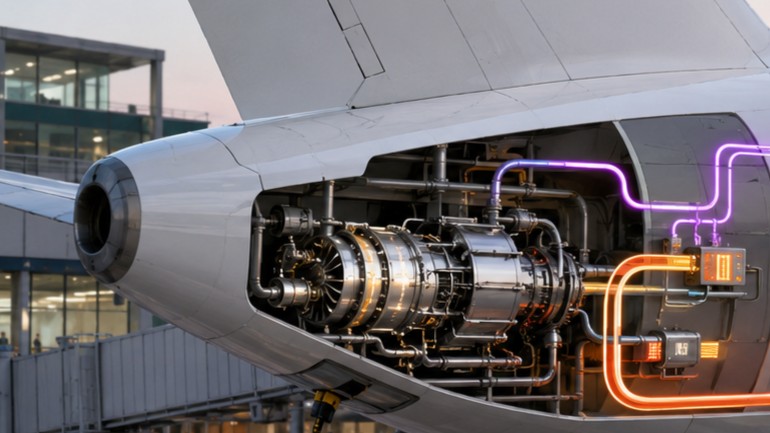
An auxiliary power unit is a small onboard power source that provides energy for aircraft systems when the main engines are not running or when additional support is needed. In aviation, people commonly use the abbreviation APU.
The unit does not provide thrust for normal flight. Instead, it supports electrical power, pneumatic power, air conditioning, and engine starting. On many commercial aircraft, the APU sits in the tail cone, although the exact location depends on aircraft design.
Passengers often hear the APU running while the aircraft is parked at the gate. It can power lights, avionics, cabin systems, and air conditioning before the main engines start. This makes it one of the most useful support systems on modern aircraft.
Auxiliary Power Unit Meaning in Aviation
In simple aviation terms, an auxiliary power unit is a compact gas turbine or engine-driven system that supplies power for non-propulsion functions. The word “auxiliary” means supporting or additional. This describes its job well because it supports the aircraft but does not act as the main propulsion system.
Large aircraft use APUs because they need power even when the main engines remain shut down. Ground crews, pilots, and maintenance teams may need electrical power during boarding, servicing, troubleshooting, or preflight preparation.
Without an APU, the aircraft may need external ground power or a ground air source. Airports can provide these services, but onboard power gives the aircraft more independence.
What an Aircraft APU Does
An aircraft APU can support several important functions. The exact capability depends on aircraft type, but the main tasks are similar.
The first major function is electrical power generation. Many aircraft APUs produce electrical power such as 115 volt AC at 400 Hz. Some systems also provide 28 volt DC through aircraft electrical architecture. This power can run lights, avionics, cockpit displays, cabin systems, and other equipment.
The second major function is pneumatic power. On many jet aircraft, the APU provides bleed air. This compressed air can support air conditioning and main engine starting.
The third function is operational independence. With a working APU, an aircraft can prepare for departure without depending fully on airport ground equipment.
APU Functions Table
| Function | What It Provides | Typical Use |
|---|---|---|
| Electrical power | AC or DC power for aircraft systems | Cockpit displays, lighting, avionics, cabin systems |
| Pneumatic power | Compressed bleed air | Air conditioning and main engine start |
| Ground operation support | Independent onboard power | Boarding, servicing, preflight preparation |
| Backup support | Limited electrical or pneumatic support, depending on aircraft design | Certain abnormal or in-flight situations |
| Maintenance support | System power without main engines running | Testing, troubleshooting, inspections |
This table shows why the APU is more than a simple generator. It supports several aircraft systems and helps keep ground operations efficient.
How the APU Helps Start the Engines
Many jet engines need compressed air to begin rotation before fuel and ignition can create self-sustaining operation. The APU can supply this air through the aircraft pneumatic system.
During engine start, bleed air from the APU drives the starter motor or air turbine starter. This rotates the engine compressor. Once the engine reaches the correct speed, fuel and ignition begin the combustion process. After the engine stabilizes, it can power its own systems through engine-driven generators and bleed air sources.
This process allows aircraft to start engines without relying on external air start equipment at every airport.
APU vs Ground Power Unit
An auxiliary power unit is installed inside the aircraft. A ground power unit, often called a GPU, is external airport equipment. Both can provide electrical power, but they are not the same system.
A GPU may power the aircraft while it sits at the gate. This can reduce fuel burn, noise, and emissions because the aircraft does not need to run its APU. However, the APU remains valuable when ground equipment is unavailable, during remote operations, or when pneumatic power is required for engine starting.
APU vs Jet Fuel Starter
A jet fuel starter, or JFS, is similar in purpose but different in design and use. A JFS directly supports engine starting and often appears on some military aircraft. It may use onboard compressed air or a small turbine system to help start the main engine.
An APU usually has a broader role. It can provide electrical power, pneumatic power, and system support. A JFS mainly focuses on starting the engine.
Why the APU Matters
The APU improves aircraft flexibility and efficiency during ground operations. It allows crews to power the aircraft, control cabin temperature, and start engines without always depending on external equipment.
It also supports passenger comfort. Before departure, the cabin may need heating, cooling, lighting, and ventilation. The APU helps provide these services while the main engines remain off.
For maintenance teams, the system is also important. Technicians can use onboard power to test aircraft systems without starting the main engines, which saves fuel and reduces noise.
Operational and Safety Considerations
Although the APU is useful, it also requires careful operation. It burns fuel, creates noise, produces exhaust heat, and needs regular maintenance. Airports may limit APU use at gates to reduce emissions and noise. In those cases, crews may use ground power and pre-conditioned air instead.
Pilots and maintenance teams follow aircraft-specific procedures for starting, loading, shutting down, and troubleshooting the APU. These procedures protect the equipment and ensure safe operation around the aircraft.
Why This Term Matters
Understanding the auxiliary power unit helps explain how aircraft remain powered before the main engines start. It also shows why modern airliners can operate independently at many airports.
The APU may sit out of sight, but it plays a major role in everyday aviation. It supports electrical systems, cabin comfort, engine starting, and maintenance tasks. For anyone learning aviation terminology, it is one of the key aircraft systems to understand.
Did you know AviationStream.com has a YouTube channel? Check out TheAeroGraphyOfficial and subscribe to watch fun, highly engaging aviation Shorts!