FAA Proposes Larger Class C Airspace Around West Palm Beach Airport
The FAA has proposed raising and widening the Class C airspace at West Palm Beach's DJT airport, the former PBI, to reduce midair collision risk.
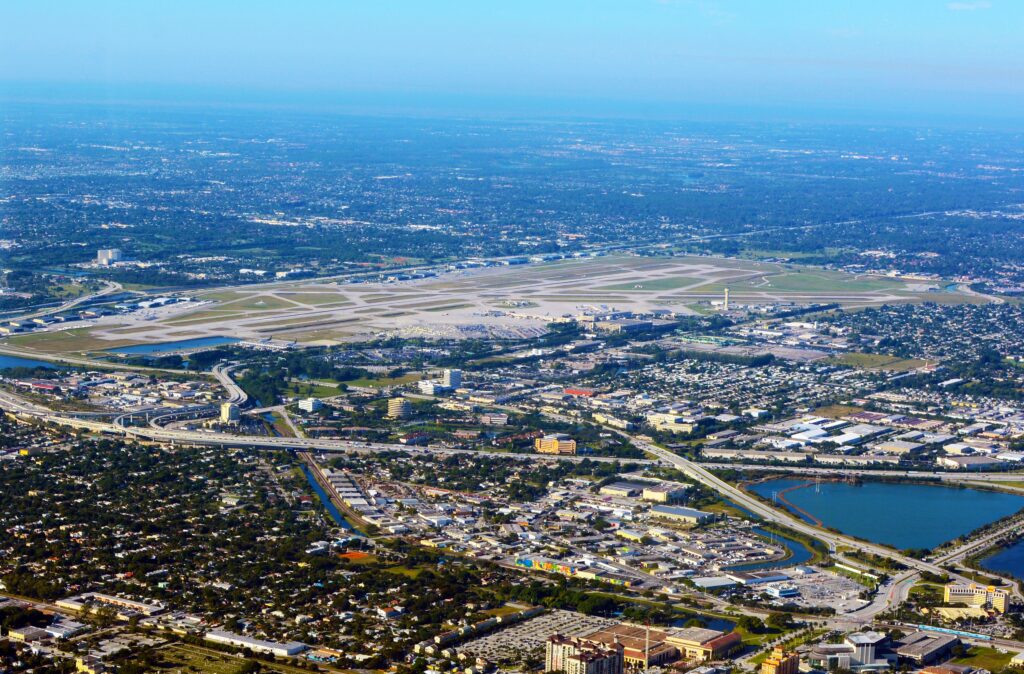
The US Federal Aviation Administration has proposed a larger Class C airspace around President Donald J. Trump International Airport (DJT) in West Palm Beach, Florida, the airport formerly known as Palm Beach International. In a notice of proposed rulemaking published in the Federal Register on 13 November 2026, the FAA says the change would “reduce the potential for midair collision” and help it manage traffic more efficiently. The public can comment until 12 January 2027.
What would change
Class C airspace surrounds busy airports with a control tower and radar approach control. Pilots must establish two-way radio contact with air traffic control before entering it, and aircraft need a transponder and ADS-B Out. Today, the airspace at DJT extends up to 4,000 ft. Under the proposal:
- The ceiling of all areas would rise from 4,000 ft to 5,000 ft above mean sea level.
- The inner core, which starts at the surface, would grow from a 5-mile to a 6-mile radius to the west, north and east, while staying clear of nearby Palm Beach County Park Airport (Lantana).
- Two new areas, D and E, would extend the Class C west of the airport along instrument arrival and departure routes, out to 22 nautical miles in places, with floors of 1,600 ft and 2,600 ft.
Why the FAA wants it
The FAA says the airspace around DJT is “complex and crowded”. Its controllers handle traffic for six towered airports and 19 non-towered satellite airfields nearby, and general aviation activity at airports such as Lantana, Boca Raton and North Palm Beach County has grown. Operations at DJT reached a record of 20,500 in March 2023, up from 13,900 in March 2020, which led to an FAA staff study in August 2023 that found the existing Class C needed to be changed. By adding Class C airspace along the instrument routes, the FAA wants airliners and business jets to be separated from VFR traffic that is not talking to controllers.
What it means for pilots
For pilots of light aircraft flying VFR in South Florida, the larger area means more airspace where they must call ATC or route around it, and aircraft without ADS-B Out would have to stay clear. The proposal is separate from another FAA proposal, published in September 2026, for special air traffic rules near DJT for security reasons; that rulemaking has its own docket. The FAA airspace change follows the renaming of the airport, which the FAA reflected in its airspace rules in May 2026. Read how a single outage can halt traffic across the US in our report on the FAA’s nationwide ground stop.
How to comment
Comments can be submitted through regulations.gov under Docket No. FAA-2026-5281 (Airspace Docket No. 26-AWA-1) until 12 January 2027. The FAA will consider them before deciding on a final rule.
Start the discussion
Commenting on this story: FAA Proposes Larger Class C Airspace Around West Palm Beach Airport