Report Finds Safety Gaps Remain at Reagan National After 2025 Collision
A National Academies report on Reagan National Airport says the FAA and Army missed recurring collision risks and makes 25 recommendations to reduce them.
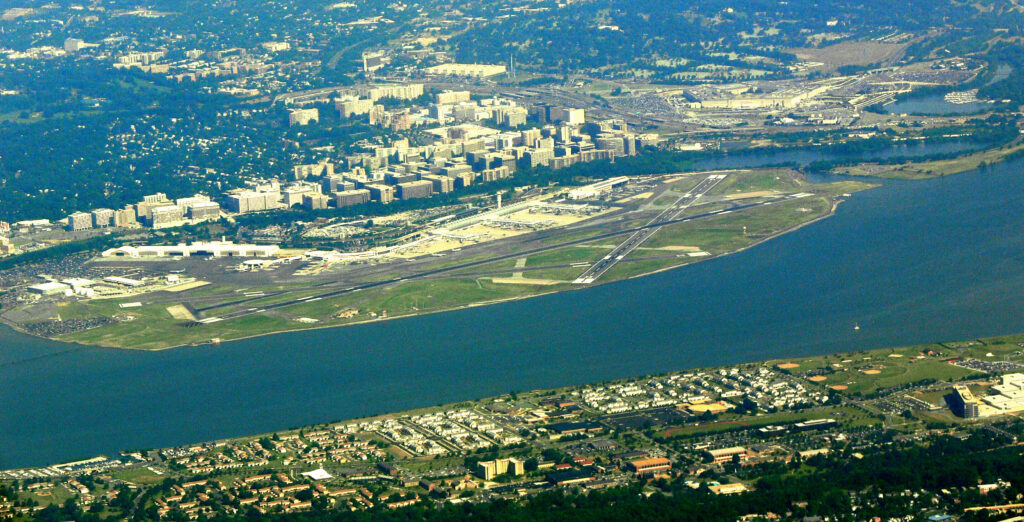
Safety weaknesses exposed by the January 2025 midair collision near Ronald Reagan Washington National Airport (DCA) have still not been fully resolved, according to a report published on 18 November 2026 by the US National Academies of Sciences, Engineering, and Medicine. The Reagan National safety report, requested by Congress, says the Federal Aviation Administration (FAA) and the US Army failed to recognise and deal with recurring collision risks before the accident, and it makes 25 recommendations on airport operations, military flying and protection against midair collisions.
Background
On 29 January 2025, American Eagle Flight 5342, a CRJ700, collided with a US Army UH-60 Black Hawk helicopter on approach to DCA, and all 67 people on both aircraft were killed. The National Transportation Safety Board (NTSB) later found systemic failures at both the FAA and the Army. You can read the full story in our Potomac River collision entry.
The new report, titled Aviation Safety in the National Capital Region, Report 1: Managing Risk in the Reagan National Airport Airspace, builds on the NTSB’s investigation. “The collision revealed weaknesses in how aviation safety risks were identified, assessed, and managed both prior to and since the accident,” said James P. Bagian, who chaired the study committee.
What the committee found
- The FAA did not consistently use the safety information it already had to spot emerging hazards, or check whether its corrective actions worked.
- The Army’s preflight risk assessment for the accident helicopter did not explicitly list a midair collision with civilian aircraft as a hazard.
- Changes in airline schedules, aircraft types and traffic patterns have made operations at DCA more complex, increasing the workload for pilots and controllers.
Key recommendations
- Capacity: Congress should require the FAA to carry out, and publish, a full safety and capacity assessment before allowing more flights at DCA. The FAA should also spread flights more evenly through each hour to avoid bursts of traffic.
- Military flying: standardised training and recurring proficiency checks for helicopter crews flying in the Washington area, and a review of whether routine training flights could be flown at another time, on another route, elsewhere or in a simulator.
- Collision protection: faster standards and certification for helicopter collision-avoidance systems, followed by a requirement to fit them, starting with helicopters that fly near airliners. ADS-B In traffic displays and alerts should be prioritised for aircraft without TCAS guidance, or flying where that guidance is not available.
What has changed since the accident
After the collision, the FAA restricted helicopter traffic around the airport and cut DCA’s hourly arrival limit from 36 to 26. It later raised the limit to 30, saying the increase could be handled safely, and added staff to the control tower. In May 2026 the FAA said it had suspended visual separation between helicopters and aeroplanes near busy airports. The committee said all of these measures must be monitored to show whether they actually reduce risk.
What comes next
The report comes as Congress negotiates aviation safety legislation that includes a requirement for ADS-B In, described in our report on the preliminary ADS-B In deal. A second National Academies report will look at earlier close calls involving military aircraft, coordination between civil and military authorities and wider safety oversight.
Sources
- National Academies: Stronger aviation safety management and collision protections needed following Reagan National midair collision, 18 November 2026
- National Academies: Aviation Safety in the National Capital Region, Report 1
- AeroTime: Safety gaps persist after fatal Washington midair collision, report warns
- AVweb: National Academies warns of continued safety risks at DCA
Start the discussion
Commenting on this story: Report Finds Safety Gaps Remain at Reagan National After 2025 Collision