FAA Nationwide Ground Stop: Why US Departures Were Halted
A router failure on the FAA network halted US departures for over four hours on 13 November 2026. What the FAA, investigators and Congress have said since.
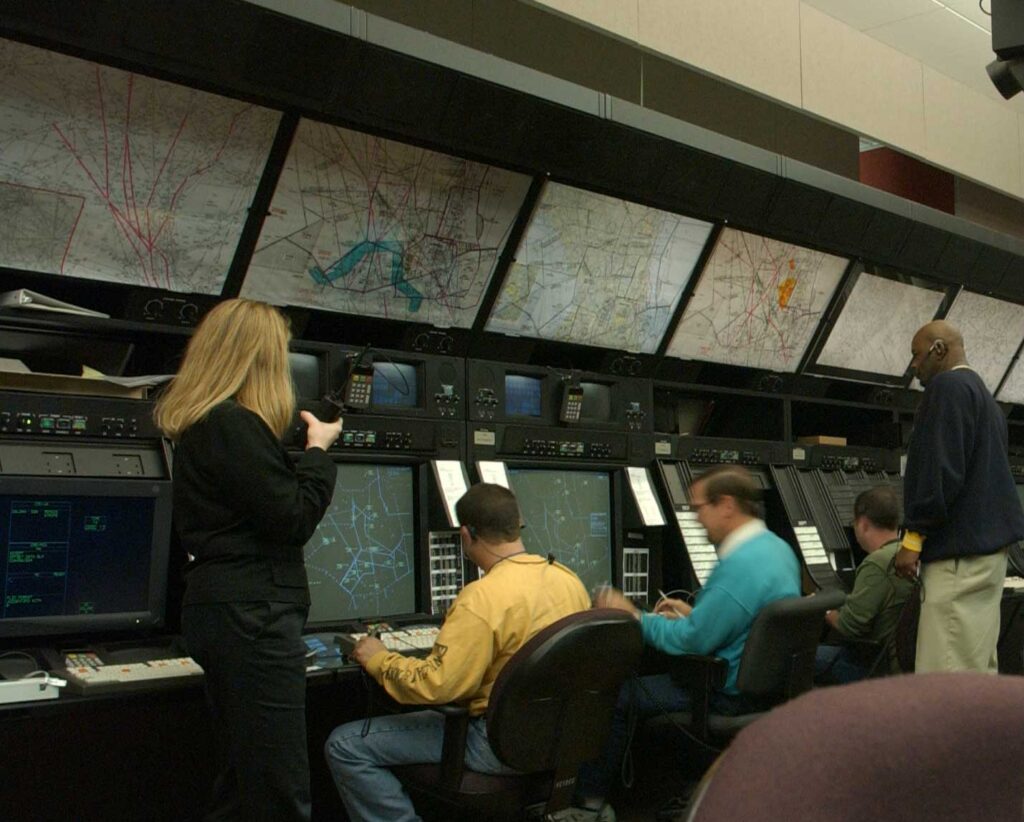
On the afternoon of Friday 13 November 2026, the US Federal Aviation Administration did something it has done only a handful of times in its history: it stopped departures from every airport in the country. A communications failure had hit several of the FAA’s 22 Air Route Traffic Control Centers, the facilities that guide aircraft between airports; the FAA first spoke of “multiple” centres, and the account given at a briefing the next day put the number at 17. For more than four hours, almost no flight could take off anywhere in the United States (medical, critical cargo and law enforcement flights were exempted), while thousands already in the air were brought down safely. The FAA nationwide ground stop disrupted travel across the country and raised fresh questions about the age of America’s air traffic control system.
Updated 18 November 2026: the FAA’s official account of the cause (data flooding its network from sites in El Dorado, Arkansas, and Amarillo, Texas), its final cancellation figures, the lab investigation with the FBI, the senators’ call to pause router installations, controllers’ questions and the estimated cost to airlines.
Correction, 14 November 2026: the headline and introduction no longer say that every departure was halted and that all 22 en-route centres were affected; medical, critical cargo and law enforcement flights were exempted, and the FAA spoke of “multiple” centres (17, according to the account given on 14 November).
Updated 14 November 2026, 19:40 UTC: how the failure started according to the FAA and the Transportation Secretary (a copper-to-fiber switch and a router flooding the network), the routers involved, L3Harris’s statement and the final cancellation figures added. Earlier updates: reports that the FBI is examining a software update as a possible cause, the agencies involved in the investigation and airline travel waivers; final Friday cancellation figures, Saturday’s knock-on cancellations and the Department of Homeland Security’s account of how the new and old systems clashed; Secretary Duffy’s call for 50 billion dollars, the latest on the investigation, a briefing for Congress and the recovery outlook; Duffy’s explanation of the failure, the number of diverted flights and the FAA’s comments on its SMART system.
The latest: what the investigation has found
The FAA’s account. In a question-and-answer statement published on 15 November, the FAA said its legacy equipment became unstable when data began flooding its telecommunications network (the FAA Telecommunications Infrastructure, or FTI) at a rate of 1,000 connection attempts every 4 to 5 seconds. Its initial investigation points to two locations: a radar site in Amarillo, Texas, and a radio communications site in El Dorado, Arkansas, where the contractor L3Harris had been deploying a new router. When L3Harris blocked both sites, the network stabilised, and the broadcasting function was then disabled on all the new routers as a precaution. According to the FAA, the instability began at 17 of its 22 en-route centres and spread to several terminal approach control facilities, but it was not a complete outage: some radio frequencies and radar feeds kept working, critical life-saving, law enforcement and military flights continued, and about 3,500 aircraft that were airborne landed safely. The agency said it has “no indication” of a cyberattack and that the failure was in the legacy system, not in equipment upgraded under its modernisation programme. It also said operators cancelled about 12,462 flights on 13 November, including 9,082 by major airlines, although not all of those cancellations were caused by the ground stop.
The router. Investigators told CNBC that within eight minutes of being installed, the new router in El Dorado began sending too much data into the network. The device, made by Juniper Networks, was taken to an L3Harris laboratory in Florida, where FAA staff and FBI agents are examining it. Secretary Duffy said he had asked FBI Director Kash Patel to send agents to make sure the analysis was being done properly. On 18 November, people familiar with the investigation told CNBC that engineers had been able to replicate the network overload in the lab, but had not yet determined why the two routers failed. Hewlett Packard Enterprise, which owns Juniper, said the router operated as configured by the installer. According to AeroTime, the FAA has paused further Juniper installations and disabled the broadcasting function on more than 60 similar routers while the investigation continues.
Pressure from Congress. Thirteen Democratic members of the Senate Commerce Committee, led by Senator Maria Cantwell, asked the FAA to halt installation of new routers until safety and reliability concerns are resolved. In their letter, reported by Reuters, they wrote that the copper-to-fiber transition involves converting 3,648 routers to Juniper devices, of which about 400 had been installed and 69 were in operation. A multi-agency “tiger team” formed by the White House, with officials from the FAA, the Department of Transportation, the Department of Defense and the Office of the Director of National Intelligence, met on 16 November to look at how to prevent a repeat, CBS News reported. Secretary Duffy has raised his funding request for a new air traffic control system from 30 billion to 50 billion dollars and has taken it to lawmakers; Democratic appropriators said the outage was not caused by a lack of funding and asked for a detailed justification.
Controllers’ questions. The National Air Traffic Controllers Association said its members had not yet been briefed on the specific cause, according to Forbes, as reported by AeroTime. Former NTSB investigator Greg Feith questioned how a single router could disrupt so much of the network: “Why is the air traffic control system vulnerable to a single-point failure?” The FAA said maintenance at major facilities is normally done at night, while routine replacements at remote sites have long been carried out during the day; it said it would review that practice.
The cost. More than 18,500 flights within, into or out of the United States were cancelled between Friday and Monday morning, according to FlightAware data reported by AVweb. The research firm Bernstein estimated that the four largest US airlines could lose about 345 million dollars in pre-tax earnings, within a range of roughly 270 to 430 million dollars. Duffy said operations were expected to be back to normal by Monday 16 November, and the FAA said the system is stable. A final root cause has not yet been published.
What happened
- About 15:15 Eastern time (20:15 UTC): controllers at several centres, including Boston, New York and Chicago, began losing radio frequencies, according to air traffic sources quoted by One Mile at a Time.
- 15:54 ET (20:54 UTC): after an earlier halt in Chicago, the FAA’s Air Traffic Control System Command Center ordered a ground stop at all US airports “due to extraordinary circumstances and for reasons of safety”. Inbound international flights were handled case by case.
- During the stop: aircraft already airborne were allowed to continue and land, some after holding. Flightradar24 counted about 3,100 aircraft in the air and bound for US airports when the order was issued; Secretary Duffy later put the number airborne at more than 3,500. Exceptions were made for medical flights, critical cargo and law enforcement operations.
- 20:15 ET (01:15 UTC, 14 November): Transportation Secretary Sean Duffy announced that the airspace had reopened, warning that recovery would be slow.
FlightAware listed more than 10,000 delays and over 4,000 cancellations on Friday, and at least 827 flights had been diverted to other airports by 19:05 ET, according to Cirium data cited by the Associated Press, and airlines expected knock-on disruption through the weekend because aircraft and crews ended up in the wrong places. By the end of the day, more than 9,100 flights within, into or out of the United States had been cancelled, according to FlightAware figures cited by CBS News and Scripps News, making it one of the most disruptive days for US air travel in years.
What a ground stop means
A ground stop is an order that keeps aircraft on the ground at their departure airports, usually at a single airport because of weather or equipment problems. A nationwide stop is extremely rare. It does not close the sky: flights already airborne keep flying under air traffic control, but no new flights are added until controllers can safely handle them. That is why passengers in the air landed normally, while those at the gate waited.
Why it happened
The FAA said only that “communication issues” had affected multiple centres and that its technicians were investigating. Officials described it as a telecommunications outage. Secretary Duffy blamed the age of the system: he said the network’s routers had become overloaded with data and begun producing inconsistent information, so the system was shut down. “We started to have inconsistency in the data from the radars and our communication with airplanes, and we have procedures for this,” he said. According to Duffy, controllers never lost radar or communications completely, and recently installed digital equipment kept working while older analog systems ran into problems. Multiple sources told CBS News that an update to the private communications network that links US air traffic control facilities, operated by the contractor L3Harris, caused the system to reboot and crash. L3Harris had not commented publicly at first.
What the FAA said on Saturday
At a briefing on Saturday 14 November, FAA Administrator Bryan Bedford and Secretary Duffy gave the first account of how the failure began. An L3Harris crew was switching an ageing copper telecommunications line to fiber-optic cable at a remote facility when a router began flooding other routers across the FAA’s private air traffic control network. Bedford said a “defective piece of equipment” had been identified, that there was “zero evidence of anything nefarious” and nothing related to artificial intelligence, and that the FAA would publish its root cause analysis once it is complete.
Senior government sources told CBS News that, according to the FAA’s preliminary findings, the problem was limited to Cisco 600-series routers built between 2001 and 2006, which became overwhelmed and sent out-of-sync data into the wider network; the faulty equipment has been isolated. Investigators are still working out whether the cause was a defective router or an installation error. The network, the FAA Telecommunications Infrastructure (FTI), has been run by L3Harris and its predecessor Harris Corporation since the contract was awarded in 2002, and an FAA-commissioned safety review in November 2023 had already described it as obsolete. In a statement reported by ABC News, L3Harris said it supports the FAA’s investigation and that, with its telecom partners, it has completed more than 70 per cent of the planned move of air traffic communications from copper to fiber.
Homeland Security Secretary Markwayne Mullin said there was no indication of a cyberattack or a “nefarious act”, and no link to a large Microsoft outage that affected some airlines the same day. The department said the trouble began when a new system was being patched into the existing network and the older equipment became overwhelmed. Later on Friday evening Mullin added that nothing seen so far pointed to a cyberattack, but that officials were “still working through that process”, so the investigation remains open. Duffy said the new SMART tool only gives recommendations to controllers and is not connected to the FAA’s STARS and ERAM radar and flight-data systems, so it could not have caused the outage. Its developer, Air Space Intelligence, also said the stoppage did not result from the tool, which the FAA began rolling out to its en-route centres this month. On Saturday, Bloomberg reported, citing a person familiar with the matter, that the FBI does not believe a cyberattack or criminal activity was behind the outage and that investigators are looking at a software update as a potential cause. The NSA, the Department of Defense and the Cybersecurity and Infrastructure Security Agency (CISA) are also reported to be involved. At the press conference, Duffy himself acknowledged that officials were “still working on the details of what went wrong” and did not want to give out wrong information. Investigators have not yet published a final cause.
How rare is this?
The last nationwide ground stop came on 11 January 2023, when the FAA’s NOTAM system, which publishes safety notices to pilots, failed and departures were halted for about 90 minutes. Before that, the only comparable event was the closure of US airspace after the terrorist attacks of 11 September 2001. Friday’s stop lasted far longer than the 2023 one.
A system waiting for an upgrade
The outage came on the same day that the White House and the Department of Transportation asked Congress for an extra 30.1 billion dollars for aviation infrastructure, including 10.1 billion for air traffic control. In 2025, Congress approved 12.5 billion dollars to begin replacing the FAA’s ageing radars, radios and telecommunications. Much of the equipment controllers use dates back decades, and the modernisation will take years. With the Thanksgiving holiday, one of the busiest travel periods of the year, less than two weeks away, attention will now turn to whether the network can be made more resilient in the meantime.
Duffy went further on Friday night. He said he wants 50 billion dollars to replace the system in one go rather than with “a patchwork fix”, well above the roughly 30 billion dollars the administration has asked Congress for, and according to Fox Business he said he could not rule out another outage before then. Senate Commerce Committee chairman Ted Cruz said the FAA will be updating Congress on what went wrong. The FAA said it thoroughly tested its systems before lifting the ground stop at 20:15 ET.
Recovery is expected to be slow. Duffy said it depends on getting crews and aircraft back into position, a process that began on Saturday morning. Delta said it would take time to reset its operation, JetBlue warned that disruption would continue into the weekend, and Frontier offered passengers a travel waiver for flights from 13 to 15 November. The knock-on effect reached Saturday, when between 3,800 and 4,200 more flights were cancelled according to FlightAware counts reported during the day, led by Delta, United and American, with Atlanta, Chicago O’Hare and New York JFK the worst affected. Airlines for America, the US airline industry group, said thousands of crew members had been left out of position. Senior government sources told CBS News that the airspace itself was operating normally again by 07:30 ET on Saturday, and Duffy said he expected the backlog to clear by late Sunday, well before the Thanksgiving travel rush. At O’Hare, United even asked the FAA for a short ground stop on arrivals on Saturday so that it could clear a backlog of departures, after aircraft had been parked on a closed runway overnight. United Airlines is letting passengers on qualifying flights between 12 and 20 November change their plans without a change fee or fare difference, and Delta allowed free changes for Friday and Saturday flights. Passengers are advised to check their flight status before going to the airport.
We will update this story when the FAA publishes the results of its investigation. Follow the latest developments on our live aviation news page.
Sources
- FAA: Statement on nationwide ground stop, 13 November 2026
- CBS News: FAA lifts nationwide ground stop, White House says no indication of “nefarious act”, 13 November 2026
- AVweb: Nationwide ground stop amid ATC communications problems, 13 November 2026
- AVweb: FAA rules out SMART AI system as cause of nationwide ground stop, 14 November 2026
- AeroTime: FAA halts all US departures, warns airborne flights to expect holding nationwide, 13 November 2026
- One Mile at a Time: FAA issues nationwide ground stop, 13 November 2026
- FLYING: “Air space is reopened”: FAA lifts nationwide ground stop, 13 November 2026
- Fox Business: Nationwide FAA ground stop lifted but cancellations, significant delays to continue, 13 November 2026
- NBC News: Live updates on the FAA ground stop, 13 November 2026
- CNN: Live updates on the FAA ground stop, 13–14 November 2026
- Simple Flying: Airlines warn ground stop chaos is far from over, 14 November 2026
- SecurityWeek: No signs of hacking in FAA ground stop as FBI reportedly probes software update, 14 November 2026
- One Mile at a Time: Duffy and Mullin’s FAA ground stop press conference, 14 November 2026
- VisaVerge: FAA ground stop and airline travel waivers, 13 November 2026
- CBS News: FAA preliminary findings point to old Cisco routers on the FTI network, 14 November 2026
- ABC News: FAA ground stop live updates, Bedford briefing and L3Harris statement, 14 November 2026
- Scripps News: Airlines report Saturday cancellations after historic ground stop, 14 November 2026
- Simple Flying: How the copper-to-fiber switch led to the ground stop, 14 November 2026
- Simple Flying: United requests ground stop at Chicago O’Hare, 14 November 2026
- FAA: Nationwide ground stop: questions and answers, 15 November 2026
- CNBC: Investigators make progress in hunt for cause of FAA ground stop, 18 November 2026
- FedScoop: FAA, FBI investigating router responsible for nationwide ground stop, 16 November 2026
- AVweb: Senators urge FAA to pause router installations following ground stop, 17 November 2026
- AeroTime: Controllers question official explanation for US air traffic control outage, 17 November 2026
- AVweb: Ground stop could cost airlines 345 million dollars, 16 November 2026
- FLYING: Federal agencies join forces to prevent another nationwide ground stop, 17 November 2026
Start the discussion
Commenting on this story: FAA Nationwide Ground Stop: Why US Departures Were Halted