Aircraft Corrosion Explained: Types, Causes and Prevention
Corrosion is the slow chemical attack of metal by its environment. On aircraft it can weaken structure out of sight, so it is prevented with coatings and sealants and found with regular inspections.
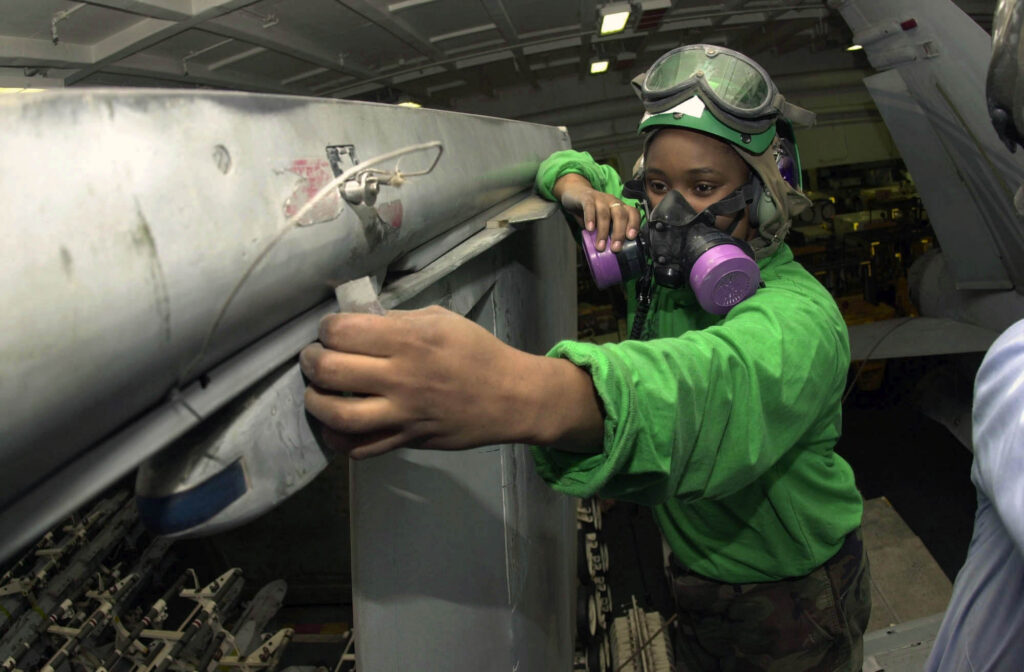
Aircraft corrosion is the deterioration of metal parts by a chemical or electrochemical reaction with their environment. In simple terms, the metal slowly turns back into oxides and salts, losing thickness and strength. Moisture, salt, industrial pollution and spilt fluids speed it up. Because corrosion can grow hidden under paint, sealant or floor panels, it is one of the main targets of structural inspections.
Why aircraft corrode
Aluminium alloys, the main metals in most airframes, form a thin protective oxide layer, but salt and moisture break it down. Corrosion needs an electrolyte, usually water containing salt, and two areas with different electrical potential. Aircraft that fly from coastal airports, operate in humid climates or serve on aircraft carriers are especially exposed. Areas under galleys and toilets, bilges where water collects, wheel wells and battery compartments are common trouble spots.
Main types of corrosion
- Surface or uniform corrosion: a general dulling and roughening of the metal, often seen as white powder on aluminium.
- Pitting: small, deep holes that can be hard to see but weaken the part much more than their size suggests.
- Intergranular corrosion: an attack along the grain boundaries inside the metal, which can occur without visible signs at the surface.
- Exfoliation: a severe form of intergranular corrosion in which the metal lifts in layers, like the pages of a wet book, typically in extrusions and thick plates.
- Galvanic corrosion: occurs where two different metals touch in the presence of moisture, for example aluminium against steel or against carbon fibre composite. The more active metal corrodes.
- Filiform corrosion: thread-like tracks under the paint.
- Stress corrosion cracking and fretting corrosion: cracking under combined stress and corrosion, and damage between parts that rub together under vibration.
Prevention
Manufacturers protect aluminium with Alclad sheet, which has a thin layer of pure aluminium on each surface, and with anodising or chemical conversion coatings, primers and paint. Joints are sealed, dissimilar metals are separated with insulating layers or sealant, and titanium fasteners are used in carbon fibre structure. Drain holes let water out of the fuselage and wings. In service, operators wash aircraft regularly, apply corrosion-inhibiting compounds in hidden areas, and follow a corrosion prevention and control programme that sets inspection tasks and limits.
Repair
When corrosion is found, technicians remove it completely, measure the remaining thickness and compare it with the limits in the Structural Repair Manual. If too much metal has been lost, the area is reinforced with a doubler or the part is replaced. The surface is then treated and protected again.
Why it matters
Corrosion weakens the primary structure of an aircraft and can combine with fatigue to start cracks. Ageing aircraft programmes since the late 1980s have made corrosion control a mandatory part of airline maintenance.
Where to look
Corrosion inspections pay special attention to the lower fuselage under galleys and toilets, the lap joints of the skin, the wheel wells and the landing gear, and the battery and cargo compartments, because moisture and spilt fluids collect there.
Frequently Asked Questions
What causes corrosion on aircraft? Moisture and salt acting on metal, especially where different metals touch.
What is exfoliation corrosion? A severe intergranular corrosion that makes the metal lift in layers.
How is aircraft corrosion prevented? With coatings, sealants, drainage, regular washing and scheduled inspections.
References
- FAA Advisory Circular 43-4B, Corrosion Control for Aircraft
- FAA Advisory Circular 43.13-1B, Acceptable Methods, Techniques and Practices – Aircraft Inspection and Repair, chapter 6 (Corrosion, inspection and protection)
Start the discussion
Commenting on this term: Aircraft Corrosion Explained: Types, Causes and Prevention