








Last Updated: 4 months ago
Initially, a fully loaded Boeing 777 weighs nearly 800,000 pounds. Consequently, you might wonder how this 400-ton machine defies gravity. Specifically, understanding aircraft takeoff physics reveals the brilliant science behind this everyday miracle. Indeed, this massive aircraft rises into the sky effortlessly. Therefore, we will break down the exact science behind this incredible process.
Generating Power: How Jet Engines Create Thrust
First, the process begins with immense power. Specifically, modern jet engines generate insane amounts of thrust. Basically, they suck in massive volumes of air. Then, the engines compress this air and mix it with aviation fuel.
Subsequently, a controlled explosion pushes the high-speed exhaust out the back. As a result, this powerful forward force overcomes the incredible weight of the plane. Ultimately, mastering this thrust is a crucial part of aircraft takeoff physics.
Wing Aerodynamics and Lift Physics
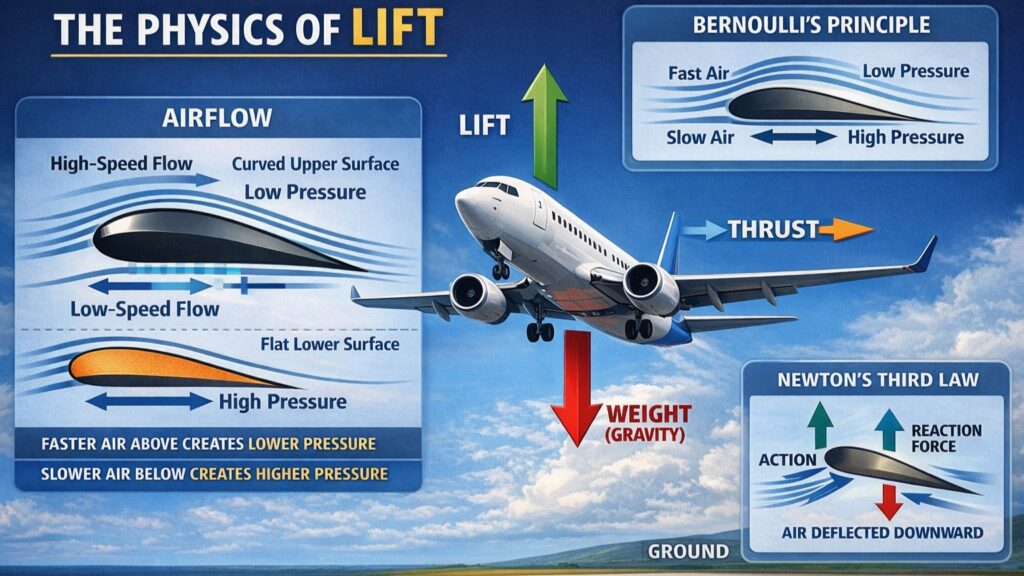
Next, we must look at the wings. Naturally, how wings create lift is absolutely fascinating. Specifically, engineers design the wings with a special curved shape. Therefore, air moves much faster over the top surface.
Consequently, this speed difference creates lower pressure above the wing. As a result, the higher pressure underneath literally pushes the heavy airplane upward.
What Flaps and Slats Actually Do
Furthermore, wings need extra help during slower speeds. Specifically, pilots deploy flaps and slats before departure. Basically, these mechanical surfaces extend from the front and back of the wing.
Consequently, they increase the total surface area. More importantly, they change the wing’s shape to generate maximum lift at lower speeds. Indeed, these components make safe departures possible.
Why V1 Speed is Absolutely Critical
Finally, the flight crew must monitor specific speeds. Specifically, V1 speed is the most critical milestone. Basically, this is the famous “point of no return.”
In other words, once the aircraft reaches V1, the pilot must take off. Consequently, stopping safely on the remaining runway becomes mathematically impossible. Therefore, precise speed calculations ensure absolute safety.
Conclusion: The Masterpiece of Flight
In conclusion, a heavy departure requires perfect harmony. Specifically, jet engine thrust, wing aerodynamics, and precise speeds work together beautifully. Undeniably, aircraft takeoff physics represent a masterpiece of modern engineering.
Frequently Asked Questions (FAQs)
How much does a Boeing 777 weigh? A fully loaded Boeing 777 can weigh nearly 800,000 pounds. This massive weight requires incredible aerodynamic forces to lift.
What exactly is V1 speed? V1 speed is the exact moment a pilot commits to flying. The crew cannot safely abort the departure after passing this specific speed.
How do flaps and slats help a plane? Flaps and slats extend from the wings to increase surface area. This allows the heavy aircraft to generate enough lift at lower speeds.
Did you know AviationStream.com has a YouTube channel? Check out TheAeroGraphyOfficial and subscribe to watch fun, highly engaging aviation Shorts!