









VECIHI XIV - (03)
— Vecihi XIV (Vecihi 14) is one of the most important early aircraft developed in Turkish aviation history. It was designed and built by the Turkish aviator, engineer, and aviation pioneer Vecihi Hürkuş. The aircraft represents one of the first domestically designed and manufactured civil aircraft in Türkiye. Its first flight in 1930 marked a significant milestone in the development of national aviation engineering.
Vecihi Hürkuş believed strongly that Türkiye should develop its own aviation technology and produce its own aircraft. Drawing on his experience as a combat pilot during the Turkish War of Independence and his technical knowledge of aircraft systems, he began designing Vecihi XIV. The aircraft was constructed in a small workshop in Kadıköy, Istanbul, under very limited technical and financial resources. Considering the technological conditions of the 1930s, this project was an impressive engineering achievement and demonstrated the potential of Turkish aviation capabilities.
Vecihi XIV was designed as a two-seat training and sport aircraft. The aircraft structure was primarily made of wood, which was common for light aircraft of that era. Wooden structures were preferred because they were relatively lightweight, easy to manufacture, and suitable for the available production technologies of the time. The aircraft was powered by a Continental W670 radial engine producing 220 horsepower, which provided sufficient thrust for training and recreational flying operations. Power was transmitted through a 2.50-meter diameter wooden propeller.
In terms of technical specifications, Vecihi XIV offered balanced performance for a light aircraft of its period. The aircraft has a wingspan of 9.8 meters, a length of 7.7 meters, and a height of 2.95 meters. Its wing area is 25.7 square meters, which contributes to stable flight characteristics and adequate lift. The empty weight of the aircraft is approximately 870 kg, while the maximum takeoff weight reaches 1195 kg. These characteristics place the aircraft in the light sport and training aircraft category.
The cruise speed of Vecihi XIV is approximately 90 knots (167 km/h). This speed was suitable for pilot training and short-distance flights during that period. The aircraft was intended to serve primarily for basic pilot training, sport aviation, and demonstration flights, helping to promote aviation awareness in Türkiye.
Although the aircraft proved technically successful, bureaucratic certification processes at the time created difficulties for obtaining official flight approval. Despite these challenges, the aircraft successfully flew and became a symbolic achievement in the history of Turkish aviation.
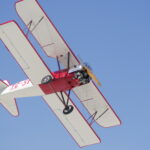
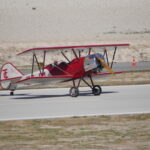
The aircraft shown in the photo is a replica of the Vecihi XIV that has been reproduced in recent years to represent the original design and preserve its historical significance.
Overall, Vecihi XIV stands as an important symbol of early Turkish aviation engineering and demonstrates the determination of Vecihi Hürkuş to establish an independent national aviation capability.
🗓️ 2026-03-10
📐 4592x2584px
🛩️ More Private Aircraft Photos
View all Private Aircraft →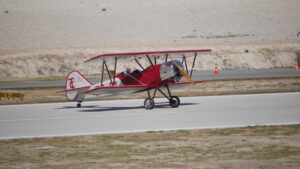


📍 More from ESKISEHIR
View all from ESKISEHIR →


📸 More by Aviator Osman
View Aviator Osman's portfolio →💬 0 Comments
You must be logged in to post a comment.
❮❯![Preview]()
No comments yet. Be the first!