







Last Updated: 4 days ago
Today, on March 19, aviation history celebrates a truly monumental anniversary. Exactly 62 years ago, in 1964, a brave pilot named Jerrie Mock departed from Ohio. She touched down 29 days later. Consequently, she successfully completed the first round-the-world solo flight by a woman. She achieved the exact goal that Amelia Earhart had tragically failed to reach 27 years earlier. Therefore, we must explore her incredible 23,103-mile journey and the inspiring legacy of all women earth rounders.
The “Flying Housewife” Who Asked “Why Not?”
Initially, Jerrie Mock did not fit the typical profile of a record-breaking test pilot. The media frequently called her the “flying housewife.” She was a 38-year-old mother of three living in Columbus, Ohio. However, she possessed a deep, burning childhood dream to see the world. Eventually, suburban life bored her immensely.
One day, her husband jokingly suggested she fly around the world to cure her boredom. She enthusiastically replied, “Why not?” Subsequently, she earned her instrument flight rating. She began planning a massive global route. She contacted the FAA and learned that no woman had ever completed this solo journey. Therefore, she decided to make history.
The Aircraft: Three Eight Charlie
Specifically, Jerrie Mock chose a highly reliable single-engine airplane for this dangerous mission. She flew a 1953 Cessna 180. She affectionately nicknamed it the “Spirit of Columbus.” Aviation enthusiasts proudly know this iconic aircraft by its tail number, N1538C. Many simply call it “Three Eight Charlie.”
Indeed, this rugged taildragger provided the perfect platform for global endurance. Engineers customized the small cabin extensively. They removed the passenger seats and installed massive extra fuel tanks. Ultimately, this classic Cessna proved its legendary durability. It safely carried her across brutal oceans and scorching deserts without major structural failures.
The Technology of 1964 vs. Today
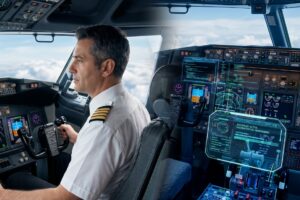
To truly appreciate the achievement of Jerrie Mock, we must examine the technology of 1964. Back then, pilots did not have GPS satellites or digital flight displays. Instead, she navigated entirely using paper maps, analog compasses, and basic radio beacons.
Specifically, she relied heavily on her high-frequency radios to maintain contact over vast oceans. Furthermore, weather forecasting was incredibly primitive compared to modern systems. Consequently, she had to visually identify violent storm cells and physically fly around them. Modern women earth rounders use advanced glass cockpits and real-time weather uplinks. Therefore, her analog navigation skills highlight her pure, raw talent as a pilot.

The Unspoken Global Race
Interestingly, Jerrie Mock was not the only woman attempting this massive feat in the spring of 1964. Weeks before her departure, another skilled pilot announced her own world flight. Her name was Joan Merriam Smith. Smith flew a twin-engine Piper Apache. She decided to follow Amelia Earhart’s original equatorial route.
Consequently, the National Aeronautic Association (NAA) had two women competing for the exact same ultimate speed record. Although neither pilot officially called it a race, the media certainly treated it like one. Therefore, Mock moved her departure up to March 19. She left just two days after Smith. In the end, the first person to return would capture the world’s attention.
Into the Unknown: Ice, Sand, and Soldiers
First, Jerrie Mock headed east over the freezing Atlantic Ocean. She battled severe icing conditions on her wings. Later, she fought through violent sandstorms along the North African coast. Eventually, a navigation error caused her to land accidentally at Inchas Air Force Base in Egypt instead of Cairo International Airport.
Suddenly, armed military soldiers surrounded her tiny Cessna. However, they quickly realized her honest mistake. The bewildered soldiers kindly pointed her toward the correct civilian airport. They quietly cleared her for takeoff. In Egypt, she finally achieved her lifelong dream of seeing the ancient pyramids from the sky.

Shocking the Crowds in Saudi Arabia
Next, her journey took her to Dhahran Airport in the Kingdom of Saudi Arabia. A massive crowd of men waited on the tarmac to greet the arriving American pilot. Suddenly, they looked incredibly puzzled when she opened the cabin door.
Soon, a man dashed forward to inspect the cockpit. He shouted to the cheering throng that there was no man inside the airplane. Consequently, the crowd gave her a rousing, historic ovation. Furthermore, Jerrie Mock completed all these stops wearing a diplomatic drip-dry skirt and sweater set. She completely ignored standard, bulky flight suits.
Flying Over Active War Zones
Subsequently, she faced incredibly long flights over Southeast Asia. During a grueling 13-hour leg from Bangkok to Manila, she flew directly over Vietnam. At that time, a brutal war was raging on the ground below. Nevertheless, she noted in her logbook that the world looked entirely peaceful from the sky.
In Manila, she received crucial maintenance for her Cessna at an official repair shop. Moreover, she learned that Joan Merriam Smith was experiencing severe mechanical delays. As a result, she took a decisive lead in their unspoken global race.
Conquering the Pacific Ocean
Finally, the most dangerous part of the journey awaited her. Jerrie Mock had to cross the massive, unforgiving Pacific Ocean. Naturally, the press constantly reminded everyone about Amelia Earhart’s tragic disappearance in these exact waters.
However, she flew with absolute confidence. She possessed modern communications equipment and superior instrument training. On April 14, 1964, she flew her longest ocean leg. She covered 2,409 miles from Honolulu, Hawaii, to Oakland, California. Indeed, this terrifying 17-hour stretch tested both human endurance and mechanical reliability perfectly.

A Triumphant Return and Enduring Legacy
On April 17, 1964, Jerrie Mock landed safely back at Port Columbus Airport in Ohio. She completed her 23,103-mile journey in exactly 29 days, 11 hours, and 59 minutes. The hometown crowd erupted in wild cheers.
Ultimately, the Federation Aeronautique Internationale certified her historic flight. She set a total of seven aviation records. Shortly after, President Lyndon B. Johnson awarded her the FAA Gold Medal for Exceptional Service. Meanwhile, Joan Merriam Smith also successfully finished her own massive global flight on May 10, 1964. Together, both women completely redefined what female aviators could achieve.

Inspiring Future Women Earth Rounders
Since that historic achievement, aviation has changed drastically. Today, the aviation community proudly celebrates all women earth rounders. In the last six decades, at least ten more women have completed solo world flights.
For instance, Shaesta Waiz flew solo around the world in 2017 to inspire the next generation. More recently, Zara Rutherford completed the journey in 2022. She became the youngest woman to achieve this incredible feat. Each pilot follows her own unique vision. Yet, they all share that same fearless spirit. In conclusion, a bored housewife transformed into a legendary aviator simply by asking, “Why not?” Today, the “Spirit of Columbus” hangs proudly in the National Air and Space Museum. Undeniably, her legacy continues to inspire millions of pilots worldwide.
Frequently Asked Questions (FAQs) – Jerrie Mock
Who was the first woman to fly solo around the world? Jerrie Mock holds the official title of the first woman to fly solo around the world. Specifically, she successfully completed her incredible and historic global journey on April 17, 1964.
What kind of airplane did Jerrie Mock fly? She flew a 1953 Cessna 180 single-engine aircraft. Furthermore, she affectionately named the plane the “Spirit of Columbus” and registered it under the tail number N1538C.
How long did the first solo world flight by a woman take? The entire journey took exactly 29 days, 11 hours, and 59 minutes. Consequently, she covered over 23,100 miles across multiple continents and brutal oceans.
Did Amelia Earhart fly around the world? No. Unfortunately, Amelia Earhart tragically disappeared over the Pacific Ocean in 1937 during her attempt. However, her pioneer spirit inspired future generations to finish the route.
✈️ TheAeroGraphyOfficial — uncovering the real science and hidden mechanics of flight.
Did you knowAviationStream.com has a YouTube channel? Check out TheAeroGraphyOfficial and subscribe to watch fun, highly engaging aviation Shorts!