Korean Air Lines Flight 007
A Korean Air Lines 747 drifted hundreds of miles off course and was shot down by a Soviet interceptor near Sakhalin on 1 September 1983. All 269 people on board died.
Korean Air Lines Flight 007 was a Boeing 747 flying from New York to Seoul via Anchorage that was shot down by a Soviet Su-15 interceptor near Sakhalin Island on 1 September 1983. The airliner had drifted far north of its planned route and into Soviet airspace over Kamchatka and Sakhalin. All 269 people on board died. The tragedy came at one of the tensest moments of the Cold War and led directly to the opening of GPS to civilian users.
Flight 007 at a glance
- Date: 1 September 1983 (31 August in New York)
- Aircraft: Boeing 747-230B
- Route: New York JFK to Seoul Gimpo, with a stop in Anchorage, Alaska
- On board: 246 passengers and 23 crew, including off-duty crew members
- Fatalities: 269, among them US Congressman Larry McDonald
- Place: Sea of Japan, near Moneron Island, west of Sakhalin
- Investigation: International Civil Aviation Organization (ICAO), 1983 and 1993
A slow drift off course
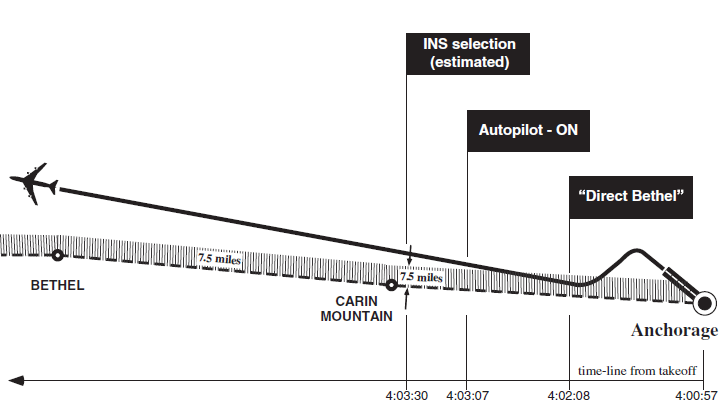
After leaving Anchorage, Flight 007 should have followed route R20, one of the North Pacific tracks that pass close to, but outside, Soviet territory. From the start, it flew a little to the north of the track, and the gap grew steadily. Over five hours the 747 ended up hundreds of miles off course, crossing the Kamchatka Peninsula and then heading for Sakhalin, both closed military areas.
Soviet air defence tracked the aircraft and launched fighters. Over Sakhalin, an Su-15 pilot followed it in the dark, fired cannon rounds that the airliner’s crew apparently never noticed and, on orders from the ground, launched two air-to-air missiles. The 747 lost pressure and control and spiralled down into the sea. The cockpit voice recorder showed that the crew had no idea they were off course or being intercepted.
Why Flight 007 went off course
The flight recorders were recovered by the Soviet Union and only handed over in 1992. ICAO’s 1993 report concluded that the crew had most likely left the autopilot in heading mode after take-off from Anchorage, instead of switching it to follow the inertial navigation system. The aircraft therefore held a constant magnetic heading and drifted north of the route. The crew did not notice, and the cross-checks they reported at waypoints did not catch the error.
The report also found that the Soviet side had not made adequate efforts to identify the aircraft or to warn it using the internationally agreed interception procedures before firing.
What changed after KAL 007
- GPS for everyone. Two weeks after the shootdown, President Ronald Reagan announced that the Global Positioning System, then a military project, would be made available for civil aviation once complete. Today, satellite navigation and ADS-B make a drift like this almost impossible to miss.
- International law. In 1984 ICAO adopted Article 3 bis of the Chicago Convention, under which states must refrain from using weapons against civil aircraft in flight.
- Oceanic routes. Radar coverage and communication along the North Pacific routes were improved, and navigation procedures were tightened.
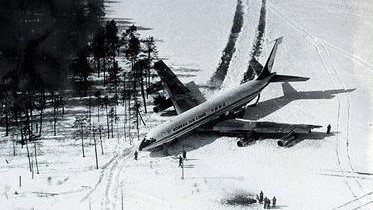
KAL 007 was not the first Korean airliner to stray over the Soviet Union: in 1978 Korean Air Lines Flight 902 was fired on and forced to land on a frozen lake near Murmansk.
Remembering the victims
The passengers came from many countries. A memorial stands at Cape Soya, the northern tip of Hokkaido, facing the sea where the aircraft came down, and relatives have held services there and at sea.
Sources
ICAO, Report of the Completion of the Fact-Finding Investigation into the Korean Air Lines Boeing 747 (Flight KE 007) (1993); ICAO Assembly, Article 3 bis of the Convention on International Civil Aviation (1984).
Related Historical Aviation Accidents Events
More significant events from aviation history
Assassination of Juvénal Habyarimana and Cyprien Ntaryamira: The 1994 Aircraft Shootdown in Rwanda
🗓 6 April, 1994 📍 Presidential Palace gardens, near Kigali International Airport, Kigali, Rwanda, 1°58′32″S 30°10′26″E / 1.9756°S 30.1739°E / -1.9756; 30.1739 ★★★★☆ Read full story →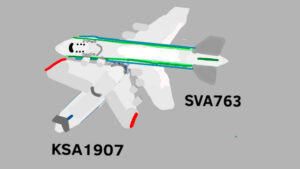
1996 Charkhi Dadri Collision: The Deadliest Mid-Air Crash
🗓 12 November, 1996 📍 Charkhi Dadri, Haryana, India, 28°33′38″N 76°18′15″E / 28.56056°N 76.30417°E / 28.56056; 76.30417 ★★★★☆ Read full story →
United Airlines Flight 736: The Crash That Changed Aviation
🗓 21 April, 1958 📍 Clark County, Nevada, United States ★★★★☆ Read full story →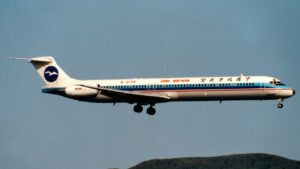
The Tragic Mystery of China Northern Airlines Flight 6136
🗓 7 May, 2002 📍 Bohai Bay, near Dalian Zhoushuizi International Airport, Dalian, Liaoning, China, 39°00′N 121°48′E / 39°N 121.8°E / 39; 121.8 ★★★☆☆ Read full story →