The Tragic Mystery of China Northern Airlines Flight 6136
China Northern Airlines Flight 6136
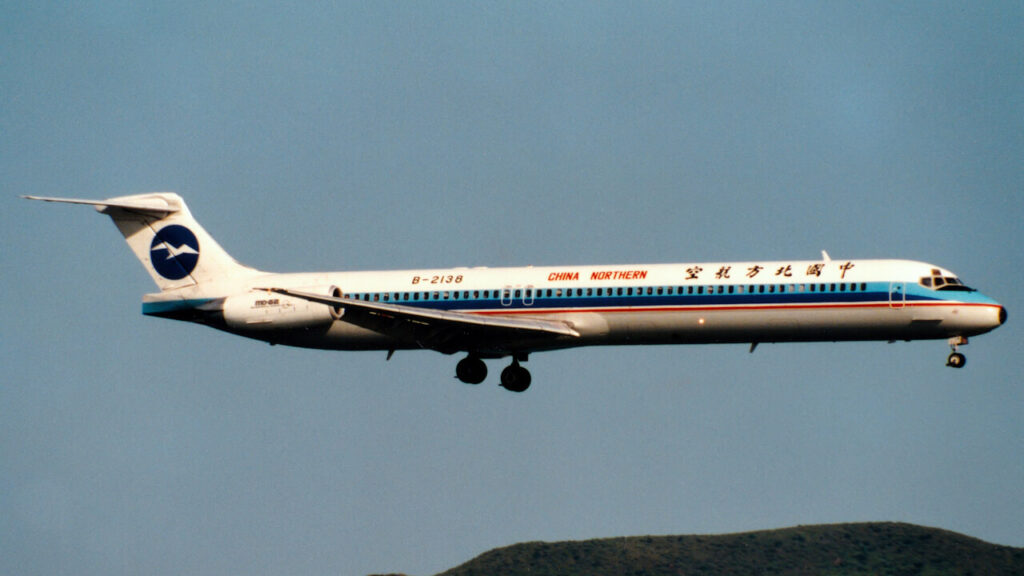
On May 7, 2002, the tranquil waters near Dalian, China, became the site of one of the most chilling and calculated tragedies in civil aviation. China Northern Airlines Flight 6136, an MD-82 jet, plummeted into the Yellow Sea, claiming the lives of all 112 people on board. While initial reports focused on mechanical failure, the eventual investigation revealed a much more sinister truth: a deliberate act of arson.
Flight Background: A Routine Journey
Flight 6136 was a scheduled domestic service departing from Beijing Capital International Airport with a destination of Dalian Zhoushuizi International Airport.
- The Aircraft: A McDonnell Douglas MD-82 (registration B-2138). The aircraft had a solid maintenance record and was considered a reliable workhorse for regional routes.
- The Crew and Passengers: On board were 103 passengers and 9 crew members. The flight was short—a quick hop across the Bohai Sea.
The Incident: Fire in the Cabin
The flight proceeded normally until it reached the outskirts of Dalian. At 9:24 PM local time, the pilot contacted air traffic control with a harrowing message: “Fire in the cabin!”
Witnesses on the ground reported seeing the aircraft circling the airport with flames trailing from the fuselage. Shortly after the distress call, the aircraft lost all communication and disappeared from radar. It struck the water about 12 miles from the Dalian coast, breaking apart on impact.
The Investigation: Searching for the Spark
Because the aircraft crashed into the sea, investigators faced a difficult recovery operation. However, once the wreckage and the “Black Boxes” (Flight Data Recorder and Cockpit Voice Recorder) were retrieved, the focus shifted from a technical malfunction to a criminal act.
The Key Evidence
- Concentrated Fire Damage: Physical evidence showed that the fire had started in the passenger cabin, specifically in the rear section, rather than in the engines or electrical bays.
- Chemical Traces: Forensic analysis of the wreckage and the remains of the passengers revealed traces of gasoline. Since commercial jet engines run on kerosene (Jet A-1), the presence of gasoline in the cabin was a major red flag.
The Perpetrator
Investigators eventually identified a passenger named Zhang Pilin. It was discovered that Zhang had purchased seven different flight insurance policies just before boarding the flight, totaling a potential payout of roughly $170,000—a massive sum in 2002.
Zhang had reportedly brought plastic bottles filled with gasoline onto the aircraft. In a desperate and horrific attempt to provide for his family through an insurance payout, he ignited the accelerant in the rear of the cabin, causing the fire that overwhelmed the crew and destroyed the plane.
Impact on Aviation Safety and Security
The tragedy of Flight 6136 had an immediate and lasting impact on Chinese aviation, particularly regarding security and insurance.
- Insurance Reform: The incident led to a massive overhaul of how flight insurance was sold in Chinese airports. Authorities realized that the ease of purchasing multiple high-value policies could provide a motive for suicide and mass murder.
- Liquids Bans: This accident was one of several global incidents that contributed to the eventual strict regulation of liquids in carry-on luggage.
- Heightened Security: Following the crash, China Northern Airlines—and later China Southern Airlines (which merged with China Northern in 2003)—implemented much more rigorous passenger screening processes.
Related Historical Aviation Accidents Events
More significant events from aviation history
1996 Charkhi Dadri Collision: The Deadliest Mid-Air Crash
🗓 12 November, 1996 📍 Charkhi Dadri, Haryana, India, 28°33′38″N 76°18′15″E / 28.56056°N 76.30417°E / 28.56056; 76.30417 ★★★★☆ Read full story →
Assassination of Juvénal Habyarimana and Cyprien Ntaryamira: The 1994 Aircraft Shootdown in Rwanda
🗓 6 April, 1994 📍 Presidential Palace gardens, near Kigali International Airport, Kigali, Rwanda, 1°58′32″S 30°10′26″E / 1.9756°S 30.1739°E / -1.9756; 30.1739 ★★★★☆ Read full story →
United Airlines Flight 736: The Crash That Changed Aviation
🗓 21 April, 1958 📍 Clark County, Nevada, United States ★★★★☆ Read full story →
China Airlines Flight 140: The 1994 Airbus A300 Crash in Nagoya
🗓 26 April, 1994 📍 Nagoya Airport, Nagoya, Japan, 35°14′43″N 136°55′56″E / 35.2453°N 136.9323°E / 35.2453; 136.9323 ★★★☆☆ Read full story →