Boom XB-1 Breaks the Sound Barrier
On 28 January 2025, Boom Supersonic's XB-1 demonstrator broke the sound barrier over the Mojave Desert, reaching Mach 1.122. It was the first independently developed jet to go supersonic and the first civil supersonic flight since Concorde retired in 2003.
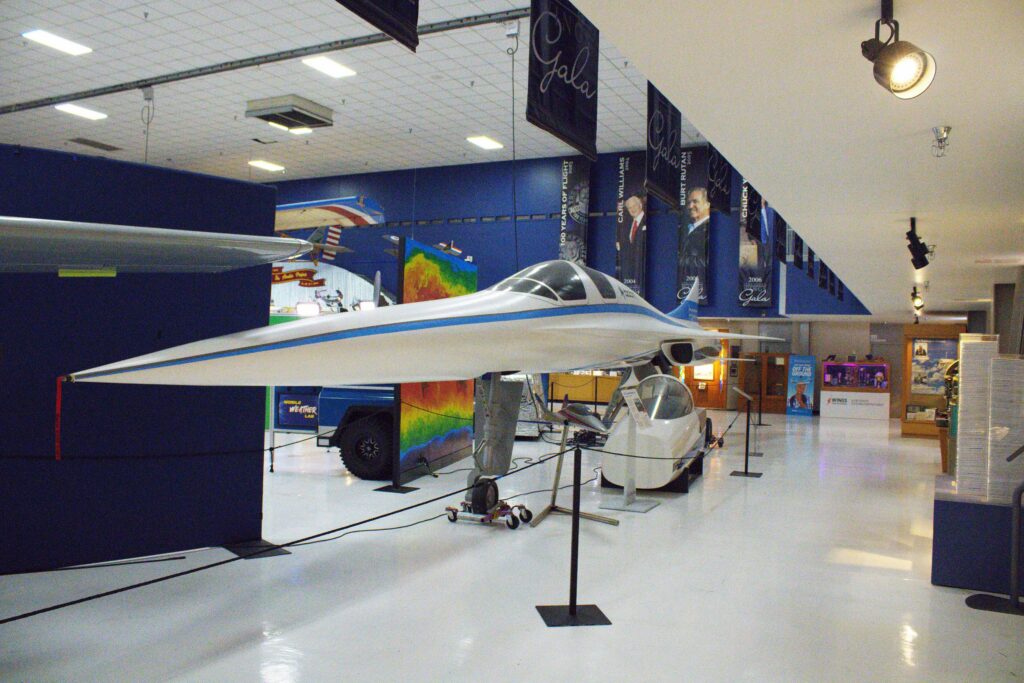
On 28 January 2025, the Boom XB-1 demonstrator flew faster than the speed of sound over the Mojave Desert in California. It was the first jet developed independently by a private company to go supersonic, and the first supersonic flight by a civil aircraft since Concorde was retired in 2003.
The Boom XB-1 flight at a glance
- Date: 28 January 2025
- Aircraft: Boom XB-1 “Baby Boom”, a one-seat, three-engine demonstrator built by Boom Supersonic
- Pilot: Tristan “Geppetto” Brandenburg, Boom’s chief test pilot
- Base: Mojave Air & Space Port, California, flying in the Black Mountain Supersonic Corridor
- Top speed: Mach 1.122, about 750 mph (1,200 km/h)
- Altitude: about 35,290 ft (10,760 m)
- Flight time: about 34 minutes
Why Boom built the XB-1
Boom Supersonic, based in Denver, is developing Overture, a supersonic airliner meant to carry around 60 to 80 passengers at about Mach 1.7 over water. Before asking airlines and regulators to trust a new supersonic airliner, the company wanted to prove the key technologies at small scale. The XB-1 was built for that: a carbon-fibre composite airframe, a slender delta wing, supersonic engine intakes, and a digital vision system that shows the pilot the runway through a camera instead of using a drooping nose like Concorde’s (read more about Concorde’s droop nose).
The project took much longer than planned. The XB-1 was unveiled in 2016, but its first flight only came on 22 March 2024, after years of ground testing, design changes and engine upgrades. It is powered by three General Electric J85 turbojets, the same engine family used in the Northrop T-38 and F-5.
Breaking the sound barrier
On the morning of 28 January, Brandenburg climbed the XB-1 to about 35,000 ft and accelerated past Mach 1 before returning to Mojave after a flight of about 34 minutes. The flight took place in the same desert airspace where Chuck Yeager first broke the sound barrier in the Bell X-1 in 1947. A Mach number of 1.122 means the aircraft was flying about 12 per cent faster than the local speed of sound.
The XB-1 went supersonic again on 10 February 2025. Boom then retired the aircraft, saying it had achieved its goals, and moved its effort to Overture and to the Symphony engine designed for it.
Why it matters
For more than twenty years after Concorde’s last flight, supersonic flight was the preserve of military aircraft and government research projects such as NASA’s X-59. The XB-1 showed that a relatively small private company could design, build and fly a supersonic aircraft. Whether that leads to a new generation of supersonic airliners depends on Overture, on engine development and on the economics and noise rules of supersonic travel, but January 2025 put civil supersonic flight back in the air.
More events from this month are in our Aviation History Calendar.
Sources
- Boom Supersonic, Boom achieves supersonic flight, press release, 28 January 2025
- The Aviationist, Boom’s XB-1 demonstrator achieves supersonic flight, 28 January 2025
- FLYER, Boom XB-1 goes supersonic, first since Concorde, 2025
- New Atlas, Boom Supersonic breaks the sound barrier, 2025
Related Aviation Milestones Events
More significant events from aviation history

Paris to New York flight: First Non-Stop 1948 Journey
🗓 28 April, 1948 📍 Paris,New York ★★★☆☆ Read full story →
Eugene Ely Makes the First Take-off From a Ship
🗓 14 November, 1910 📍 Hampton Roads, Virginia, United States ★★★☆☆ Read full story →
Women’s World Speed Record
🗓 1 May, 1963 📍 Edwards Air Force Base, California. ★★☆☆☆ Read full story →
Mantell UFO Incident
🗓 7 January, 1948 📍 United States of America ★★★☆☆ Read full story →