NASA’s X-59 Quiet Supersonic Jet Makes Its First Flight
On 28 October 2025, NASA test pilot Nils Larson flew the X-59 for the first time, from Lockheed Martin's Skunk Works in Palmdale to NASA's Armstrong Flight Research Center at Edwards. The jet is designed to turn the sonic boom into a quiet thump.
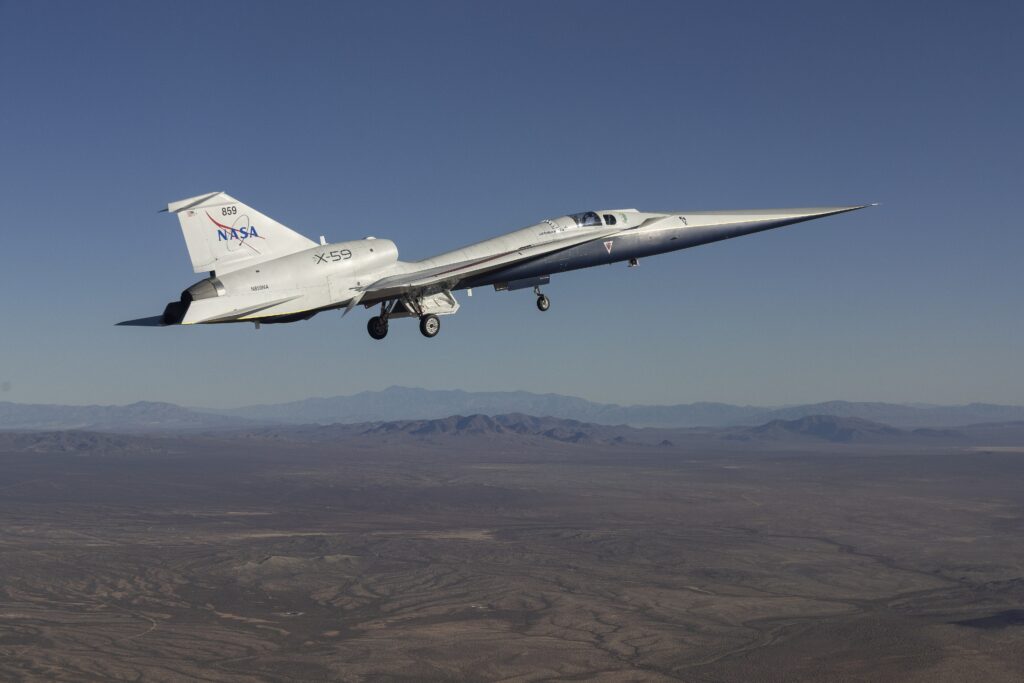
On 28 October 2025, NASA’s X-59 quiet supersonic research aircraft took off for the first time from Lockheed Martin’s Skunk Works facility in Palmdale, California. NASA test pilot Nils Larson flew the single-seat jet for about an hour before landing at nearby Edwards Air Force Base, home of NASA’s Armstrong Flight Research Center. The X-59 first flight was the start of flight testing for an aircraft built to answer one question: can a supersonic jet fly over land without disturbing the people below?
The first flight at a glance
- Date: 28 October 2025, take-off at 08:14 local time
- From: US Air Force Plant 42, Palmdale, California
- To: Edwards Air Force Base, California
- Pilot: Nils Larson, NASA test pilot
- Duration: about 1 hour 7 minutes
- Altitude and speed: about 12,000 ft and about 230 mph (370 km/h), as planned
- Chase aircraft: a NASA F/A-18
Why the X-59 exists
Supersonic flight over land has been banned for commercial aircraft in the United States since 1973, because the sonic boom of an aircraft flying faster than sound can rattle windows and startle people on the ground. Concorde, for example, flew supersonic only over the ocean. The X-59 is designed so that the shock waves from its nose, canopy, wings and tail do not merge into one sharp boom. Instead, people on the ground should hear a soft “thump”, about as loud as a car door closing.
To achieve this, the aircraft has an unusual shape. It is about 30 metres (99 ft) long with a very long, slender nose that makes up about a third of its length. Because the nose blocks the forward view, the pilot has no forward-facing window; an external vision system with a camera and a cockpit display shows the view ahead. The single General Electric F414 engine is mounted on top of the fuselage, so the body shields the ground from its shock waves.
The first flight
The first flight was deliberately gentle. Larson flew the X-59 with its landing gear down, as planned, checking handling, systems and air data at low speed and altitude while the chase F/A-18 followed. NASA said the aircraft performed exactly as expected. The flight also moved the X-59 to its home base at Edwards, where the full test programme takes place.
What comes next
The X-59 is the centrepiece of NASA’s Quesst mission. After envelope-expansion flights, it is planned to reach its design cruise of about Mach 1.4 at 55,000 ft. NASA then plans to fly it over several US communities and ask residents what they heard. The results will be shared with the Federal Aviation Administration and the International Civil Aviation Organization, which could use them to set a noise-based standard for supersonic flight over land. That, in turn, could open the way for a new generation of supersonic airliners, such as those being developed by companies like Boom Supersonic, whose XB-1 demonstrator broke the sound barrier in January 2025.
Sources
- AIAA: NASA’s X-59 quiet supersonic research aircraft performs first flight, 29 October 2025
- AVweb: NASA X-59 makes historic first flight over California, 28 October 2025
- The Aviationist: NASA’s X-59 QueSST conducts maiden flight, 28 October 2025
- FlightGlobal: NASA reveals details of X-59’s first flight, October 2025
Related Aviation Milestones Events
More significant events from aviation history
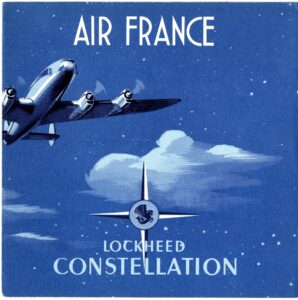
Air France Constellation Flies Paris to New York Non-Stop (1948)
🗓 28 April, 1948 📍 Paris,New York ★★★☆☆ Read full story →
Eugene Ely Makes the First Take-off From a Ship
🗓 14 November, 1910 📍 Hampton Roads, Virginia, United States ★★★☆☆ Read full story →
Women’s World Speed Record
🗓 1 May, 1963 📍 Edwards Air Force Base, California. ★★☆☆☆ Read full story →
Boom XB-1 Breaks the Sound Barrier
🗓 28 January, 2025 📍 Mojave Air & Space Port, California, United States ★★☆☆☆ Read full story →
Start the discussion
Commenting on this event: NASA’s X-59 Quiet Supersonic Jet Makes Its First Flight