







Last Updated: 4 months ago
Aircraft Engineering: The Concorde Droop Nose Explained
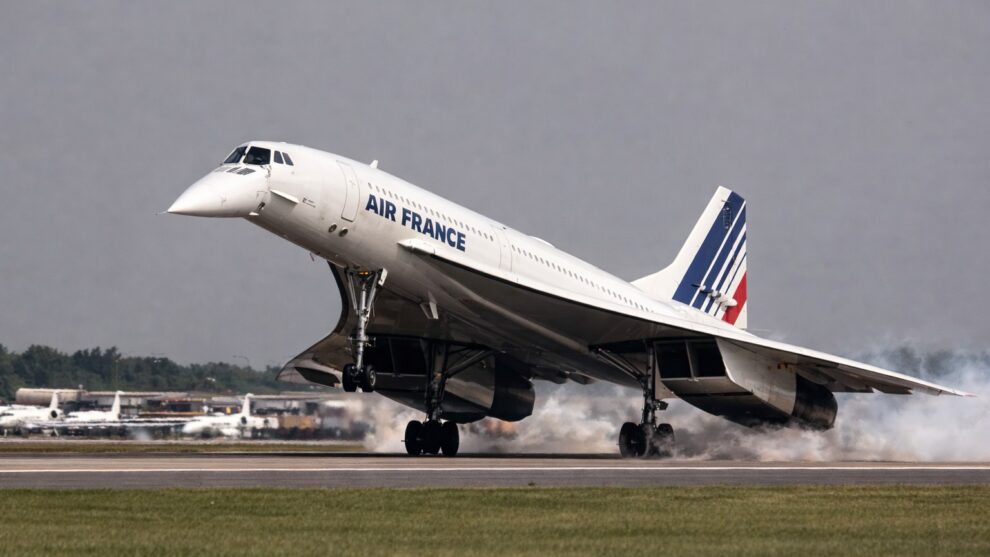
At first glance, the Concorde droop nose looks almost broken when it bends downward. Indeed, many aviation enthusiasts notice this unusual feature during takeoff or landing. However, this design is certainly not a defect. Instead, engineers created it to solve a serious visibility problem.
Undoubtedly, the Concorde remains the world’s most famous supersonic airliner. Specifically, it flew at speeds above Mach 2. In other words, this is more than twice the speed of sound. Consequently, at these extreme speeds, aerodynamic efficiency becomes absolutely critical.
Therefore, to minimize drag, designers gave the aircraft a remarkably long, needle-like nose. Initially, this streamlined shape worked perfectly for supersonic cruise. Nevertheless, it created a massive challenge during slower flight phases.

The Delta-Wing Challenge and Visibility
First, to understand the aircraft, we must look at the wings. Specifically, the Concorde featured an iconic “ogival delta wing” design.
Naturally, these wings perform highly efficiently at Mach 2. Conversely, they produce very little lift at low speeds. As a result, the aircraft had to pitch upward at a steep angle to generate lift.
During takeoff and landing, the Concorde flew with a high “angle of attack.” Consequently, the nose pointed sharply upward to keep the plane airborne.
- The Problem: Mainly, this steep angle blocked the pilots’ forward view. Basically, they simply could not see the runway.
- The Risk: Obviously, pilots must see the runway during critical flight phases. Therefore, flying blind posed an unacceptable safety risk.
Ultimately, engineers needed a smart solution. On one hand, the aircraft had to stay aerodynamically efficient. At the same time, pilots needed a clear line of sight on the ground.
The Brilliant Concorde Droop Nose Solution
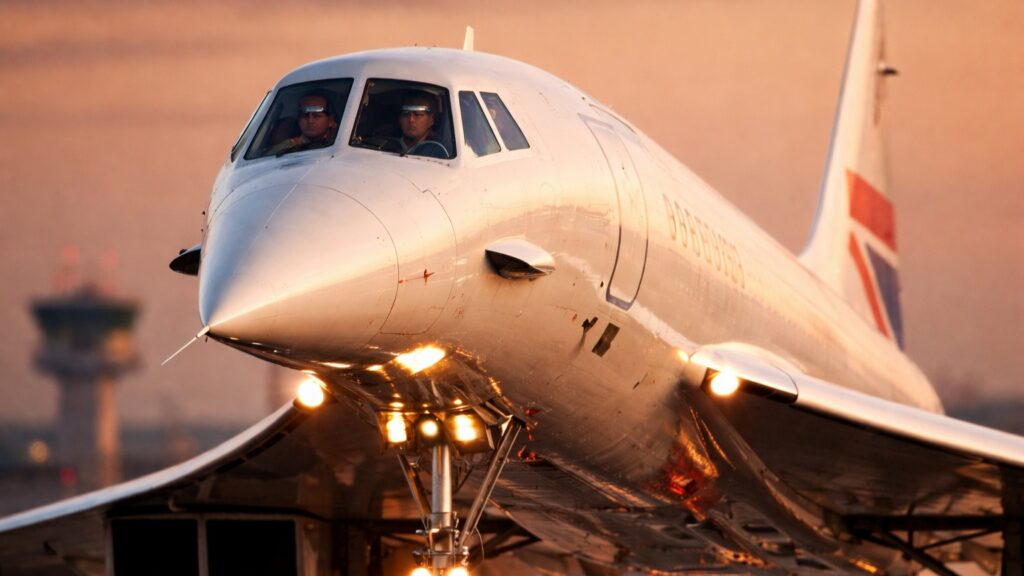
Fortunately, British and French engineers developed the famous Concorde droop nose system to solve this crisis. Specifically, a hydraulic system tilted the entire front section downward during low-speed operations.
Furthermore, the crew adjusted the nose depending on the flight phase:
- Firstly, during Supersonic Cruise: The nose locked perfectly straight. Additionally, a retractable heat-shield visor moved up. Importantly, this visor protected the windshield from extreme kinetic friction.
- Secondly, for Taxi and Takeoff: Pilots lowered the heat visor. Then, they drooped the nose to 5 degrees. As a result, this gave them enough visibility to navigate safely.
- Finally, during Landing: Pilots lowered the nose to its maximum droop of 12.5 degrees. Consequently, this drastic angle provided an unobstructed view of the runway threshold.
A Brief History of a Supersonic Legend
Historically, the Concorde made its first flight on 2 March 1969 in Toulouse, France.
Importantly, it proved that commercial supersonic travel was truly possible. Afterwards, following rigorous testing, it entered service in 1976. Specifically, British Airways and Air France operated the commercial flights.
Altogether, manufacturers built only 20 aircraft, including prototypes. Furthermore, just 14 entered commercial service. Nevertheless, despite limited production numbers, it became an absolute engineering icon.
The Concorde Droop Nose: A Unique Design in Aviation History
Today, the Concorde droop nose remains a highly recognizable aviation feature. Admittedly, it might look like damage to the untrained eye. However, it actually represents a masterclass in aerodynamic problem-solving.
In conclusion, the Concorde did more than fly faster than sound. Undoubtedly, it proved how innovative engineering can overcome physical limits to change the world…
Did you know AviationStream.com has a YouTube channel? Check out TheAeroGraphyOfficial and subscribe to watch fun, bite-sized aviation Shorts!