Turkish Airlines Flight 981
Minutes after leaving Paris on 3 March 1974, a cargo door on a Turkish Airlines DC-10 blew open. The floor collapsed, cutting the controls; all 346 people on board died.
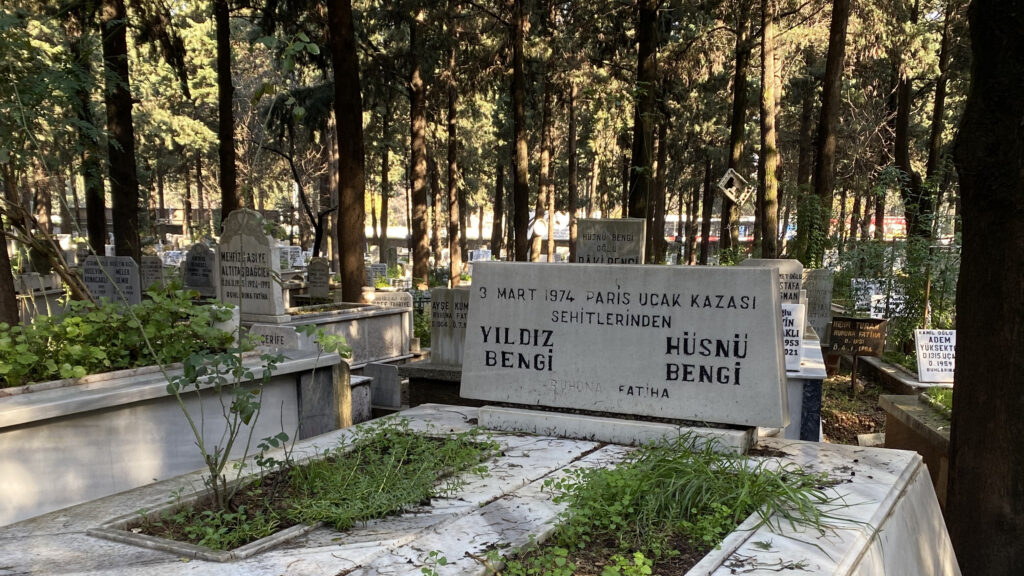
Turkish Airlines Flight 981 crashed into the Ermenonville Forest north of Paris on 3 March 1974, minutes after taking off from Orly for London. A rear cargo door that had not locked properly blew open, the cabin floor above it collapsed and the cables to the tail controls were cut. All 346 people on board the McDonnell Douglas DC-10 died. It was the deadliest air accident in history until Tenerife three years later, and it exposed a design flaw that had already been seen once before.
Flight 981 at a glance
- Date: Sunday 3 March 1974
- Aircraft: McDonnell Douglas DC-10-10, registered TC-JAV and named “Ankara”
- Route: Istanbul to London Heathrow via Paris Orly
- On board: 335 passengers and 11 crew
- Fatalities: 346, with no survivors
- Crash site: Ermenonville Forest, near Fontaine-Chaalis, Oise, France
- Investigation: French Secretariat of State for Transport commission of inquiry
A full flight to London
A strike by British European Airways staff had left many travellers stranded in Paris, and seats on the Turkish flight to London were in demand. Among those who boarded at Orly were English rugby supporters returning from a match in Paris, business travellers and families from many countries.
About ten minutes after take-off, while climbing through roughly 11,000 feet, the aft cargo door on the left side burst open. The cargo hold lost pressure in an instant, while the cabin above it was still pressurised. The difference in pressure pushed down and collapsed part of the cabin floor, and with it the control cables and hydraulic lines that ran beneath it to the tail and the number two engine. The aircraft pitched down and struck the forest at high speed.
A door that looked locked but was not
The DC-10’s cargo doors opened outwards. They were held shut by latches driven by an electric actuator and secured by locking pins that a handle on the outside of the door was meant to set. If the latches had not fully closed, the handle could still be forced down, and the door could look locked when it was not.
The problem was known. In 1972 a cargo door on an American Airlines DC-10 had blown open over Windsor, Ontario, and the crew had managed to land. Instead of a binding airworthiness directive, the manufacturer and the US regulator agreed on voluntary service changes. The aircraft that became TC-JAV had been recorded as modified, but the work was incomplete, and the ground handler who closed the door at Orly, following the instructions he had, could not tell that the latches were not engaged.
The French inquiry concluded that the door had not been properly latched and that the design allowed this to go unnoticed.
What changed after the Ermenonville crash
- Cargo doors. Mandatory changes to DC-10 cargo doors followed, including stronger locking mechanisms and small viewing ports so ground crews could check with their own eyes that the latches were closed.
- Floors that survive decompression. Regulators required large aircraft to withstand the sudden loss of pressure in any compartment without losing the floor, using vents between the cabin and the holds.
- Regulation by rule, not agreement. The accident is still cited as the reason safety fixes for known defects should be mandated, not left to voluntary agreements.
Remembering the victims
The victims came from more than 20 countries, with large numbers from Japan, the United Kingdom and Türkiye. A memorial stands in the Ermenonville Forest at the crash site.
Sources
Final report of the French Secretariat of State for Transport commission of inquiry into the accident to Turkish Airlines DC-10 TC-JAV (1976).
Related Historical Aviation Accidents Events
More significant events from aviation history
Assassination of Juvénal Habyarimana and Cyprien Ntaryamira: The 1994 Aircraft Shootdown in Rwanda
🗓 6 April, 1994 📍 Presidential Palace gardens, near Kigali International Airport, Kigali, Rwanda, 1°58′32″S 30°10′26″E / 1.9756°S 30.1739°E / -1.9756; 30.1739 ★★★★☆ Read full story →
1996 Charkhi Dadri Collision: The Deadliest Mid-Air Crash
🗓 12 November, 1996 📍 Charkhi Dadri, Haryana, India, 28°33′38″N 76°18′15″E / 28.56056°N 76.30417°E / 28.56056; 76.30417 ★★★★☆ Read full story →
United Airlines Flight 736: The Crash That Changed Aviation
🗓 21 April, 1958 📍 Clark County, Nevada, United States ★★★★☆ Read full story →
The Tragedy of Lauda Air Flight 004
🗓 26 May, 1991 📍 Phu Toei National Park, Suphan Buri province, Thailand, 14°56′48″N 99°27′10″E / 14.94667°N 99.45278°E / 14.94667; 99.45278 ★★★☆☆ Read full story →