Cessna 501 Citation Crash
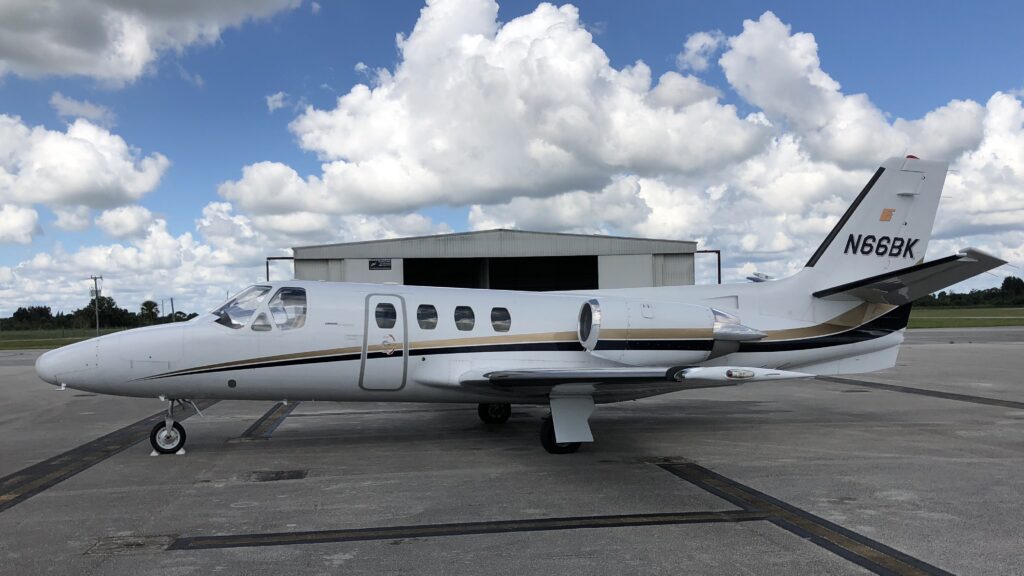
The sudden and catastrophic loss of a privately operated Cessna 501 Citation I corporate jet on May 29, 2021, remains a critical case study in modern aviation safety regarding pilot spatial disorientation, instrument flying proficiency, and the lethal dangers of somatogravic illusions during high-workload flight phases.
The flight, operating under instrument flight rules (IFR), departed from Smyrna Airport (MQY) in Tennessee, bound for Palm Beach International Airport (PBI) in Florida. Less than two minutes after liftoff, the light business jet entered a localized cloud layer, experienced erratic altitude excursions, and plunged at near-supersonic speeds into Percy Priest Lake.
The high-profile Cessna 501 crash resulted in seven fatalities—including prominent Christian diet-author Gwen Shamblin Lara and her husband, actor Joe Lara—prompting a rigorous National Transportation Safety Board (NTSB) investigation into single-pilot jet operations.
Flight Profile, Aircraft Specifications, and Pilot Metrics
Understanding the anatomy of the Percy Priest Lake plane crash requires a deep dive into the technical configuration of the aircraft and the qualifications of the pilot at the controls.
- The Aircraft: The accident airplane was a Cessna 501 Citation I/SP (registration N663CD), manufactured in 1982. The “SP” designation signified that the aircraft was certified for single-pilot operations, provided the pilot met rigid Federal Aviation Administration (FAA) training and medical mandates.
- The Powerplants: The jet was powered by two Pratt & Whitney Canada JT15D-1A turbofan engines, an incredibly reliable engine model within the general aviation and light corporate jet sectors.
- The Pilot in Command: The aircraft was piloted by William J. Lara (professionally known as Joe Lara). Flight records indicated he held a commercial pilot certificate with multi-engine land and instrument airplane ratings, alongside a specific Cessna 501 type rating. However, post-accident logbook analysis revealed critical gaps in his recent instrument flight currency and actual weather experience in a turbojet environment.
Chronology of a Two-Minute Fatal Flight
According to the definitive Flight Data Recorder (FDR) matrix and Air Traffic Control (ATC) radar tracking, the timeline of the flight spanned a mere 90 to 120 seconds from the application of takeoff thrust to water impact.
The Physics of Spatial Disorientation: The Somatogravic Illusion
The core finding of the NTSB’s aviation accident investigation centered on human factors rather than mechanical failure. The weather at the time of departure featured a low, solid overcast ceiling at approximately 1,300 feet. When the Cessna 501 broke through the bottom of the cloud layer, the pilot instantly lost all visual reference to the natural horizon.
When a pilot loses visual cues, the human brain relies entirely on the vestibular system (the inner ear) to perceive balance and motion. However, the inner ear can be easily deceived by linear acceleration. This physiological phenomenon is known as a somatogravic illusion.
During a rapid acceleration phase—such as a jet climbing out on takeoff—the otolith organs in the inner ear tilt backward. In total darkness or dense cloud cover, this backward tilt creates a powerful, false sensation that the aircraft is pitching up into an excessively steep climb.
The Fatal Correction
Believing the aircraft’s nose was dangerously high, the pilot reacted to the illusion by pushing the control yoke forward to pitch the nose down. In reality, the aircraft was already tracking at a normal pitch angle.
By manually forcing the nose down while inside the clouds, the pilot inadvertently placed the Cessna 501 into a high-speed, steep descent. As the aircraft accelerated downward, the increased G-forces further intensified the false sensation of a climb, causing the pilot to push the nose down even harder.
Radar Tracking and Aerodynamic Load Analysis
The NTSB’s aircraft performance study utilized ground-based radar plots to reconstruct the final seconds of the flight profile. The data illustrated a complete breakdown of cockpit situational awareness:
- The Bank Angle: As the pilot struggled with the pitch illusion, the aircraft entered an unrecognized, banking left turn that progressively steepened into a 60-degree graveyard spiral.
- The Terminal Dive: The airspeed rapidly deteriorated past the maximum operating limit ($V_{mo}$) of the Cessna 501.
- The Energy Footprint: The aircraft slammed into the shallow waters of Percy Priest Lake at an estimated speed exceeding 400 knots (approx. 460 mph) in a 45-degree nose-down attitude. The high-velocity impact completely destroyed the airframe structure, resulting in immediate fatal trauma to all seven occupants.
Wreckage Recovery and Technical Findings
Because the debris field was submerged under 15 to 30 feet of water with near-zero underwater visibility, emergency rescue units and recovery teams faced immense logistical hurdles.
| Investigation Parameter | Forensic and Mechanical Analysis Results |
| Engine Status | Tear-down analysis of both Pratt & Whitney JT15D engines revealed internal rotational damage consistent with high power settings at impact. No signs of pre-existing mechanical failure. |
| Flight Control Continuity | All primary flight control cables (elevator, ailerons, rudder) were traced through the debris; structural fractures were consistent with high-velocity overload rather than fatigue failure. |
| Autopilot Status | Examination of the pitch and roll trim actuators indicated that the autopilot was disengaged during the final descent, confirming the pilot was flying the aircraft manually. |
| Toxicology Report | FAA forensic toxicology screens for the pilot returned negative results for alcohol, illicit drugs, or impairing prescription medications. |
Regulatory Impact and Single-Pilot Jet Safety Protocols
The conclusion of the NTSB’s investigation into the Cessna 501 Citation crash reignited an intense safety debate within the aviation industry regarding the risks of single-pilot operations in light turbojet aircraft during instrument meteorological conditions (IMC).
- Re-evaluating Type Rating Currency: Safety advocates have pushed for stricter recurrent training rules, recommending that single-pilot type ratings require mandatory, scenario-based simulator training focusing explicitly on recovering from unrecognized spatial disorientation.
- Instrument Flight Proficiency Audits: The accident highlighted the danger of “paper currency”—where a pilot technically meets the legal minimum flight hours to fly in weather but lacks the practical, split-second reflexes required to manage a high-performance jet alone in the clouds.
- The “Two-Pilot” Recommendation: Many corporate flight departments have permanently updated their standard operating procedures (SOPs) to mandate a minimum crew of two pilots for all turbojet flights conducted in IFR conditions, regardless of whether the aircraft airframe is certified for a single pilot.
Conclusion
The 2021 Cessna 501 Citation crash serves as a somber, technical reminder that the margin for error in aviation narrows significantly when visual reference to the ground is lost. The structural integrity of the Cessna Citation airframe and the reliability of its engines were completely compromised by a classic human factors breakdown. For the global pilot community, this accident stands as a definitive blueprint for why absolute instrument proficiency and rigorous adherence to cockpit attitude indicators are the only effective shields against the lethal illusions of flight.
Related Historical Aviation Accidents Events
More significant events from aviation history
1996 Charkhi Dadri Collision: The Deadliest Mid-Air Crash
🗓 12 November, 1996 📍 Charkhi Dadri, Haryana, India, 28°33′38″N 76°18′15″E / 28.56056°N 76.30417°E / 28.56056; 76.30417 ★★★★☆ Read full story →
Assassination of Juvénal Habyarimana and Cyprien Ntaryamira: The 1994 Aircraft Shootdown in Rwanda
🗓 6 April, 1994 📍 Presidential Palace gardens, near Kigali International Airport, Kigali, Rwanda, 1°58′32″S 30°10′26″E / 1.9756°S 30.1739°E / -1.9756; 30.1739 ★★★★☆ Read full story →
United Airlines Flight 736: The Crash That Changed Aviation
🗓 21 April, 1958 📍 Clark County, Nevada, United States ★★★★☆ Read full story →
China Airlines Flight 140: The 1994 Airbus A300 Crash in Nagoya
🗓 26 April, 1994 📍 Nagoya Airport, Nagoya, Japan, 35°14′43″N 136°55′56″E / 35.2453°N 136.9323°E / 35.2453; 136.9323 ★★★☆☆ Read full story →