Singapore Airlines Flight 321 Turbulence Accident
Singapore Airlines Flight 321 Turbulence Accident
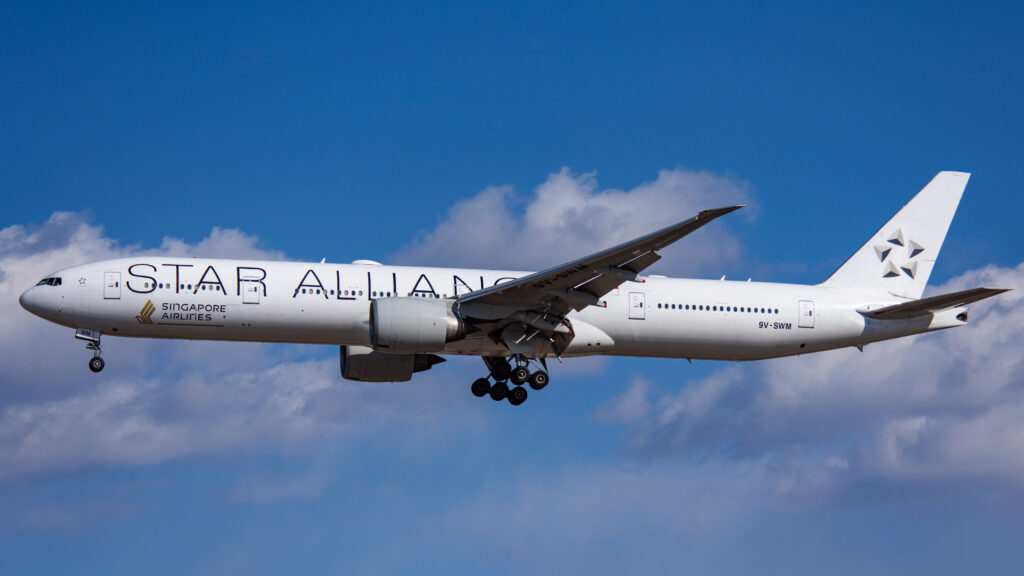
On May 21, 2024, Singapore Airlines Flight 321 was executing a routine, long-haul international passenger service from London Heathrow Airport (LHR) to Singapore Changi Airport (SIN). The wide-body aircraft was cruising smoothly at a flight level of 37,000 feet (FL370) at a speed of Mach 0.84 (approximately 1,037 km/h). The cabin environment was relaxed; a routine breakfast service had recently concluded, meaning a significant percentage of the 211 passengers and 18 crew members were unbelted, standing in the aisles, or utilizing the lavatories. Chronology of an Emergency: Inside the Boeing 777-300ER CockpitThe data recovered from the Digital Flight Data Recorder (DFDR) and the Cockpit Voice Recorder (CVR) provided investigators with an exact, second-by-second timeline of how a routine long-haul flight degenerated into a fatal mid-air emergency.
The Aerodynamic Forces: Analyzing the -1.5G Drop
According to meteorological data reconstructed during the investigation, Flight SQ321 encountered a powerful, localized convectively induced updraft rising at an estimated speed of 8,000 to 9,000 feet per minute. This fast-moving column of air was generated by an un-mapped thunderstorm cell whose cloud top had violently punched upward from 27,500 feet to 40,000 feet in less than ten minutes.
As the Boeing 777-300ER passed over this invisible updraft, the sudden change in vertical wind velocity caused the aircraft to swell rapidly upward. The vehicle’s autopilot automatically pitched the nose down to hold its assigned altitude of 37,000 feet. This mechanical correction, combined with the sudden drop on the opposite side of the thermal column, created a terrifying shift in gravitational metrics.
Within a microscopic fraction of a second, the internal cabin environment experienced a negative gravitational force of -1.5G. Unbelted occupants, structural items, and unsecured heavy galley carts became instantly airborne, striking the overhead storage bins and ceiling panels with immense velocity. Less than four seconds later, the forces swung back to a positive +1.5G, violently slamming the airborne passengers back down onto armrests, seatbacks, and the floor.
The Crucial Inquiry: Did the Weather Radar Malfunction?
The defining element of the final TSIB report is the focus on the aircraft’s airborne weather radar system. For two years, questions persisted as to why an experienced flight crew would fly directly over a massive convective storm cell. The CVR transcript showed that the Pilot-in-Command had proactively set his radar gain sensitivity to “MAX” throughout the cruise portion of the flight.
Despite this maximum sensitivity setting, the navigation displays showed absolutely zero weather returns or precipitation reflections. The crew observed clear skies outside their windshields, seeing only high-altitude cloud sheets far in the distance. The CVR captured the captain’s confusion immediately following the upset:
“We hit something, but I was on MAX… I was on MAX, I don’t see anything here.”
The Technical Investigation Findings
The investigation revealed a history of intermittent radar anomalies associated with this specific airframe. The TSIB noted that the exact same radar unit had logged three distinct instances of under-detecting weather phenomena in the month leading up to the accident. Furthermore, when the aircraft was ferried back to Singapore from Thailand for deep technical maintenance after the incident, subsequent flight checks recorded further instances of under-detection.
While the unnamed original equipment manufacturer (OEM) ran ground simulation tests on the radar hardware and claimed it functioned within certified parameters, the TSIB final report officially concluded that it “cannot be ruled out” that a severe technical system failure or a radar display under-painting anomaly left the pilots functionally blind to the active thunderstorm cell.
Medical Summary and the Emergency Mayday Diversion
The violent internal structural impacts caused an immediate mass-casualty crisis inside the cabin. Crew members reported broken ceiling panels, punctured overhead bins, and widespread injuries. At 08:01 AM UTC, the flight crew declared a Mayday emergency and requested an immediate tactical medical diversion to Suvarnabhumi International Airport (BKK) in Bangkok, Thailand.
The aircraft initiated a rapid descent to 31,000 feet, touching down safely in Bangkok at 08:45 AM UTC. Emergency medical triage units confirmed that out of the 229 people on board, 56 sustained serious trauma, 23 sustained minor injuries, and one passenger tragically died.
| Metric / Attribute | Passenger and Structural Injury Data Breakdown |
| Total Onboard Complement | 229 (211 Passengers, 18 Crew Members) |
| Fatalities | 1 (73-year-old British National via suspected acute heart failure/lung edema) |
| Serious Injuries (56 cases) | Complex skull fractures, traumatic brain injuries (TBI), spinal column compressions, and vertebral dislocations |
| Minor Injuries (23 cases) | Severe lacerations, soft-tissue contusions, and joint dislocations |
| Internal Airframe Damage | Shattered overhead oxygen mask pods, collapsed ceiling tracks, and deformed structural composite panels |
Lasting Regulatory Changes and Global Aviation Safety Protocols
The publishing of the final TSIB report has forced international aviation authorities to enact profound updates to commercial flight deck and cabin operations:
- Redefining Turbulence Management Training: Regulatory bodies have implemented mandatory pilot refresher training focusing specifically on identifying the limits of digital multi-scan weather radars, particularly when flying near rapidly developing tropical convection zones.
- Engineering Radar Redundancies: The TSIB has formally recommended that aerospace manufacturers design automated image-recording systems for navigation displays, enabling maintenance personnel to immediately diagnose in-flight radar under-detection or video-feed freeze errors.
- Cabin Service Restrictions: Airlines worldwide have codified permanent updates to cabin safety checklists. Flight attendants must immediately cease all meal and beverage services, secure loose carts, and buckle into their jumpseats the moment a flight deck activates a “Fasten Seatbelt” illumination.
The definitive resolution of the Singapore Airlines Flight 321 investigation serves as a permanent architectural reminder to global aviation: even the most robust modern airframes cannot completely mitigate the risk of hidden convective weather systems, and continuous passenger seatbelt compliance remains the single most effective defense against high-altitude atmospheric anomalies.
Related Historical Aviation Accidents Events
More significant events from aviation history
Assassination of Juvénal Habyarimana and Cyprien Ntaryamira: The 1994 Aircraft Shootdown in Rwanda
🗓 6 April, 1994 📍 Presidential Palace gardens, near Kigali International Airport, Kigali, Rwanda, 1°58′32″S 30°10′26″E / 1.9756°S 30.1739°E / -1.9756; 30.1739 ★★★★☆ Read full story →
1996 Charkhi Dadri Collision: The Deadliest Mid-Air Crash
🗓 12 November, 1996 📍 Charkhi Dadri, Haryana, India, 28°33′38″N 76°18′15″E / 28.56056°N 76.30417°E / 28.56056; 76.30417 ★★★★☆ Read full story →
United Airlines Flight 736: The Crash That Changed Aviation
🗓 21 April, 1958 📍 Clark County, Nevada, United States ★★★★☆ Read full story →
The Tragic Mystery of China Northern Airlines Flight 6136
🗓 7 May, 2002 📍 Bohai Bay, near Dalian Zhoushuizi International Airport, Dalian, Liaoning, China, 39°00′N 121°48′E / 39°N 121.8°E / 39; 121.8 ★★★☆☆ Read full story →