The Launch of Space Shuttle Challenger STS-51-B
Science in Orbit: The Legacy of Space Shuttle Challenger STS-51-B
When we think of the Space Shuttle Challenger, our minds often drift to its tragic final mission. However, on April 29, 1985, Challenger embarked on one of the most scientifically productive and unique journeys in NASA history: STS-51-B.
Known as the Spacelab-3 mission, this flight transformed the shuttle into a world-class laboratory, proving that humans (and a few animal friends) could conduct complex research in the silence of microgravity.
Mission Overview: The Spacelab-3 Milestone
Launched from Kennedy Space Center, STS-51-B was the 17th flight of the Space Shuttle program and the seventh for Challenger. Unlike missions focused on satellite deployment, 51-B was all about pure science.
- Launch Date: April 29, 1985
- Orbiter: Challenger (OV-099)
- Mission Duration: 7 days, 0 hours, 8 minutes
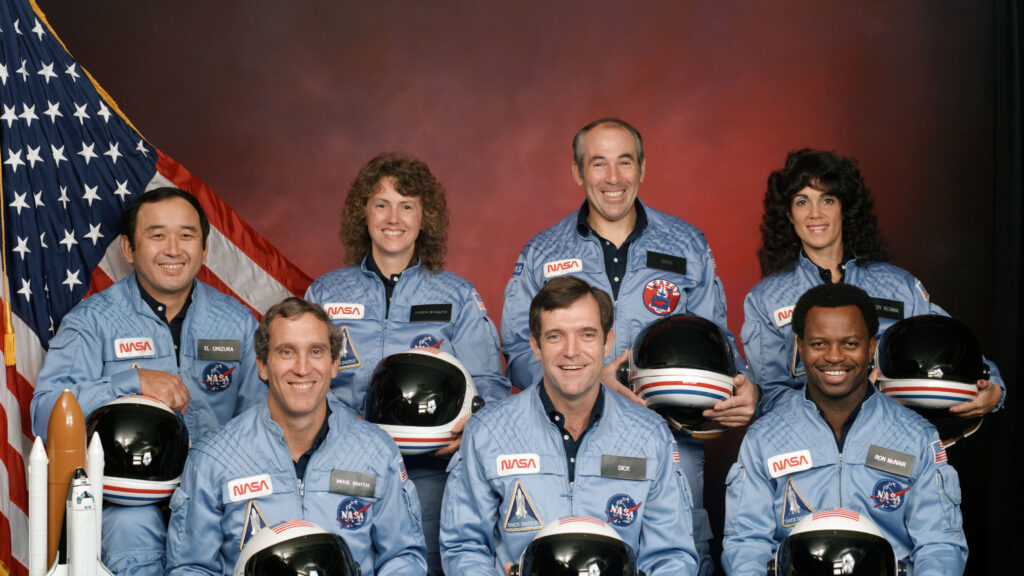
- The Crew: A seven-man team led by Commander Robert Overmyer, including two “Payload Specialists”—scientists specifically trained to run the onboard experiments.
A Floating Laboratory: What was Spacelab-3?
The heart of the mission was the Spacelab module, a pressurized laboratory tucked inside Challenger’s cargo bay. Developed by the European Space Agency (ESA), Spacelab allowed scientists to work in a “shirt-sleeve” environment, just like a lab on Earth, while orbiting 220 miles above the planet.
The “Zoo” in Space
One of the most famous aspects of STS-51-B was its biological research. Challenger carried a “Research Animal Holding Facility” containing:
- Two Squirrel Monkeys
- 24 Albino Rats
The mission aimed to study how weightlessness affected living organisms. While the crew famously spent a fair amount of time cleaning up “stray waste” that escaped the animal cages, the data collected was invaluable for understanding Space Adaptation Syndrome (space sickness) and bone density loss in microgravity.
Breaking Scientific Ground
Beyond biology, the crew of STS-51-B managed a grueling 24-hour shift schedule to maximize their seven days in orbit. Their work covered five primary areas:
- Materials Processing: Growing near-perfect crystals that are impossible to create on Earth due to gravity.
- Atmospheric Physics: Using the ATMOS (Atmospheric Trace Molecule Spectroscopy) instrument to map the Earth’s upper atmosphere.
- Fluid Mechanics: Studying how liquids behave in space, which is critical for designing better fuel tanks for future spacecraft.
- Astronomy: Observing faint auroras and cosmic rays without the interference of Earth’s thick atmosphere.
- Life Sciences: Monitoring the crew’s own physiological changes alongside the animal subjects.
Success Despite Challenges
The mission wasn’t without its hurdles. A leak in one of the experiments threatened to shut down the science program early, and the aforementioned “escaped debris” from the animal cages made for some messy workdays.
However, the crew successfully completed 14 out of 15 major experiments. When Challenger landed at Edwards Air Force Base on May 6, 1985, it brought back more raw scientific data than almost any mission before it.
Why STS-51-B Matters Today
STS-51-B proved that the Space Shuttle was more than just a “truck” for satellites—it was a versatile, high-functioning research station. The lessons learned during this mission regarding animal care, crystal growth, and atmospheric monitoring laid the direct groundwork for the operations we now see daily on the International Space Station (ISS).
It serves as a powerful reminder of Challenger’s incredible capabilities and the brilliant scientific legacy it left behind.
Quick Stats: STS-51-B
- Orbits of Earth: 111
- Distance Traveled: 2.9 million miles
- Landing: Edwards Air Force Base, California
- Key Achievement: First mission to fly the fully operational Spacelab configuration.
Related Space History Events
More significant events from aviation history
Mercury-Redstone 3: America’s First Man in Space
🗓 5 May, 1961 📍 Cape Canaveral LC-5 ★★★★★ Read full story →
STS-1 Columbia Mission: The First Space Shuttle Flight
🗓 12 April, 1981 📍 Kennedy, LC-39A ★★★★☆ Read full story →
The Legacy of April 1, 1960: Launching the First Weather Satellite TIROS-1
🗓 1 April, 1960 📍 Cape Canaveral, LC-17A ★★★★☆ Read full story →
Launch of Magellan (Spacecraft)
🗓 4 May, 1989 📍 Venus orbiter ★★★★☆ Read full story →