Auguste Piccard’s 1931 Stratospheric Balloon Flight
Long before modern astronauts crossed the boundary into space, the early pioneers of flight faced a seemingly insurmountable barrier: the upper atmosphere. On May 27, 1931, Swiss physicist Auguste Piccard and his assistant Paul Kipfer shattered that barrier, becoming the first humans to enter the stratosphere.
Launching from Augsburg, Germany, in a revolutionary, sealed capsule attached to a massive hydrogen balloon, the duo ascended to a breathtaking altitude of 51,775 feet (15,781 meters). Their successful high-altitude journey proved that human life could survive in the near-vacuum of the upper atmosphere, laying the direct technical foundation for modern high-altitude aviation and manned spaceflight.
The Pioneer: Who Was Auguste Piccard?
Professor Auguste Piccard was a brilliant Swiss physicist and inventor teaching at the Free University of Brussels. Unlike traditional aviators of the 1920s and 30s who sought records for speed or distance, Piccard’s motivation was purely scientific.
He wanted to study cosmic rays—highly energetic subatomic particles originating from deep space. To accurately measure these rays, he needed to rise above the dense, protective layers of the Earth’s troposphere, where atmospheric interference would not distort his data.
The Technology: The Pressurized Aluminum Gondola
At 50,000 feet, the atmospheric pressure is less than one-tenth of what it is at sea level. Without protection, a human would lose consciousness within seconds due to hypoxia (oxygen deprivation) and fluids in the body would begin to boil.
To survive these deadly conditions, Piccard designed a groundbreaking piece of aerospace engineering: the pressurized aluminum gondola.
- The Shell: A perfectly airtight sphere made of lightweight aluminum, measuring just 7 feet (2.1 meters) in diameter.
- The Atmospheric Control: Inside, Piccard installed a primitive but effective life support system that utilized a liquid oxygen tank to constantly replenish the air, while a chemical scrubber absorbed exhaled carbon dioxide.
- The Paint Scheme: In a classic example of early aerospace experimentation, one half of the sphere was painted flat black to absorb solar radiation and generate heat, while the other half was painted reflective white to bounce heat away.
This pressurized capsule was suspended beneath a massive, ultra-thin cotton balloon envelope filled with hydrogen gas, designed to expand as the air thinned during the ascent.
Flight Profile: The Historic Stratospheric Ascent
On the morning of May 27, 1931, the flight commenced from a launching site in Augsburg, Germany. The ascent did not begin smoothly; a sudden gust of wind damaged the gondola’s air valves during takeoff, creating a small internal air leak that Piccard and Kipfer had to frantically seal using a mixture of petroleum jelly and oakum fiber.
Despite the early mechanical scare, the massive hydrogen balloon performed perfectly. Within hours, the sphere broke through the tropopause and entered the stratosphere, settling at a record-breaking peak altitude of 51,775 feet.
Trapped in the Stratosphere
Once at peak altitude, the scientists successfully collected data proving that cosmic rays were significantly stronger in the upper atmosphere. However, when the time came to descend, they encountered a dangerous malfunction: the rope used to trigger the balloon’s hydrogen venting valve had tangled.
Unable to release gas, Piccard and Kipfer were trapped in the stratosphere for over fifteen hours, floating at the mercy of high-altitude winds. Inside the tiny capsule, temperatures fluctuated violently between freezing cold and stifling heat as the sphere rotated in the sun. It was only after night fell and the cooling air caused the hydrogen gas inside the balloon to naturally contract that the aircraft finally began to descend.
The Landing on the Austrian Glacier
Near midnight, the gondola drifted over the rugged peaks of the Tyrolean Alps. Piccard and Kipfer executed a rough but successful emergency landing directly onto the snowbanks of the Gurgler Glacier in Obergurgl, Austria.
The two scientists spent the night sleeping inside the insulated aluminum capsule on the ice. The following morning, they hiked down the mountain to a nearby village, completely unaware that the international press had already presumed them dead. Their survival and the intact recovery of their scientific instruments made front-page news worldwide.
The Lasting Legacy: From Ballooning to NASA Space Suits
The scientific success of Auguste Piccard’s 1931 flight fundamentally re-engineered how humanity approached high-altitude exploration.
| Exploration Attribute | Impact of the 1931 Piccard Flight |
| Cabin Engineering | Proved that a spherical, pressurized hull is the ideal structure for resisting extreme pressure differentials—a design used later in early spacecraft like Vostok and Apollo. |
| Life Support Development | Established the baseline requirements for closed-loop oxygen and carbon dioxide scrubbing systems, which are critical components of modern spacesuits and the International Space Station (ISS). |
| Scientific Data | Confirmed the atmospheric altitude profile of cosmic rays, accelerating early research into particle physics and quantum mechanics. |
Piccard’s work also directly inspired his son, Jacques Piccard, who used similar structural pressure principles to build the Trieste bathyscaphe, diving to the deepest point of the ocean (the Mariana Trench) in 1960. The Piccard family remains the only dynasty to have explored both the highest highs and the lowest lows of the planet.
Conclusion
Auguste Piccard’s stratospheric balloon flight was an extraordinary synthesis of physical science and raw human bravery. By building a functional capsule capable of maintaining artificial atmospheric pressure, Piccard proved that human biology did not have to remain bound to the lower atmosphere. Every commercial jetliner cruising at 40,000 feet and every astronaut orbiting the globe today owes a direct technological debt to the two men who looked out a tiny round window at a deep indigo sky in 1931.
Related Space History Events
More significant events from aviation history
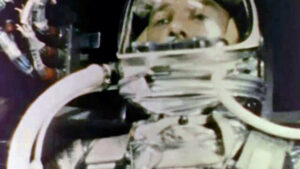
Mercury-Redstone 3: America’s First Man in Space
🗓 5 May, 1961 📍 Cape Canaveral LC-5 ★★★★★ Read full story →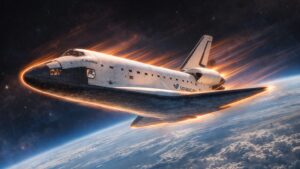
STS-1 Columbia Mission: The First Space Shuttle Flight
🗓 12 April, 1981 📍 Kennedy, LC-39A ★★★★☆ Read full story →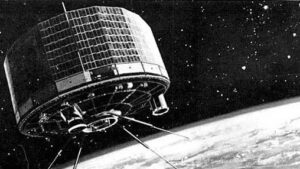
The Legacy of April 1, 1960: Launching the First Weather Satellite TIROS-1
🗓 1 April, 1960 📍 Cape Canaveral, LC-17A ★★★★☆ Read full story →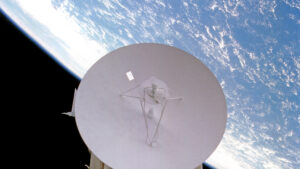
Launch of Magellan (Spacecraft)
🗓 4 May, 1989 📍 Venus orbiter ★★★★☆ Read full story →