Southern Airways Flight 242
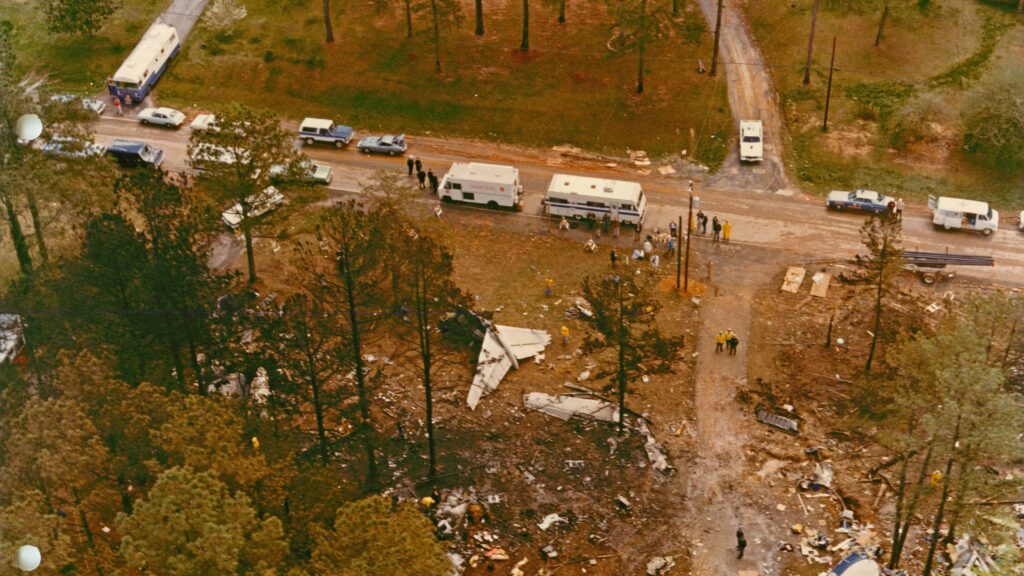
The Southern Airways Flight 242 crash occurred on April 4, 1977, in Georgia, USA.
It was operating a short domestic route from Huntsville, Alabama, to Atlanta, Georgia, with an intermediate stop. The aircraft involved was a McDonnell Douglas DC-9, a common short- to medium-haul jet at the time. There were 85 people on board, including passengers and crew.
Encounter with Severe Weather
During the flight, the crew encountered a line of thunderstorms near Rome, Georgia. At the time, onboard weather radar had limitations, especially in distinguishing the most intense parts of a storm.
As the aircraft entered the storm, it was exposed to:
- Heavy rain
- Turbulence
- Significant hail
The hail caused damage to the aircraft’s structure and affected airflow into both engines.
Both engines experienced serious performance degradation and eventually lost thrust. With limited power available, the aircraft began descending. The pilots attempted to reach a nearby airport but were unable to maintain sufficient altitude. As a result, they carried out a forced landing on a roadway.
Crash Outcome
The aircraft impacted a road in New Hope, Georgia. The accident resulted in:
- Fatalities among passengers and crew
- Additional casualties on the ground
- Survivors who were later rescued
Although tragic, the scale of the accident is more moderate compared to larger aviation disasters.
Investigation Findings
The investigation by the National Transportation Safety Board (NTSB) determined that the key issue was the aircraft’s penetration into a severe thunderstorm containing hail.
Contributing factors included: Operational decisions made under time pressure, limitations of weather radar technology at the time, difficulty assessing storm intensity in real conditions…
Related Historical Aviation Accidents Events
More significant events from aviation history

Assassination of Juvénal Habyarimana and Cyprien Ntaryamira: The 1994 Aircraft Shootdown in Rwanda
🗓 6 April, 1994 📍 Presidential Palace gardens, near Kigali International Airport, Kigali, Rwanda, 1°58′32″S 30°10′26″E / 1.9756°S 30.1739°E / -1.9756; 30.1739 ★★★★☆ Read full story →
1996 Charkhi Dadri Collision: The Deadliest Mid-Air Crash
🗓 12 November, 1996 📍 Charkhi Dadri, Haryana, India, 28°33′38″N 76°18′15″E / 28.56056°N 76.30417°E / 28.56056; 76.30417 ★★★★☆ Read full story →
United Airlines Flight 736: The Crash That Changed Aviation
🗓 21 April, 1958 📍 Clark County, Nevada, United States ★★★★☆ Read full story →
The Tragic Mystery of China Northern Airlines Flight 6136
🗓 7 May, 2002 📍 Bohai Bay, near Dalian Zhoushuizi International Airport, Dalian, Liaoning, China, 39°00′N 121°48′E / 39°N 121.8°E / 39; 121.8 ★★★☆☆ Read full story →