The Legacy of April 1, 1960: Launching the First Weather Satellite TIROS-1
Discover how NASA's April 1, 1960 mission with the first weather satellite TIROS-1 revolutionized global weather forecasting and Earth observations.
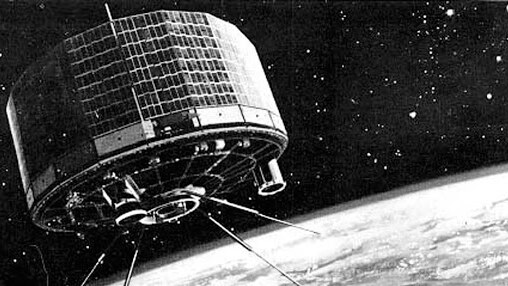
April 1, 1960, marked a monumental shift in how humanity observes our planet. On this day, NASA successfully launched the first weather satellite TIROS-1 into a low Earth orbit. This mission represented the dawn of space-based meteorology and completely changed modern science.
The Primary Goals of the First Weather Satellite TIROS-1
The TIROS-1 Program prioritized developing a sophisticated meteorological satellite information system. At the time, scientists considered weather forecasting the most promising application of satellite technology. Furthermore, NASA used this experimental step to determine if satellites could genuinely help us study Earth’s complex systems. The program also tested various design parameters, such as instruments and data transmission, because satellite technology remained in its infancy.
How the First Meteorological Satellite Improved Earth-Bound Decisions
The mission aimed to provide actionable data for life-saving decisions. For instance, meteorologists wanted to know if satellite imagery could accurately signal when to evacuate a coast due to an approaching hurricane. Consequently, the success of the first weather satellite TIROS-1 proved that space-based observations are absolutely essential. Moreover, this mission paved the way for the sophisticated global monitoring systems we rely on today.
Frequently Asked Questions About the First Weather Satellite TIROS-1
When did NASA launch the first weather satellite TIROS-1? NASA launched it on April 1, 1960, from Cape Canaveral, Florida.
What does TIROS stand for? TIROS stands for Television Infrared Observation Satellite.
What did the first weather satellite TIROS-1 achieve? It provided the first long-term sequence of images of Earth’s cloud patterns. This vital data proved that satellites are invaluable for weather forecasting.
How long did the TIROS-1 mission last? The satellite operated for 78 days and successfully sent back nearly 23,000 images of the Earth.
Related Space History Events
More significant events from aviation history
Mercury-Redstone 3: America’s First Man in Space
🗓 5 May, 1961 📍 Cape Canaveral LC-5 ★★★★★ Read full story →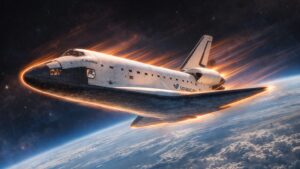
STS-1 Columbia Mission: The First Space Shuttle Flight
🗓 12 April, 1981 📍 Kennedy, LC-39A ★★★★☆ Read full story →
Launch of Magellan (Spacecraft)
🗓 4 May, 1989 📍 Venus orbiter ★★★★☆ Read full story →
Auguste Piccard’s 1931 Stratospheric Balloon Flight
🗓 29 May, 1931 📍 Augsburg, Germany ★★★☆☆ Read full story →