The First Flight of C-130J Super Hercules
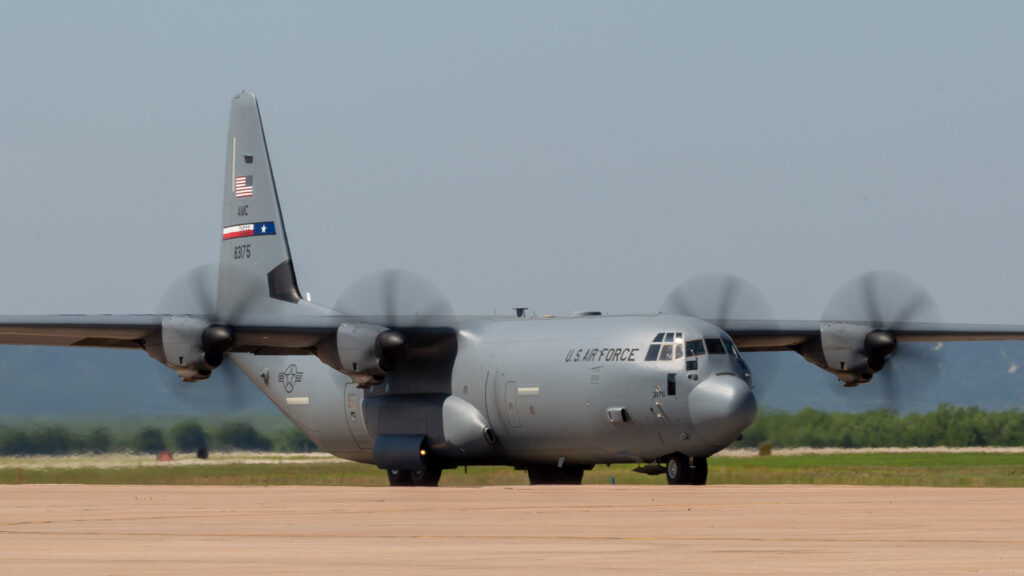
The Day the Legend Evolved: The First Flight of the C-130J Super Hercules
From the first flight on 5 April 1996 to 30 April 2013, 290 C-130J Super Hercules aircraft operated by 13 nations surpassed 1 million flight hours.
In the world of military aviation, few silhouettes are as recognizable as the Lockheed Martin C-130 Hercules. But on April 14, 1996, the skies over Marietta, Georgia, witnessed more than just another routine flight—they saw the birth of a digital revolution in tactical airlift. The first flight of the C-130J Super Hercules marked the transition of a Cold War workhorse into a 21st-century powerhouse.
A Legacy Reimagined
By the mid-1990s, the “legacy” C-130 (the E and H models) had already proven itself in every corner of the globe. However, the aging technology was reaching its limits. Lockheed Martin recognized that to keep the Hercules relevant, they couldn’t just tweak the design; they had to reinvent it from the inside out.
The result was the C-130J Super Hercules, an aircraft that looked identical to its predecessors but shared only about 30% of the same parts.
Key Technical Upgrades
What exactly made the “J” model “Super”? The upgrades focused on three core areas:
- Propulsion: The introduction of the Rolls-Royce AE 2100D3 turboprop engines provided significantly more horsepower.
- The Propellers: The iconic four-blade props were replaced with Dowty R391 six-blade composite propellers, easily identified by their curved, scimitar-like shape.
- The Flight Deck: The C-130J eliminated the need for a navigator and flight engineer, moving to a two-pilot cockpit featuring four large liquid crystal displays (LCDs) and dual Head-Up Displays (HUDs).
Higher, Faster, Further: Performance Stats
The first flight proved that the engineering theories worked in practice. When compared to the older C-130H, the Super Hercules delivered staggering improvements:
| Feature | Performance Increase |
| Maximum Speed | 21% Increase |
| Climbing Time | 50% Faster |
| Range | 40% Further |
| Operational Ceiling | Higher (up to 28,000 ft with 42,000 lbs payload) |
Why the C-130J Matters Today
Since that first flight in 1996, the C-130J has become the backbone of tactical airlift for over 20 nations. Its versatility is unmatched, serving in roles such as:
- Special Operations (AC-130J Ghostrider)
- Search and Rescue (HC-130J)
- Aerial Refueling (KC-130J)
- Weather Reconnaissance (WC-130J “Hurricane Hunters”)
The C-130J is the only Hercules model currently in production, proving that the foundation laid on April 14, 1996, was solid enough to carry the legend for decades to come.
Conclusion
The first flight of the C-130J Super Hercules wasn’t just a win for Lockheed Martin; it was a win for global logistics and military readiness. By marrying a rugged, proven airframe with cutting-edge digital technology, the “Super Herc” ensured that the Hercules legacy would remain the gold standard for tactical airlift well into the middle of the 21st century.
Related Military Aviation Event Events
More significant events from aviation history
Roswell Incident
🗓 8 July, 1947 📍 33°57′01″N 105°18′51″W / 33.95028°N 105.31417°W / 33.95028; -105.31417 ★★★☆☆ Read full story →
Mantell UFO Incident
🗓 7 January, 1948 📍 United States of America ★★★☆☆ Read full story →
Korean Air Lines Flight 902 Shootdown: The 1978 Cold War Airspace Incident
🗓 20 April, 1978 📍 near Loukhi, Karelian ASSR, Russian SFSR, Soviet Union, 66°02′54″N 33°04′14″E / 66.04833°N 33.07056°E / 66.04833; 33.07056 ★★★☆☆ Read full story →
United Airlines Flight 736: The Crash That Changed Aviation
🗓 21 April, 1958 📍 Clark County, Nevada, United States ★★★★☆ Read full story →