Mantell UFO Incident
Sent to look at an unidentified object over Kentucky on 7 January 1948, Air National Guard pilot Thomas Mantell climbed his P-51 without oxygen, blacked out and crashed.
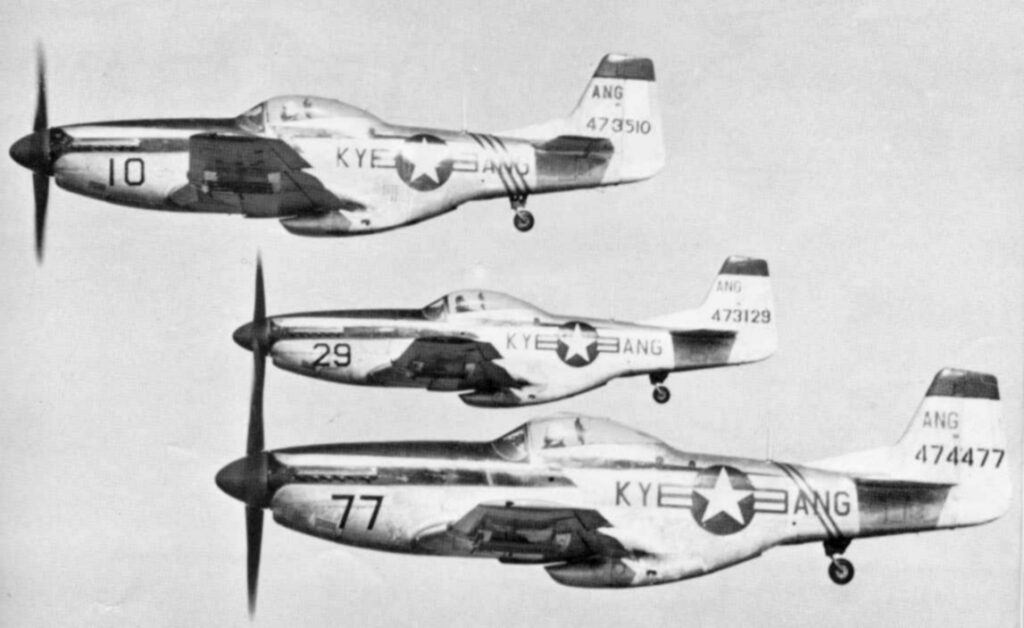
The Mantell UFO incident took place on 7 January 1948, when Captain Thomas F. Mantell, a 25-year-old Kentucky Air National Guard pilot, died after chasing an unidentified object in his P-51D Mustang. He climbed far above the altitude at which oxygen is needed, lost consciousness and crashed near Franklin, Kentucky. The case made headlines as the first death linked to a UFO sighting. Later investigations concluded that the object was most likely a giant, then-secret US Navy research balloon.
The Mantell incident at a glance
- Date: 7 January 1948
- Aircraft: North American P-51D Mustang, Kentucky Air National Guard
- Pilot: Captain Thomas F. Mantell Jr., a Second World War transport pilot
- Fatalities: 1
- Place: a farm near Franklin, Kentucky, United States
- Investigation: US Air Force (Project Sign, later Project Blue Book)
What happened
On the afternoon of 7 January, the Kentucky State Highway Patrol and then the control tower at Godman Field, next to Fort Knox, reported a large, bright object in the sky. A flight of four P-51 Mustangs from the Air National Guard’s 165th Fighter Squadron happened to be passing nearby on a ferry flight, and the tower asked them to take a look.
One pilot, short of fuel, left the formation. Mantell and the other two began to climb towards the object. None of the aircraft carried oxygen for a high-altitude flight. As they passed about 22,000 feet, the two wingmen turned back. Mantell continued climbing, reporting that the object was above and ahead of him and appeared to be metallic and of tremendous size.
Radio contact was lost. Witnesses later saw his Mustang descending in a spiral, and it crashed on a farm near Franklin. Investigators concluded that Mantell had blacked out from lack of oxygen, a condition called hypoxia, and that the aircraft had flown on until it lost control.
What did Mantell see?
The Air Force’s first explanation was that the pilots had seen the planet Venus, which can be visible in daylight. Later reviews by Project Blue Book concluded that the object was most likely a Skyhook balloon: a huge plastic research balloon, flown by the US Navy to great heights, which was secret at the time. Seen from below in sunlight, such a balloon looks bright and metallic, and it floats far higher than any piston fighter could reach.
Why it still matters
- Hypoxia kills quietly. Above about 15,000 feet without oxygen, judgement fails before the pilot notices anything is wrong. The Mantell crash is still used to show why oxygen rules are strict.
- The UFO era. Coming six months after the Roswell incident, it turned public interest in “flying saucers” into a national story and pushed the Air Force to set up formal investigations of sightings.
- The P-51’s ceiling. The Mustang could climb above 40,000 feet, which made the chase possible, but only a pilot with oxygen could survive up there. Read more in our P-51D Mustang entry.
Sources
US Air Force Project Sign and Project Blue Book files on the Mantell incident (1948 to 1950s); Kentucky Air National Guard historical records.
Related Military Aviation Event Events
More significant events from aviation history
Roswell Incident
🗓 8 July, 1947 📍 33°57′01″N 105°18′51″W / 33.95028°N 105.31417°W / 33.95028; -105.31417 ★★★☆☆ Read full story →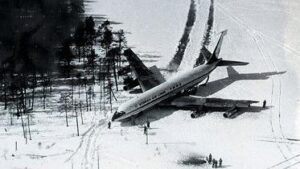
Korean Air Lines Flight 902 Shootdown: The 1978 Cold War Airspace Incident
🗓 20 April, 1978 📍 near Loukhi, Karelian ASSR, Russian SFSR, Soviet Union, 66°02′54″N 33°04′14″E / 66.04833°N 33.07056°E / 66.04833; 33.07056 ★★★☆☆ Read full story →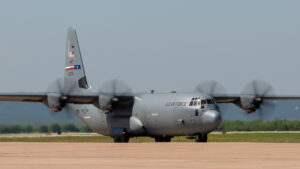
The First Flight of C-130J Super Hercules
🗓 5 April, 1996 ★★☆☆☆ Read full story →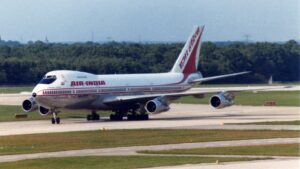
Air India Flight 855
🗓 1 January, 1978 📍 Arabian Sea, 3 km (1.9 mls) west of Santacruz Airport, Bombay, India., 18°58′30″N 72°09′33″E / 18.975°N 72.1592°E / 18.975; 72.1592 ★★★☆☆ Read full story →