The Tragic Hijacking of Air Vietnam Flight 706
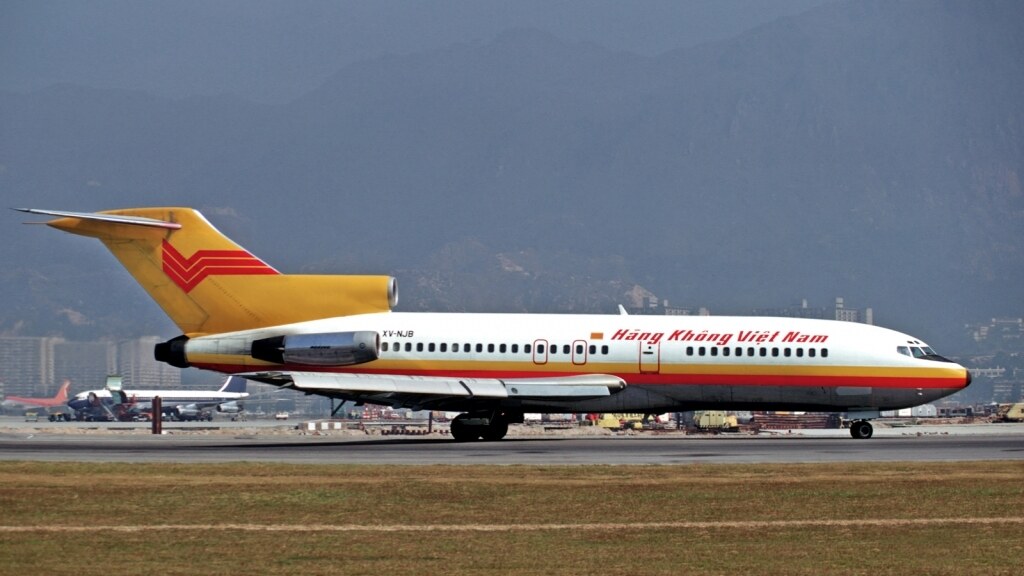
On September 15, 1974, the skies over South Vietnam became the setting for one of the most harrowing hijacking attempts in aviation history. Air Vietnam Flight 706, a Boeing 727, ended in a catastrophic crash that claimed the lives of all 75 people on board. Occurring during the final, turbulent months of the Vietnam War, this tragedy remains a somber case study in the dangers of cockpit interference and the volatile intersection of war and civil aviation.
Flight Background: A Routine Journey Interrupted
Air Vietnam was the flag carrier of South Vietnam, and Flight 706 was a standard domestic service connecting the central city of Da Nang to the capital, Saigon (now Ho Chi Minh City).
- The Aircraft: A Boeing 727-121C (registration XV-NJC). The 727 was the workhorse of the era, prized for its ability to operate out of shorter runways and its rugged reliability.
- The Passenger Load: On board were 67 passengers and 8 crew members, including many military personnel and civilians seeking travel across the war-torn country.
The Incident: Chaos at 30,000 Feet
Shortly after departure from Da Nang, a lone hijacker, later identified as a man named Le Duc Tan (an army ranger), managed to breach the cockpit. Armed with two hand grenades, he demanded that the flight be diverted to Hanoi, North Vietnam.
The pilots, Captain Nguyen Phan and his crew, faced an impossible dilemma. Navigating a South Vietnamese commercial jet into North Vietnamese airspace during an active conflict was essentially a suicide mission, as they would likely have been shot down by anti-aircraft defenses.
The Stand-off
For several minutes, the crew attempted to negotiate with the hijacker. Recognizing that they could not reach Hanoi, the pilots attempted to land the aircraft at Phan Rang Air Base to refuel or resolve the standoff.
Eyewitnesses and air traffic control reports indicate that the aircraft was on its final approach to Phan Rang. However, just as the plane was about to touch down, communication was lost.
The Crash: A Final Act of Desperation
At an altitude of approximately 1,000 feet, the situation in the cockpit reached a violent breaking point. It is believed that as the hijacker realized the pilots were not taking him to Hanoi, he detonated his hand grenades.
The explosion caused an immediate loss of control. The Boeing 727 plummeted and crashed into the ground near the airbase, disintegrating on impact. There were no survivors. The crash was so violent that recovery efforts were hampered by the total destruction of the airframe.
Historical Context: Aviation in a War Zone
The loss of Flight 706 cannot be viewed in isolation from the Vietnam War. By late 1974, South Vietnam was under immense pressure, and internal stability was crumbling.
- Desperation: The hijacker’s motive was believed to be a desperate attempt to defect or flee the deteriorating situation in the South.
- Security Gaps: Civil aviation security in a war zone was notoriously difficult to maintain. The ease with which a passenger could smuggle military-grade explosives onto a flight highlighted the systemic vulnerabilities of the time.
- The Final Days: This crash occurred less than a year before the Fall of Saigon, marking it as one of the final major civilian aviation disasters of the South Vietnamese state.
Impact and Lessons Learned
While the crash of Air Vietnam Flight 706 was overshadowed by the larger geopolitical shifts of the 1970s, it remains a critical point in aviation security history.
- Cockpit Security: The incident reinforced the need for reinforced cockpit doors and stricter protocols for dealing with armed intruders—measures that would eventually become global standards decades later.
- Hijacking Protocols: It served as a grim example for pilot training, illustrating that negotiation with a motivated, armed hijacker in a high-stress environment often has no positive outcome without external intervention.
Related Historical Aviation Accidents Events
More significant events from aviation history
1996 Charkhi Dadri Collision: The Deadliest Mid-Air Crash
🗓 12 November, 1996 📍 Charkhi Dadri, Haryana, India, 28°33′38″N 76°18′15″E / 28.56056°N 76.30417°E / 28.56056; 76.30417 ★★★★☆ Read full story →
Assassination of Juvénal Habyarimana and Cyprien Ntaryamira: The 1994 Aircraft Shootdown in Rwanda
🗓 6 April, 1994 📍 Presidential Palace gardens, near Kigali International Airport, Kigali, Rwanda, 1°58′32″S 30°10′26″E / 1.9756°S 30.1739°E / -1.9756; 30.1739 ★★★★☆ Read full story →
United Airlines Flight 736: The Crash That Changed Aviation
🗓 21 April, 1958 📍 Clark County, Nevada, United States ★★★★☆ Read full story →
China Airlines Flight 140: The 1994 Airbus A300 Crash in Nagoya
🗓 26 April, 1994 📍 Nagoya Airport, Nagoya, Japan, 35°14′43″N 136°55′56″E / 35.2453°N 136.9323°E / 35.2453; 136.9323 ★★★☆☆ Read full story →