Mercury-Redstone 3: America’s First Man in Space
Freedom 7: The 15 Minutes That Changed American History
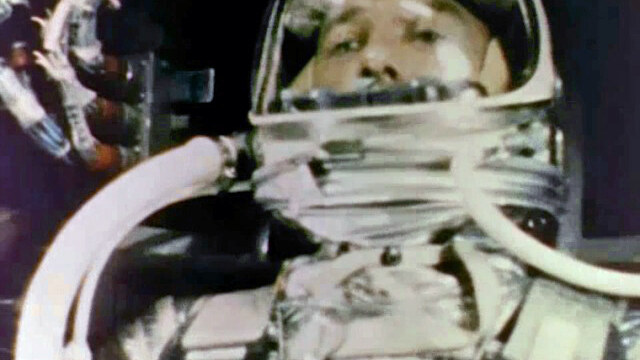
On May 5, 1961, a slender Redstone rocket stood on the launchpad at Cape Canaveral, carrying more than just a spacecraft. It carried the hopes, fears, and prestige of a nation. When Alan Shepard ignited those engines, he didn’t just become the first American in space—he proved that the United States was a formidable contender in the high-stakes Space Race.
The Mission: Mercury-Redstone 3
Following the Soviet Union’s success with Yuri Gagarin just weeks earlier, NASA was under immense pressure. The mission, dubbed Mercury-Redstone 3, was a suborbital flight designed to test if a human could survive and perform tasks in the harsh environment of space.
- The Pilot: Alan Shepard, a veteran Navy test pilot and one of the original “Mercury Seven.”
- The Spacecraft: A tiny, bell-shaped capsule Shepard named Freedom 7.
- The Goal: A 15-minute ballistic trajectory reaching an altitude of over 100 miles.
A Morning of Tension and “The Prayer”
The launch was far from smooth. Shepard sat in the cramped cockpit for over four hours due to weather delays and technical glitches. It was during this wait that he famously (and colorfully) urged mission control to “fix your little problem and light this candle!”
Legend also has it that he uttered a quiet “test pilot’s prayer” before ignition: “Please, dear God, don’t let me f— up.”
The Flight Profile
At 9:34 AM EST, the Redstone rocket roared to life.
- Powered Flight: The rocket burned for 2 minutes and 22 seconds.
- Weightlessness: Shepard experienced about five minutes of microgravity.
- Manual Control: Unlike Gagarin, whose flight was mostly automated, Shepard took manual control of Freedom 7, proving that humans could fly a spacecraft in zero-G.
- Re-entry: Shepard endured 11Gs during the steep descent back into the atmosphere.
116 Miles Up: What Shepard Saw
From his small porthole, Shepard gazed out at the curvature of the Earth. He described the view as “beautiful,” noting the brilliant blues of the Atlantic and the stark contrast of the black space above. Though the flight was short, the data collected was invaluable for the upcoming orbital missions.
The Splashdown and Hero’s Welcome
Freedom 7 splashed down in the Atlantic Ocean, near the Bahamas, exactly 15 minutes and 22 seconds after liftoff. Shepard and his capsule were recovered by a Marine Corps helicopter and delivered to the deck of the USS Lake Champlain.
The success of Freedom 7 was a massive psychological boost for the American public. Just 20 days later, inspired by Shepard’s success, President John F. Kennedy addressed Congress and set the ultimate goal: landing a man on the Moon and returning him safely to Earth before the decade was out.
The Legacy of Freedom 7
Alan Shepard’s 15 minutes of fame laid the foundation for the entire Apollo program. The Freedom 7 capsule now resides at the Smithsonian National Air and Space Museum, serving as a testament to the bravery of the early pioneers.
Quick Facts: Freedom 7
- Max Altitude: 116.5 miles (187.5 km)
- Max Speed: 5,134 mph (8,262 km/h)
- Distance Traveled: 302 miles
- Recovery Vessel: USS Lake Champlain (CVS-39)
Related Space History Events
More significant events from aviation history
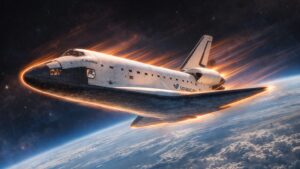
STS-1 Columbia Mission: The First Space Shuttle Flight
🗓 12 April, 1981 📍 Kennedy, LC-39A ★★★★☆ Read full story →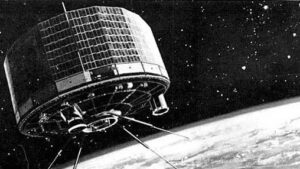
The Legacy of April 1, 1960: Launching the First Weather Satellite TIROS-1
🗓 1 April, 1960 📍 Cape Canaveral, LC-17A ★★★★☆ Read full story →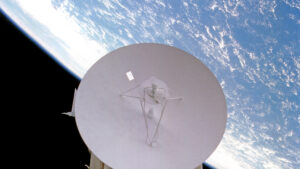
Launch of Magellan (Spacecraft)
🗓 4 May, 1989 📍 Venus orbiter ★★★★☆ Read full story →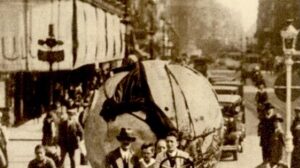
Auguste Piccard’s 1931 Stratospheric Balloon Flight
🗓 29 May, 1931 📍 Augsburg, Germany ★★★☆☆ Read full story →