Boeing Technology in 2026: Certified MAX Family, 777-9 and a Navy Fighter
Boeing's latest technology work in late 2026: MAX 7 and MAX 10 certified, 777-9 in final testing, a quieter 787 engine inlet and the Navy's F/A-XX fighter.
After several difficult years, Boeing has closed a number of long-running technology chapters in 2026. Two delayed 737 MAX versions have finally been certified, the 777-9 is in the last phases of its test programme, and the company has tested a quieter, lighter engine inlet on a 787. On the defence side, the US Navy chose Boeing to build its next carrier-based fighter. Here is a round-up of the Boeing technology programmes that matter most as the year ends.
The 737 MAX family is complete
On 3 August 2026, the FAA issued an amended type certificate for the 737 MAX 7, the smallest member of the family, about eight years after it began flight testing. The larger 737-10 followed on 20 October, Boeing said in its third-quarter results on 27 October. Both aircraft had been held up by a design problem found in 2024: the engine anti-ice system could overheat the composite engine inlet in some conditions. Boeing had to redesign the system and, as required under the post-2019 Aircraft Certification, Safety and Accountability Act, also update flight-control software and cockpit crew alerts.
The certification programme for the MAX 7 alone included more than 1,000 hours of flight and ground testing. Southwest Airlines is the launch customer, and analysts at Cirium estimate that about 30 MAX 7s have already been built and are waiting for delivery. The redesigned anti-ice system will also be fitted to the MAX 8 and MAX 9 already in service. You can compare the two newly certified versions in our database: the 737 MAX 7 and its siblings.
The 777-9 enters the final stretch
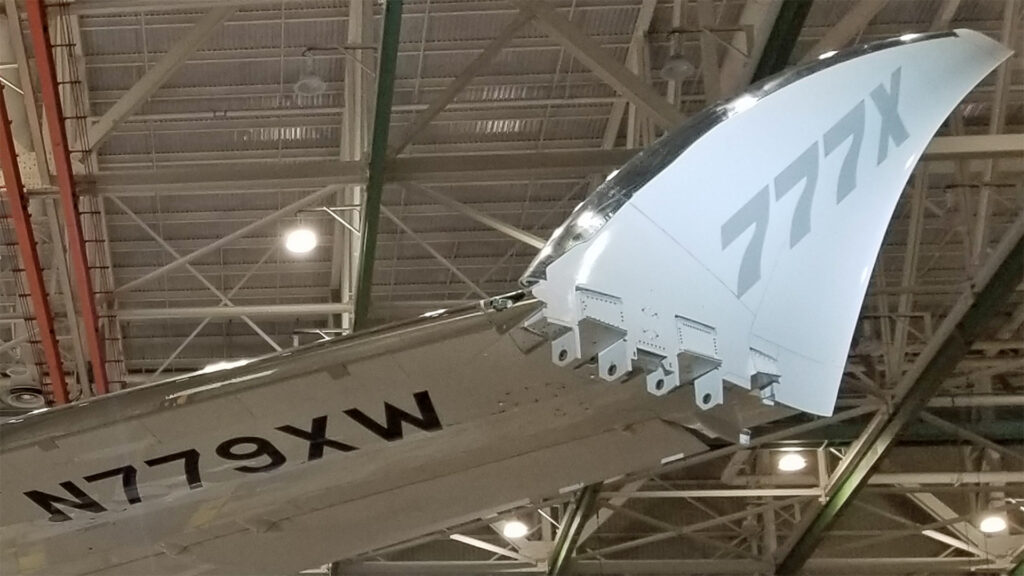
The 777-9, the first member of the 777X family, is Boeing’s biggest new airliner programme. It combines a new carbon-fibre wing with folding wingtips, which let its 71.8-metre span fit standard airport gates, and General Electric’s GE9X, the largest jet engine ever built. Boeing says the programme continued its certification flight testing in the third quarter and remains on track for first delivery in 2027, with Lufthansa expected to be the first operator. Boeing has said it expects approval for the final phases of flight testing by the end of 2026. The new jet will replace aircraft such as the 777-300ER.
A quieter engine inlet on the 2026 ecoDemonstrator
Every year, Boeing’s ecoDemonstrator programme takes technologies out of the laboratory and tests them in flight. The 2026 aircraft was a 787-9 destined for Lufthansa, powered by Rolls-Royce Trent 1000 engines. Flights took place in July and August at Boeing’s site in Glasgow, Montana, which has a ground microphone array that measures noise as aircraft pass low overhead.
The main test item was a Next-Generation Inlet: a shorter engine inlet whose sound-absorbing liner covers much more of the inner surface. A shorter nacelle means less weight and drag, and Boeing says the design will make it easier to fit future, more efficient engines with larger fans. The team also tested “Intelligent Operations” flight paths, routes generated by algorithms that use higher altitude constraints and continuous descent arrivals to cut fuel burn and noise within today’s air traffic control rules. The work is part of phase III of the FAA’s CLEEN programme, and a final report will be made public.
Thin wings after the X-66
In 2025, Boeing and NASA paused the X-66, a modified MD-90 that was to fly with a long, thin, truss-braced wing. The two partners are now concentrating on thin-wing technology itself rather than a full-scale flying demonstrator, and the design work and hardware from the X-66 have been kept. Very thin, long wings are one of the main ways the industry hopes to cut the fuel burn of the next generation of single-aisle aircraft.
A new fighter for the US Navy
On 29 September 2026, the Pentagon announced that Boeing had won the US Navy’s F/A-XX competition against Northrop Grumman. The full-scale development contract is valued at more than 20 billion dollars and covers several test aircraft. F/A-XX is a sixth-generation, carrier-based fighter designed to replace the F/A-18E/F Super Hornet from the 2030s and to extend the strike range of the carrier air wing. It is Boeing’s second sixth-generation fighter win, after the US Air Force’s F-47 in 2025.
What comes next
Boeing’s commercial priority now is stable production: the 737 line is working towards 47 aircraft a month and the 787 is holding at eight a month. In November, the company also told employees it plans to cut about 5 per cent of its Commercial Airplanes workforce because production increases have been delayed. The next technology milestones to watch are the 777-9’s certification and first delivery, the first MAX 7 and MAX 10 deliveries in 2027, and the first results from the F/A-XX development programme. For the European side of the story, see what Airbus is working on.
Sources
- Boeing: third quarter 2026 results, 27 October 2026
- AVweb: FAA certifies Boeing 737 MAX 7, 4 August 2026
- Boeing: 2026 ecoDemonstrator test programme facts, 16 July 2026
- Boeing: US Navy selects Boeing for F/A-XX, 29 September 2026
- USNI News: Boeing picked to build Navy’s F/A-XX carrier fighter, 29 September 2026
- Aviation Week: Boeing puts X-66 on ice but will continue thin wing studies
- Leeham News: Boeing plans to cut 5% of commercial workforce, 9 November 2026

Start the discussion
Commenting on this story: Boeing Technology in 2026: Certified MAX Family, 777-9 and a Navy Fighter