Airbus Technology in 2026: Longer Wings, A350F and Hydrogen Fuel Cells
Airbus technology in late 2026: longer wings tested on an A321neo, a shape-changing wing demonstrator, the A350F freighter and hydrogen fuel cells.
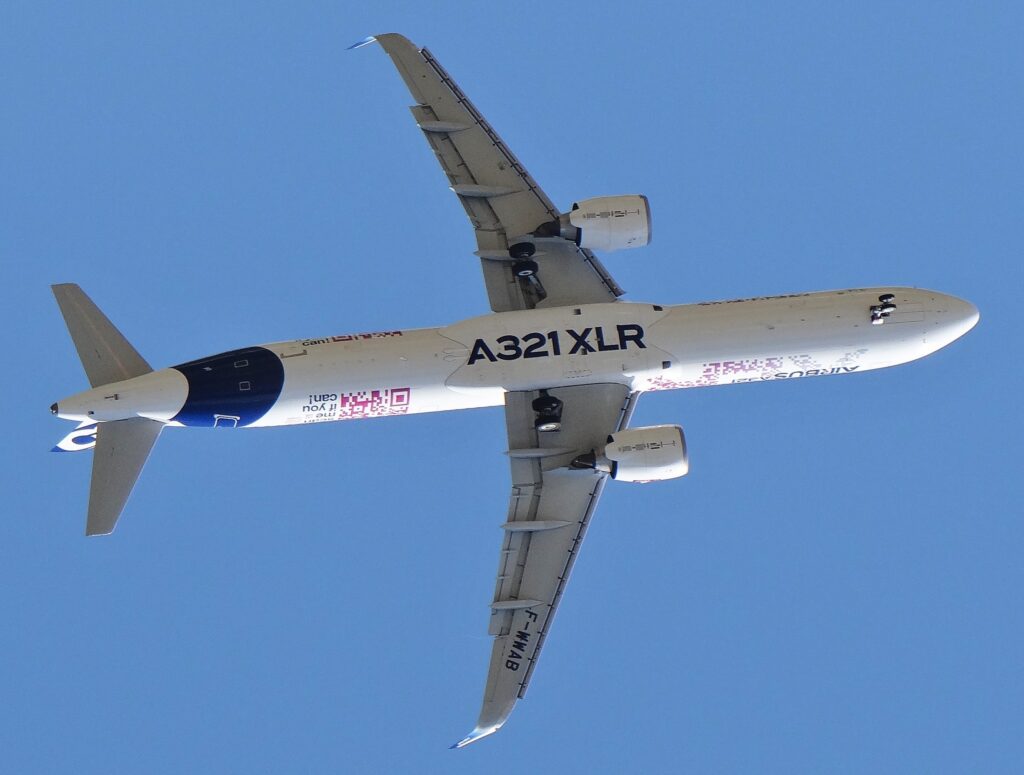
Airbus is using 2026 to prepare the technologies for its next generation of aircraft, above all the single-aisle jet that will one day replace the A320 family. The company has launched flight tests of much longer wings, is about to fly a wing that changes shape in flight, has flown its new A350F freighter for the first time and has agreed with MTU Aero Engines to develop a hydrogen fuel cell engine. Here is a round-up of the Airbus technology programmes that matter most as the year ends.
Longer wings on an A321neo
At the Farnborough Airshow on 21 July 2026, Airbus launched a new flight-test programme for its Wing of Tomorrow research. Over three years, it will design, build and fly full-scale wing extensions, each several metres long, on an A321neo. The extensions represent a folding wing in its fully extended position, and the tests will show how a much longer span behaves in real flight and how it changes the aircraft’s handling.
Long, slender wings create less drag and are one of the biggest levers for cutting fuel burn, but they do not fit standard airport gates, so Airbus is studying wings that fold on the ground, as Boeing has done on the 777X. The extensions will be built at Airbus’s Wing Technology Development Centre in the United Kingdom and flown from Toulouse. Since 2014 the Wing of Tomorrow work has received £227 million from the UK’s Aerospace Technology Institute and has already produced three 17-metre wings for ground tests.
A wing that changes shape in flight
A second demonstrator, the eXtra Performance Wing from Airbus UpNext, goes further. A modified Cessna Citation business jet is being fitted with a scaled wing whose surfaces adapt in flight, inspired by the way birds change the shape of their wings, to reduce drag and gust loads. Airbus said in July that assembly was nearing completion at Cazaux in south-west France and that a remotely piloted first flight is planned by the end of 2026.
The A350F takes to the air
On 29 September 2026, the A350F freighter made its first flight from Toulouse. The prototype, MSN700, flew for 4 hours and 10 minutes with a crew of five, reaching 25,000 ft and 340 knots. A second aircraft, MSN701, has joined the programme, and the two will fly a campaign of about 10 months and 400 flight hours towards EASA certification. Based on the A350 airliner, the freighter has a large main-deck cargo door and, according to Airbus, burns up to 40 per cent less fuel than previous-generation freighters. It will compete directly with Boeing’s 777-8F.
Hydrogen: from airliner to fuel cell engine
Airbus’s hydrogen plans have changed. In February 2025, the company said its ZEROe hydrogen airliner would not enter service by 2035 as first planned, and it has since concentrated on fuel cell electric propulsion rather than burning hydrogen in a gas turbine. On 7 July 2026, Airbus and MTU Aero Engines agreed to create a joint venture to develop, certify and sell a fully electric hydrogen fuel cell engine, aiming to supply the first such propulsion system for a commercial aircraft. The agreement is not yet binding, needs regulatory approval and consultation with employees, and the venture is expected to start work in 2027.
A new factory for engine pylons
Airbus is also investing in how it builds aircraft. In November 2026 it presented plans for a new factory on a 48-hectare site it owns at Cornebarrieu near Toulouse, which would make the pylons that attach engines to the wings, including A220 pylons now built in Wichita. A public consultation runs from 24 November 2026 to 16 February 2027. If the project is approved, construction could start around 2029 and production in 2031. French media report an investment of 600 to 900 million euros and around 3,500 jobs by 2037.
What comes next
The next milestones are the first flight of the eXtra Performance Wing, the first flights of the A321neo with its long wing extensions and the A350F’s certification campaign. All of them feed the decision on Airbus’s next single-aisle aircraft, which the company expects to bring to market in the second half of the 2030s. For the American side of the story, see what Boeing is working on, or compare today’s best-selling Airbus in our database, the A320neo.
Sources
- Airbus: new flight test programme for Wing of Tomorrow, 21 July 2026
- Airbus: A350F first flight, 29 September 2026
- Airbus: joint venture with MTU Aero Engines for a hydrogen fuel cell engine, 7 July 2026
- AeroTime: Airbus plans a new greenfield factory in Toulouse, 11 November 2026
- France 24: Airbus pushes ahead with future single-aisle jet and hydrogen plane, 21 July 2026


Start the discussion
Commenting on this story: Airbus Technology in 2026: Longer Wings, A350F and Hydrogen Fuel Cells