









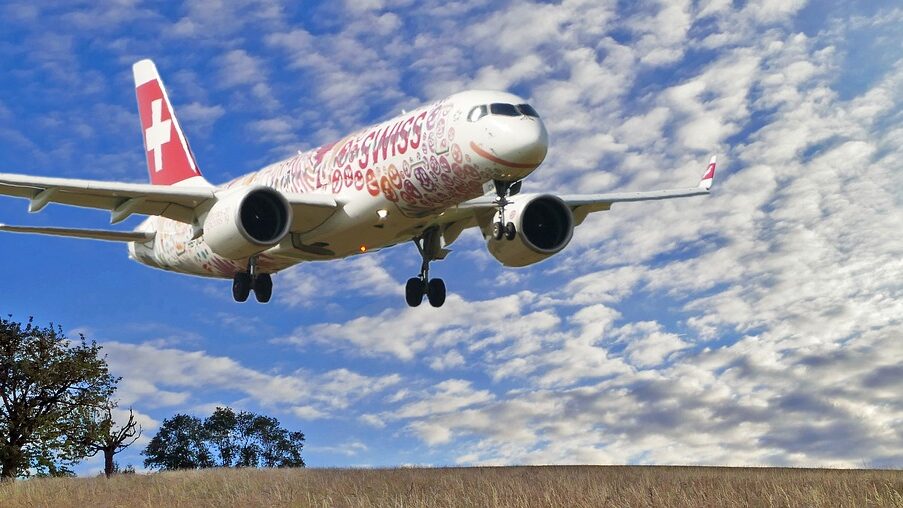
Last Updated: 4 months ago
← Back to Aircraft Database| General Characteristics | |
| Type | Civil and Commercial Aircraft, Narrow-body airliner |
|---|---|
| National Origin | Canada |
| Manufacturer | Airbus, Bombardier |
| Variants | Airbus A220-100 |
| Status | In service |
| First Flight | 16 September 2013 (12 years ago) (2013-09-16) |
| Introduction | 15 July 2016 (9 years ago) (2016-07-15) with Swiss Global Air Lines |
| Primary Users | JetBlue, Breeze Airways, Air France |
| Number Built | 493 as of February 2026 |
| Developed From | Airbus A220 |
| Capacity & Dimensions | |
| Cockpit Crew | Two |
| Typical Seating | 120–150 (Typical 2-class seating) |
| Max Seating | 160 seats |
| Overall Length | 38.71 m (127 ft) |
| Wing Span | 35.1 m (115 ft 2 in) |
| Wing Sweep | 0 degrees |
| Wing Area | 112.3 m2 (1,209 sq ft) area (10.97 AR) |
| Overall Height | 11.5 m (37 ft 9 in) |
| Weights, Powerplant & Performance | |
| MTOW | 70.9 t (156,000 lb) |
| OEW | 37.08 t (81,750 lb) |
| Fuel Capacity | 21,918 L (5,790 US gal) |
| Engines | 2 × Pratt & Whitney PW1500G |
| Max. Thrust | 108.5 kN (24,400 lb) |
| Typical Cruise Speed | 829 km/h (447 kn, Mach 0.78) |
| Max. Speed | 905 km/h (488 kn, Mach 0.82) |
| Range | 6,300 km (3,400 nmi, 3,900 mi) |
| Takeoff Distance | 1,900 m (6,200 ft) |
| Service Ceiling | 12,500 m (41,000 ft) |
The Airbus A220-300 is the larger member of the Airbus A220 family. It serves the small single-aisle market with more seating capacity than the A220-100, while still keeping the clean-sheet efficiency that made the A220 program important for modern airlines.
The aircraft originally entered the aviation world as the Bombardier CS300. Later, Airbus brought the C Series program into its commercial aircraft portfolio and renamed the CS300 as the Airbus A220-300. Therefore, this aircraft combines Canadian design roots with Airbus global support, production scale and airline market reach.
The Airbus A220-300 works well on regional, domestic and medium-haul routes. It gives airlines more seats than the A220-100, yet it remains smaller than an A320neo or Boeing 737-class aircraft. As a result, it helps operators serve routes where demand is too high for smaller regional jets but not high enough for larger narrow-body aircraft.
General Characteristics
| Feature | Specification |
|---|---|
| Aircraft Type | Small single-aisle twin-engine jet airliner |
| Main Category | Civil and Commercial Aircraft |
| Additional Category | Narrow-body airliner |
| Current Manufacturer | Airbus |
| Original Program | Bombardier C Series / CS300 |
| Country Category | Canada |
| Aircraft Family | Airbus A220 family |
| Variant | Airbus A220-300 |
| Former Name | Bombardier CS300 |
| ICAO Code | BCS3 |
| Typical Role | Regional, domestic and medium-haul passenger routes |
| Status | In production and in service |
The Airbus A220-300 shares the same basic design philosophy as the A220-100. However, it has a longer fuselage and higher seating capacity. Because of this, airlines can use it on routes where the smaller A220-100 may not provide enough seats.
Cabin and Seating
The A220-300 cabin offers a practical balance between passenger comfort and airline capacity. It can typically seat around 120 to 160 passengers, depending on airline configuration. In maximum seating layouts, the aircraft can carry up to 160 passengers.
| Feature | Specification |
|---|---|
| Cockpit Crew | Two pilots |
| Typical Seating | 120–160 passengers |
| Maximum Seating | Up to 160 passengers |
| Cabin Type | Single-aisle cabin |
| Typical Layout | Five-abreast seating |
| Cabin Concept | Modern small single-aisle airliner cabin |
The five-abreast cabin layout usually uses a 2-3 seating arrangement. This means fewer middle seats than a traditional six-abreast narrow-body cabin. Therefore, passengers often experience a more comfortable cabin on regional and medium-haul flights.
In addition, the aircraft offers large windows, modern lighting and a wider cabin feel than many older aircraft in the same market segment. These cabin features help airlines improve passenger experience without moving to a larger aircraft type.
Airbus A220-300 Dimensions
The Airbus A220-300 is longer than the A220-100, and this extra fuselage length gives it more cabin capacity. However, it keeps the same general A220 design language, including the advanced wing and efficient low-wing twinjet layout.
| Feature | Specification |
|---|---|
| Overall Length | 38.7 m / 127 ft 0 in |
| Cabin Length | 27.5 m / 90 ft 3 in |
| Fuselage Maximum Diameter | 3.5 m / 11 ft 6 in |
| Maximum Cabin Width | 3.28 m / 10 ft 9 in |
| Wingspan | 35.1 m / 115 ft 1 in |
| Height | 11.5 m / 38 ft 8 in |
| Wing Type | Advanced low-wing design |
The aircraft’s dimensions place it between larger regional jets and mainstream narrow-body airliners. Because of this size, the A220-300 can serve many airports efficiently while still offering meaningful passenger capacity.
Although it is smaller than the A320neo family, the aircraft does not feel like a traditional regional jet. Instead, it offers mainline-style cabin comfort, modern systems and strong range. As a result, airlines can use it to upgrade routes that previously relied on older or less efficient aircraft.
A220-300 Engines and Performance
The Airbus A220-300 uses two Pratt & Whitney PW1500G geared turbofan engines. These engines help reduce fuel burn, noise and emissions compared with many previous-generation aircraft in the same market. Moreover, the geared turbofan architecture supports efficient operation across different route lengths.
| Feature | Specification |
|---|---|
| Engines | 2 × Pratt & Whitney PW1500G geared turbofan engines |
| Engine Type | High-bypass geared turbofan |
| Maximum Takeoff Weight | 70.9 tonnes |
| Maximum Operating Mach | M0.82 |
| Range | 3,400 nautical miles |
| Maximum Seating | 160 passengers |
| Typical Mission | Regional, domestic and medium-haul routes |
The Airbus A220-300 gives airlines strong range for its size. It can operate short domestic sectors, longer regional routes and selected medium-haul services. Therefore, it provides network flexibility that many older regional aircraft cannot match.
Its performance also supports operations from a wide range of airports. Airlines can use it for hub-and-spoke routes, point-to-point flying and thinner city pairs. Consequently, the aircraft fits both network carriers and smaller-market route strategies.
Why Airlines Choose the A220-300
Airlines choose the Airbus A220-300 because it offers more seats than the A220-100 while keeping the same efficient family concept. It helps operators right-size capacity on routes that do not need a larger A320neo or Boeing 737-class aircraft.
The aircraft also gives airlines strong passenger appeal. Its five-abreast layout, large windows and modern cabin create a comfortable travel experience. In addition, its efficient engines and advanced aerodynamics help reduce operating costs.
Another advantage is route flexibility. Airlines can use the A220-300 for short flights, regional international routes and longer thin markets. Because of this flexibility, the aircraft can open new routes or improve the economics of existing ones.
Operational Role
The A220-300 often serves domestic, regional and medium-haul passenger routes. It works well for airlines that need more capacity than a smaller regional jet but less capacity than a larger narrow-body aircraft.
The aircraft can support high-frequency business routes, leisure markets, secondary city pairs and hub feeder services. Meanwhile, its range allows airlines to fly longer sectors when demand does not justify a larger aircraft.
Because the Airbus A220-300 belongs to the A220 family, it also complements the A220-100. Airlines can use the smaller version on thinner routes and the larger version on busier sectors. As a result, both models can work together in a flexible fleet plan.
Comparison with the A220-100
The Airbus A220-300 is longer and carries more passengers than the A220-100. The A220-100 typically serves lower-capacity routes, while the A220-300 fits markets that need more seats and slightly stronger revenue potential.
Both aircraft share the same cabin width, cockpit philosophy and engine family. However, the A220-300 offers more cabin length and up to 160 seats. Therefore, airlines often choose it when they want A220 efficiency but need more passenger capacity.
The A220-100 remains useful for thinner routes. In contrast, the A220-300 gives airlines a better option for stronger markets. This makes the larger variant especially important in the A220 family.
Bombardier CS300 Heritage
The Airbus A220-300 began as the Bombardier CS300. Bombardier designed the C Series as a clean-sheet aircraft family for the 100 to 150 seat market. Later, Airbus introduced the A220 name and brought the aircraft into its product line.
This heritage matters because the aircraft is not a shortened or stretched version of an older Airbus model. Instead, it comes from a clean-sheet design focused on efficiency, comfort and route flexibility. Therefore, the A220-300 has a unique position within the Airbus commercial aircraft family.
Today, the aircraft carries the Airbus name, but its Canadian C Series background remains a key part of its story. This combination helps explain why the aircraft has such a distinctive market position.
Frequently Asked Questions
Is the Airbus A220-300 the same as the Bombardier CS300?
Yes. The aircraft was originally known as the Bombardier CS300. After Airbus introduced the A220 family, the CS300 became the Airbus A220-300.
How many passengers can the A220-300 carry?
The aircraft can carry up to 160 passengers, depending on airline configuration.
What engines does the Airbus A220-300 use?
The aircraft uses two Pratt & Whitney PW1500G geared turbofan engines.
What is the range of the A220-300?
The aircraft has a range of about 3,400 nautical miles.
What is the difference between the A220-100 and A220-300?
The A220-300 is longer and carries more passengers. The A220-100 is better suited to lower-capacity routes, while the A220-300 fits stronger markets.
Airbus A220-300 Summary
The Airbus A220-300 is the larger member of the A220 family and the successor to the Bombardier CS300 name. It combines up to 160 seats, Pratt & Whitney geared turbofan engines, a comfortable five-abreast cabin and a range of about 3,400 nautical miles. Because of this balance, the A220-300 gives airlines an efficient option for regional, domestic and medium-haul routes that need more capacity than smaller regional jets but less capacity than larger narrow-body aircraft.
Source: Overview of the Airbus A220-300
Did you knowAviationStream.com has a YouTube channel? Check out TheAeroGraphyOfficial and subscribe to watch fun, highly engaging aviation Shorts!