








Last Updated: 4 months ago
← Back to Aircraft Database| General Characteristics | |
| Type | Civil and Commercial Aircraft, Wide-body jet airliner |
|---|---|
| National Origin | Multi-national |
| Manufacturer | Airbus |
| Variants | A300B4-300R, A300-600F |
| Status | In limited passenger service, in cargo service |
| First Flight | December 9, 1987 |
| Introduction | April 20, 1988 |
| Primary Users | FedEx Express, UPS Airlines, European Air Transport Leipzig, Iran Air |
| Number Built | 561 |
| Developed From | Airbus A300-600 |
| Capacity & Dimensions | |
| Cockpit Crew | Two |
| Typical Seating | 247–285 |
| Max Seating | 345 |
| Overall Length | 54.08 m |
| Wing Span | 44.84 m |
| Wing Sweep | 25 degrees |
| Wing Area | 260 m2 |
| Overall Height | 16.66 m |
| Weights, Powerplant & Performance | |
| MTOW | 171,700 kg |
| OEW | 88,626 kg |
| Fuel Capacity | 53,505 kg |
| Engines | GE CF6-80C2 or PW4158 |
| Max. Thrust | 249–270 kN |
| Typical Cruise Speed | 833 km/h |
| Max. Speed | Mach 0.82 |
| Range | 7,500 km |
| Takeoff Distance | 2,400 m |
| Service Ceiling | 35,000 ft |
The Airbus A300-600R is the increased-range passenger version of the Airbus A300-600 family. It belongs to the later development stage of the original Airbus A300, the world’s first twin-engine wide-body airliner. As a result, the aircraft combines early Airbus wide-body design with improved range, updated systems and a more efficient two-crew cockpit.
Airbus developed the A300-600 from the earlier A300B4. The newer version used several improvements from the Airbus A310, including a redesigned rear fuselage section that created more useful cabin space. Therefore, the aircraft could carry additional passengers and more underfloor cargo compared with earlier A300 versions.
The Airbus A300-600R added more range to this platform. The “R” stands for increased range, and the aircraft achieved this through higher fuel capacity and weight improvements. Because of this, airlines could use the type on longer regional and medium-haul routes while still benefiting from the wide-body cabin and twin-engine operating economics.
Airbus A300-600R General Characteristics
| Feature | Specification |
|---|---|
| Aircraft Type | Twin-engine wide-body jet airliner |
| Main Category | Civil and Commercial Aircraft |
| Additional Category | Wide-body jet airliner |
| Manufacturer | Airbus |
| National Origin | Multi-national |
| Aircraft Family | Airbus A300-600 |
| Official Designation | Airbus A300B4-600R |
| Common Name | Airbus A300-600R |
| Primary Role | Medium-range passenger transport |
| Cockpit Crew | Two pilots |
| ICAO Code | A306 |
| Status | Out of production, mostly retired from passenger service |
The Airbus A300-600R should not be confused with the Airbus A300-600F. The A300-600F is a freighter version, while the A300-600R is mainly a passenger aircraft. However, both aircraft belong to the same broader A300-600 family and share many structural and system similarities.
A300-600R Cabin and Seating
The A300-600R offers a wide-body passenger cabin with twin aisles. In standard single-class seating, Airbus data lists 274 passengers. Airline layouts could vary depending on cabin class, galley position, lavatory arrangement and operator requirements.
| Feature | Specification |
|---|---|
| Standard Single-Class Seating | 274 passengers |
| Typical Airline Layout | Around 250–270 passengers, depending on configuration |
| Cabin Type | Twin-aisle wide-body cabin |
| Passenger Compartment Volume | About 574 m³ / 20,270 ft³ |
| Pressurized Fuselage Volume | About 860 m³ / 30,370 ft³ |
| Cockpit Volume | About 12 m³ / 424 ft³ |
The wide-body cabin gave airlines more capacity than narrow-body aircraft on busy routes. In addition, the twin-aisle layout improved boarding and deboarding compared with single-aisle aircraft. Therefore, the A300-600R worked well on high-demand routes where airlines needed wide-body comfort without moving to a much larger aircraft.
The aircraft also offered strong underfloor cargo capacity. Even in passenger service, airlines could carry baggage and freight in the lower compartments. As a result, the A300-600R supported both passenger revenue and belly cargo revenue.
Airbus A300-600R Dimensions
The aircraft kept the wide-body proportions of the A300 family. However, the A300-600 version included improvements that made better use of the fuselage and cabin volume.
| Feature | Specification |
|---|---|
| Overall Length | About 54.08 m / 177 ft 5 in |
| Wingspan | About 44.84–44.85 m / 147 ft 1 in |
| Overall Height | About 16.5 m |
| Fuselage Type | Wide-body fuselage |
| Wing Layout | Low-wing swept configuration |
| Engine Layout | Two underwing turbofan engines |
| Wingtip Devices | Wingtip fences on later configurations |
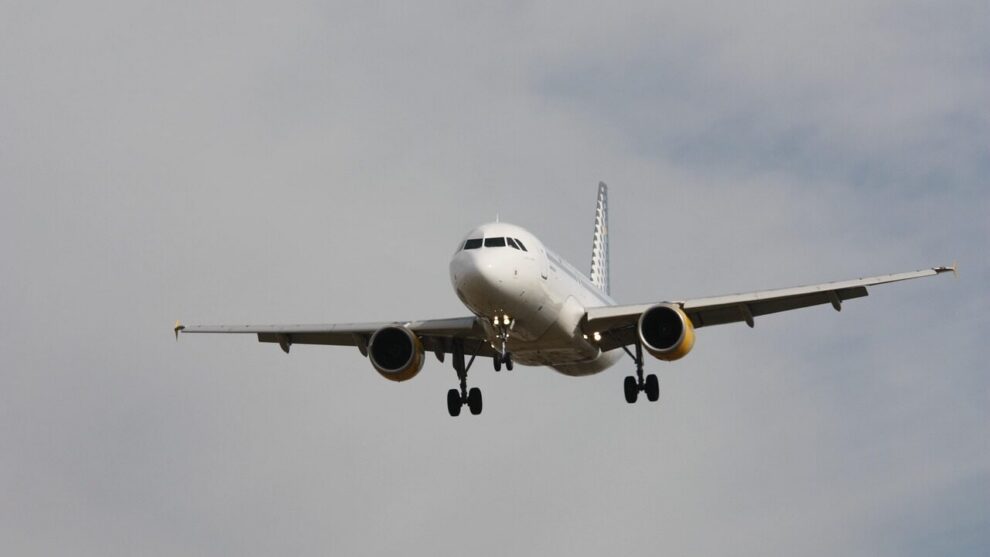
The Airbus A300-600R has a classic wide-body twinjet appearance. Its broad fuselage, two underwing engines and swept wings clearly show the design philosophy of early Airbus wide-body aircraft. Moreover, wingtip fences helped improve aerodynamic efficiency compared with earlier A300 configurations.
Because of its size, the aircraft offered a practical middle ground. It carried more passengers than narrow-body jets, yet it remained smaller than larger long-haul wide-body aircraft. Consequently, airlines could use it effectively on dense medium-haul markets.
A300-600R Engines and Performance
The A300-600R used high-bypass turbofan engines. Depending on the specific aircraft and customer selection, engine options included General Electric CF6-80C2 series engines or Pratt & Whitney PW4000 series engines.
| Feature | Specification |
|---|---|
| Engine Options | General Electric CF6-80C2 or Pratt & Whitney PW4000 series |
| Engine Type | High-bypass turbofan |
| Number of Engines | Two |
| Maximum Takeoff Weight | About 170,500–171,700 kg, depending on weight variant |
| Maximum Landing Weight | Up to about 140,000 kg |
| Maximum Zero Fuel Weight | About 130,000 kg |
| Estimated Operational Empty Weight | About 88,626–88,805 kg, depending on engine option |
| Estimated Maximum Payload | About 41,195–41,374 kg |
| Usable Fuel Capacity | About 68,160 litres / 18,008 US gallons |
The Airbus A300-600R offered more fuel capacity than the baseline A300-600 passenger model. Therefore, it could serve longer routes with better payload-range flexibility. This made the aircraft useful for airlines that wanted wide-body capacity on medium-range international sectors.
Although later Airbus aircraft such as the A330 introduced more modern technology and longer-range capability, the A300-600R remained an important step in Airbus development. It showed how the original A300 platform could evolve into a more capable aircraft with improved systems and better route flexibility.
Lower Cargo Capacity
| Feature | Specification |
|---|---|
| Usable Lower Cargo Volume | About 158.54 m³ / 5,602 ft³ |
| Forward Cargo Compartment | About 76.51 m³ / 2,702 ft³ |
| Aft Cargo Hold Compartment | About 61.03 m³ / 2,155 ft³ |
| Bulk Cargo Compartment | About 21 m³ / 742 ft³ |
| Cargo Role | Passenger baggage and belly freight |
The lower cargo compartments gave the A300-600R an important advantage. Airlines could carry passengers in the main cabin while also moving freight below the floor. Therefore, the aircraft worked well on routes with both passenger and cargo demand.
This belly cargo capacity also helped the aircraft remain valuable after its passenger service declined. Some A300-600 aircraft later moved into cargo roles or supported freight operators through freighter versions and conversions.
Why Airlines Chose the A300-600R
Airlines chose the Airbus A300-600R because it offered a strong mix of capacity, range and operating efficiency. It provided a wide-body cabin without requiring three or four engines. As a result, airlines could serve dense routes with lower engine count and simpler operation than many older wide-body aircraft.
The aircraft also benefited from a two-crew cockpit. Earlier A300B2 and A300B4 aircraft often used three crew members, including a flight engineer. In contrast, the A300-600 family adopted a more modern cockpit concept. Therefore, airlines could reduce cockpit crew requirements and align the aircraft more closely with newer Airbus designs.
In addition, the A300-600R gave airlines more flexibility than the baseline A300-600. The increased fuel capacity supported longer missions, while the wide-body cabin supported high passenger demand. Consequently, the aircraft became useful for medium-haul international routes, dense regional networks and high-capacity domestic services.
Operational Role
The A300-600R mainly served passenger airlines on medium-range routes. Airlines used it on busy regional and international sectors where a narrow-body aircraft did not provide enough capacity. Meanwhile, larger long-haul wide-bodies could be too expensive or too large for the same routes.
The aircraft also fit well into networks that needed strong belly cargo capacity. On many routes, airlines could carry passengers, baggage and freight together. Because of this, the A300-600R became a practical aircraft for high-demand city pairs.
Over time, newer aircraft replaced the A300-600R in many passenger fleets. However, the aircraft continued to matter in aviation history. It linked the original A300 concept with later Airbus wide-body families and helped prove the long-term value of twin-engine wide-body operations.
Comparison with the A300B4-200
The Airbus A300-600R is more advanced than the earlier A300B4-200. The A300B4-200 belongs to the early A300B2/B4 generation and usually used a three-crew cockpit. The A300-600R, on the other hand, belongs to the later A300-600 generation and uses a two-crew cockpit.
The A300-600R also offers improved fuel capacity, updated systems and better payload-range performance. In addition, the A300-600 family made better use of internal space because of the redesigned rear fuselage section. Therefore, the A300-600R represents a more mature version of the A300 concept.
Comparison with the A300-600F
The A300-600R and A300-600F share the same family background, but they serve different missions. The A300-600R is mainly a passenger aircraft, while the A300-600F is a freighter.
The passenger version focuses on cabin capacity, passenger comfort and belly cargo. The freighter version focuses on main-deck cargo loading and dedicated freight operations. Because of this difference, the two aircraft should have separate database entries.
Frequently Asked Questions
What is the Airbus A300-600R?
The Airbus A300-600R is the increased-range passenger version of the Airbus A300-600 wide-body twinjet family.
What does the “R” mean in A300-600R?
The “R” refers to increased range. The aircraft uses additional fuel capacity and weight improvements to support longer missions than the baseline A300-600.
Is the Airbus A300-600R a cargo aircraft?
No. The A300-600R is mainly a passenger aircraft. However, the A300-600 family also includes freighter versions such as the A300-600F and A300-600RF.
How many passengers can the A300-600R carry?
Airbus data lists 274 passengers in standard single-class seating. Airline layouts could vary depending on cabin configuration.
What engines does the Airbus A300-600R use?
The aircraft can use General Electric CF6-80C2 or Pratt & Whitney PW4000 series turbofan engines, depending on the specific aircraft.
Airbus A300-600R Summary
The Airbus A300-600R is an important increased-range version of the A300-600 passenger aircraft. It combines a wide-body twin-aisle cabin, two-crew cockpit, improved fuel capacity, strong underfloor cargo volume and efficient twin-engine operation. Although newer Airbus wide-bodies later replaced it in many fleets, the A300-600R remains a key aircraft in the development history of Airbus commercial aviation.
Did you knowAviationStream.com has a YouTube channel? Check out TheAeroGraphyOfficial and subscribe to watch fun, highly engaging aviation Shorts!