







Last Updated: 3 days ago
World War II undoubtedly marked a turning point in the history of aerial warfare. For the first time, WWII air combat tactics evolved into a sophisticated blend of technology, strategy, and pilot skill. Consequently, understanding these tactics not only sheds light on the war itself but also explains the foundation of modern air combat doctrines.
Evolution of WWII Air Combat Tactics
Initially, before WWII, aerial combat was relatively simple and often resembled individual duels rather than coordinated military operations. However, as the war progressed, nations rapidly developed new WWII air combat tactics to gain air superiority. Furthermore, aircraft became faster, more maneuverable, and heavily armed. As a result, this forced pilots to adapt quickly to survive.
Energy Fighting WWII: A Crucial Strategy
Undeniably, one of the most critical concepts in WWII air combat tactics was energy management. Specifically, this approach, often referred to as “energy fighting,” involved controlling an aircraft’s speed and altitude to gain an advantage over the enemy. For instance, pilots flying aircraft like the P-51 Mustang or Focke-Wulf Fw 190 used their superior speed and climb rates to dictate the terms of engagement.
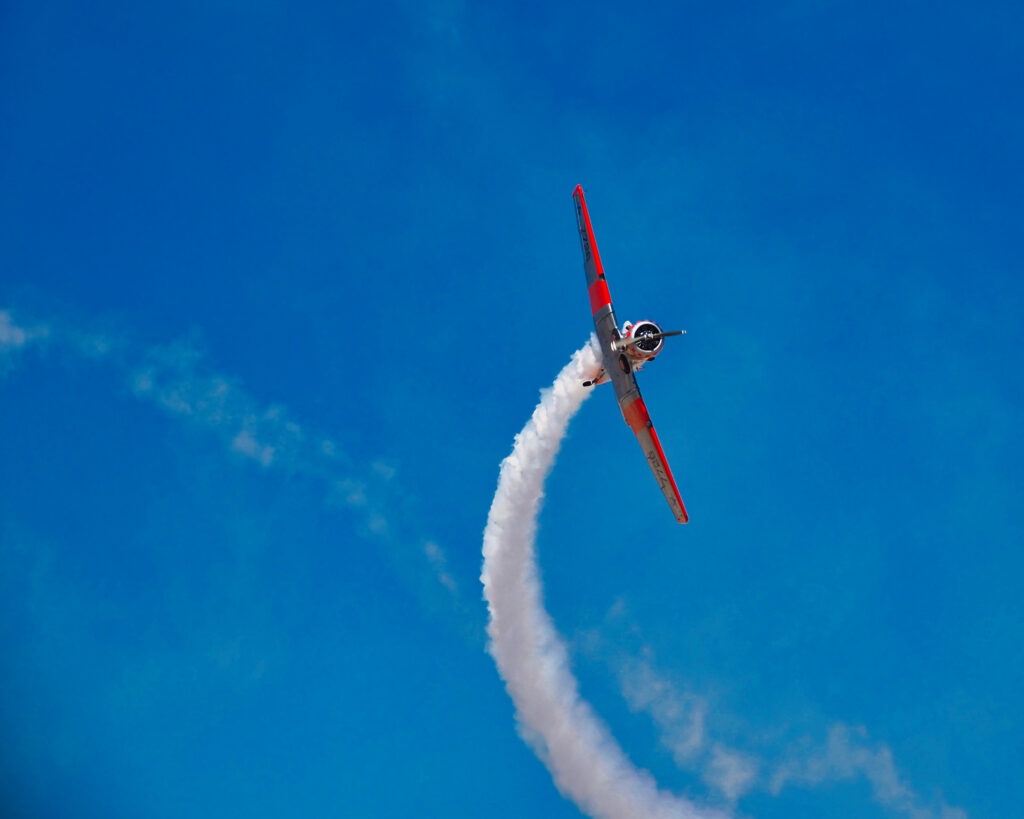
Instead of turning tightly with the enemy, energy fighters would perform “boom-and-zoom” attacks—diving from a higher altitude, firing a burst, and then climbing back to safety. Ultimately, this tactic minimized risk while simultaneously maximizing damage.
Dogfighting Strategies: Turn Fighting vs. Speed
In contrast to energy fighting, some aircraft excelled in turn fighting, where maneuverability was key. The Japanese Mitsubishi A6M Zero is a classic example. It could easily out-turn most Allied aircraft, thereby allowing pilots to get behind their opponents in close-range dogfights.
Naturally, dogfighting required exceptional situational awareness and reflexes. Because of this, pilots had to constantly scan the sky, anticipate enemy movements, and make split-second decisions. Nevertheless, relying solely on turning could be extremely dangerous against faster opponents utilizing energy-based WWII air combat tactics.
Flying in World War II Aerial Warfare
Moreover, another major advancement during WWII was the use of formation tactics. Early in the war, many air forces used tight formations; however, these significantly limited pilot visibility. Subsequently, the German Luftwaffe introduced the “finger-four” formation, which greatly improved flexibility and situational awareness.
Later on, this formation was adopted by Allied forces and quickly became a standard. Therefore, it allowed pilots to support each other, cover blind spots, and react more effectively to threats. Indeed, teamwork often made the clear difference between victory and defeat in the skies.
Boom-and-Zoom vs. Turn-and-Burn in Air Combat
Ultimately, successful WWII air combat tactics often came down to choosing the right approach based on the aircraft’s inherent strengths. On one hand, “boom-and-zoom” tactics favored speed and altitude. On the other hand, “turn-and-burn” tactics relied heavily on agility.
For example, a pilot in a Supermarine Spitfire might engage in tighter turns, whereas a pilot in a Messerschmitt Bf 109 would often use vertical maneuvers to secure an energy advantage. Above all, understanding your aircraft—and your enemy’s—was absolutely essential. Thus, many experienced pilots survived simply by avoiding unfavorable engagements altogether.
The Role of Technology
Additionally, the role of technology cannot be overstated. Radar, radio communication, and improved weapon systems played a crucial role in shaping WWII air combat tactics. First, radar allowed early detection of incoming enemy aircraft, giving pilots ample time to position themselves advantageously.
Furthermore, aircraft armament also rapidly evolved. Machine guns were either supplemented or entirely replaced by cannons, which increased firepower significantly. Consequently, this meant that engagements became much shorter but considerably more lethal. (For more historical context, visit The National WWII Museum’s archives on aerial warfare.
Lessons That Still Matter
Interestingly, the WWII air combat tactics developed during this era continue to heavily influence modern aerial warfare. Essential concepts like energy management, situational awareness, and teamwork remain fundamental in today’s fighter pilot training programs.
Even with the advent of advanced missiles and radar systems, the foundational principles established through WWII air combat tactics still apply today. Therefore, modern pilots still study these historical tactics to thoroughly understand the roots of modern aerial combat strategy.
Conclusion
In conclusion, WWII air combat was a complex and rapidly evolving battlefield where success ultimately depended on a combination of technology, skill, and tactical thinking. From energy fighting to advanced formation maneuvers, these WWII air combat tactics shaped the outcome of countless engagements and laid the solid groundwork for modern air warfare. Ultimately, understanding these tactics not only honors the brave pilots who fought in the skies but also provides highly valuable insight into exactly how air combat has evolved into what it is today.
Did you knowAviationStream.com has a YouTube channel? Check out TheAeroGraphyOfficial and subscribe to watch fun, highly engaging aviation Shorts.