STS-1 Columbia Mission: The First Space Shuttle Flight
The 1981 STS-1 Columbia mission changed space exploration. Discover how NASA's first Space Shuttle flight revolutionized orbital travel.
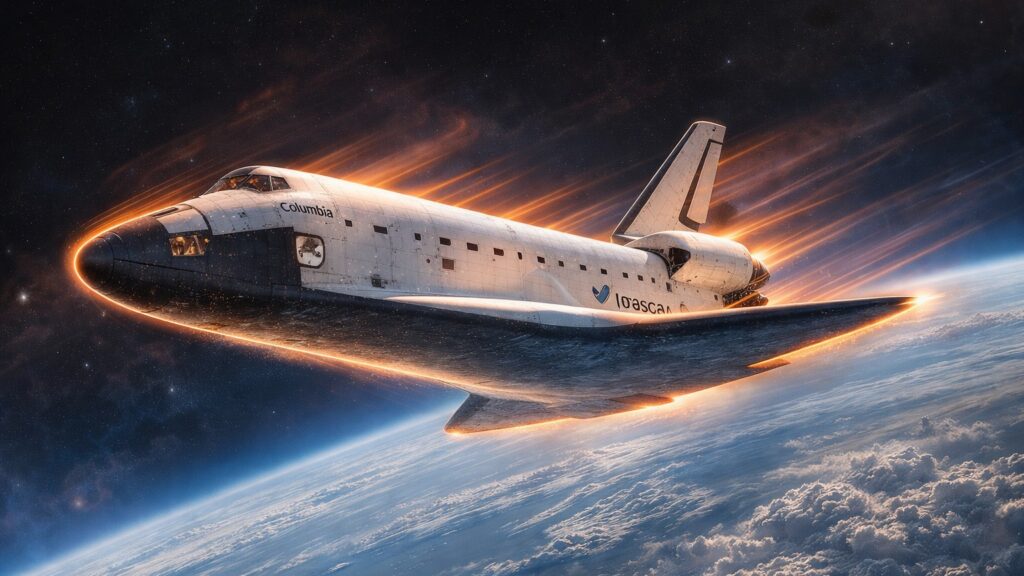
Initially, a monumental event changed aerospace history on April 12, 1981. Specifically, NASA successfully launched the historic STS-1 Columbia mission. Consequently, this remarkable event marked the dawn of a completely new era. Ultimately, humanity eagerly witnessed the very first Space Shuttle flight. Indeed, this daring journey finally proved the viability of a reusable spacecraft launch.
The Astronauts of the STS-1 Columbia Mission
First, legendary astronauts John W. Young and Robert L. Crippen commanded the orbiter. Basically, they bravely piloted the complex vehicle into the dangerous unknown. Furthermore, America returned to orbit exactly 20 years after Yuri Gagarin’s historic journey. Therefore, the STS-1 Columbia mission carried immense symbolic and technological weight globally.
Validating the Reusable Spacecraft Launch Concept
Before this era, space agencies threw away incredibly expensive rockets after just one use. However, NASA envisioned a much more economical and practical solution. Specifically, they designed the Space Transportation System to operate exactly like an airplane. Consequently, the first Space Shuttle flight aimed to validate this exact economic theory. Indeed, achieving a safe reusable spacecraft launch promised significantly cheaper access to orbit.
Unprecedented Risks of the First Space Shuttle Flight
Interestingly, this mission involved unprecedented risks for the brave flight crew. Unlike previous Apollo programs, NASA never tested the entire system without astronauts first. Specifically, the STS-1 Columbia mission served as the maiden voyage of the integrated stack. Additionally, the launch utilized incredibly powerful Solid Rocket Boosters for the first time. Consequently, these twin white rockets provided massive thrust during the initial atmospheric ascent.
Mission Objectives and Flight Systems
Next, the courageous crew spent 54 hours comfortably orbiting our blue planet. Specifically, they completed 36 full orbits during the first Space Shuttle flight. Consequently, the astronauts meticulously tested every single novel flight system on board. Indeed, they evaluated the unique aerodynamic capabilities and orbital maneuvering thrusters. Ultimately, their rigorous testing validated the radical heavy-lift spaceplane concept completely.
The Perfect Landing of the STS-1 Columbia Mission
Finally, the spacecraft fired its orbital maneuvering engines to safely de-orbit. Consequently, the orbiter descended rapidly through the thick Earth atmosphere. Specifically, commander John Young executed a flawless unpowered glider landing. Indeed, the massive vehicle touched down smoothly at Edwards Air Force Base. Ultimately, this incredible desert landing successfully concluded the STS-1 Columbia mission.
Legacy of the First Space Shuttle Flight
Following this immense triumph, NASA aggressively expanded its ambitious orbital operations. Specifically, the first Space Shuttle flight opened the door for massive satellite deployments. Furthermore, the program eventually allowed astronauts to construct the incredible International Space Station. Indeed, mastering the reusable spacecraft launch forever transformed global space exploration.
Conclusion
In conclusion, the STS-1 Columbia mission remains a towering aerospace engineering achievement. Undeniably, John Young and Robert Crippen demonstrated unparalleled piloting skill and extreme bravery. Today, modern aerospace companies still utilize the lessons learned from this exact program. Ultimately, the revolutionary Space Transportation System inspired an entire generation of future engineers.
Frequently Asked Questions (FAQs)
How long did the STS-1 Columbia mission last? The historic spaceflight lasted exactly 54 hours and encompassed 36 complete orbits around the Earth.
Who flew on the very first Space Shuttle flight? Veteran astronaut John W. Young commanded the flight, while rookie astronaut Robert L. Crippen served as the pilot.
How did the orbiter land back on Earth? The massive spacecraft executed a completely unpowered glider landing at Edwards Air Force Base in California.
So, here is the ultimate question for you: Do you prefer the classic Space Shuttle design or the modern vertical-landing rockets we see today? Let us know your thoughts in the comments below!
Did you knowAviationStream.com has a YouTube channel? Check out TheAeroGraphyOfficial and subscribe to watch fun, highly engaging aviation Shorts!
Related Space History Events
More significant events from aviation history
Mercury-Redstone 3: America’s First Man in Space
🗓 5 May, 1961 📍 Cape Canaveral LC-5 ★★★★★ Read full story →
The Legacy of April 1, 1960: Launching the First Weather Satellite TIROS-1
🗓 1 April, 1960 📍 Cape Canaveral, LC-17A ★★★★☆ Read full story →
Launch of Magellan (Spacecraft)
🗓 4 May, 1989 📍 Venus orbiter ★★★★☆ Read full story →
Auguste Piccard’s 1931 Stratospheric Balloon Flight
🗓 29 May, 1931 📍 Augsburg, Germany ★★★☆☆ Read full story →