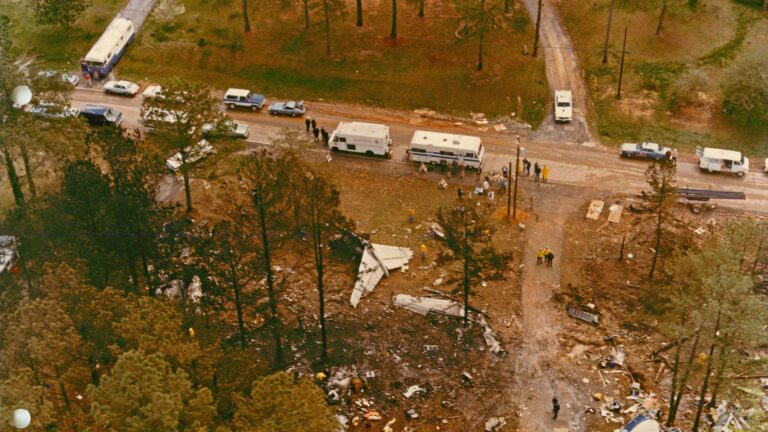
The Tragedy of Lauda Air Flight 004
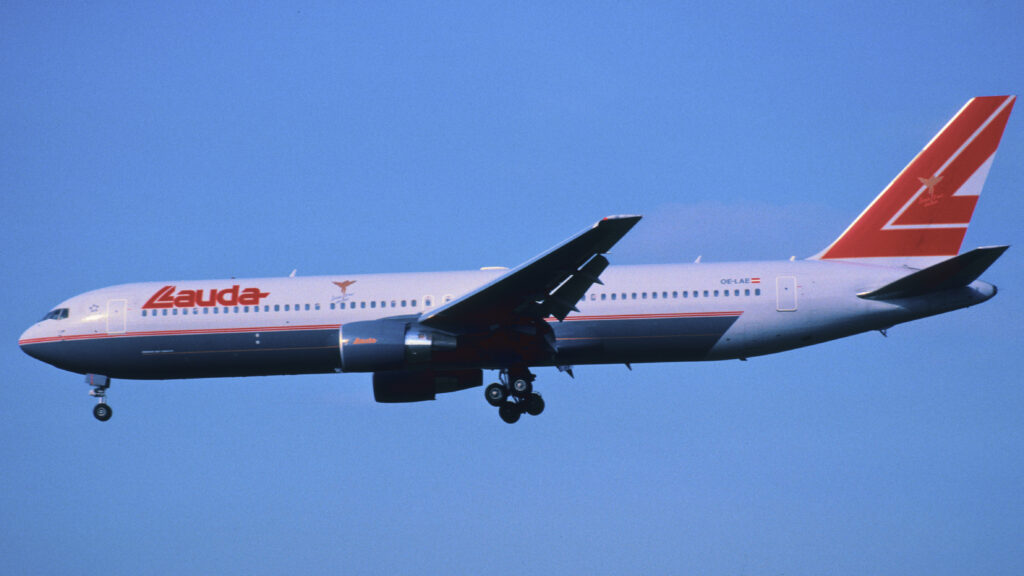
On May 26, 1991, the aviation world was shaken by a catastrophic accident in the skies over Thailand. Lauda Air Flight 004, a Boeing 767-300ER, suffered a mid-air structural failure that resulted in the loss of all 223 people on board.
While the event was a profound tragedy, the subsequent investigation led by Formula 1 legend Niki Lauda himself forced the aerospace industry to rethink engine safety and the reliability of automated systems.
Flight Background: From Bangkok to Vienna
Lauda Air was an Austrian airline founded by three-time F1 World Champion Niki Lauda. The airline was known for its high standards and modern fleet.
- The Aircraft: A Boeing 767 named Wolfgang Amadeus Mozart. It was only two years old and considered one of the most advanced wide-body jets in service.
- The Route: Flight 004 was a scheduled flight from Hong Kong to Vienna, with a stopover at Bangkok’s Don Mueang International Airport.
The Incident: An Unthinkable Failure
Just 15 minutes after taking off from Bangkok, as the aircraft was climbing through 24,700 feet, a warning appeared on the cockpit displays: “REV ISLN” (Reverser Isolation). This indicated a potential fault in the thrust reverser system of the left engine.
In a normal flight, a thrust reverser—used to slow the plane down after landing—should be mechanically incapable of deploying while the aircraft is in the air.
The Deployment
At 11:17 PM local time, while the pilots were discussing the warning, the left engine’s thrust reverser suddenly deployed. This created a massive amount of drag and disrupted the airflow over the wing.
The Boeing 767 violently banked to the left. The aerodynamic forces were so extreme that the aircraft entered an uncontrollable dive, eventually breaking up in mid-air before crashing into the jungle of Phu Toei National Park.
Niki Lauda’s Relentless Pursuit of Truth
Unsatisfied with early theories, Niki Lauda traveled to the crash site in Thailand and later to Boeing’s headquarters in Seattle. He was a pilot himself and refused to accept that “pilot error” was the cause.
Lauda challenged Boeing’s assertions that the plane could remain flyable if a reverser deployed at high speed. He famously demanded to test the scenario in a flight simulator. When the simulator showed that recovery was impossible, Boeing was forced to admit a technical flaw in the 767’s design.
The Investigation Findings
The NTSB and Thai authorities discovered that a failure in the directional control valve (a hydraulic component) had allowed the thrust reverser to deploy without any command from the cockpit.
The investigation revealed that:
- Hydraulic Contamination: Microscopic debris or electrical shorts could trigger the valve.
- Certification Flaws: It was previously believed that a “mechanical lock” would prevent deployment in flight, but the Lauda Air crash proved that hydraulic pressure could override these locks under specific failure conditions.
Lasting Impact on Aviation Safety
The legacy of Lauda Air Flight 004 is written in the safety protocols of every modern jet engine today. Following the crash:
- Mandatory Redesign: Boeing was required to install mechanical “third-line” locks on all 767, 757, and 737 aircraft to ensure that even a total hydraulic failure could not deploy a thrust reverser in flight.
- Revised Testing: The FAA and other global regulators changed certification requirements, forcing manufacturers to prove that an aircraft could withstand or recover from a reverser deployment at any phase of flight.
- Improved Maintenance: Stricter inspections of engine wiring and hydraulic systems became industry standard.
Related Historical Aviation Accidents Events
More significant events from aviation history
1996 Charkhi Dadri Collision: The Deadliest Mid-Air Crash
🗓 12 November, 1996 📍 Charkhi Dadri, Haryana, India, 28°33′38″N 76°18′15″E / 28.56056°N 76.30417°E / 28.56056; 76.30417 ★★★★☆ Read full story →
Assassination of Juvénal Habyarimana and Cyprien Ntaryamira: The 1994 Aircraft Shootdown in Rwanda
🗓 6 April, 1994 📍 Presidential Palace gardens, near Kigali International Airport, Kigali, Rwanda, 1°58′32″S 30°10′26″E / 1.9756°S 30.1739°E / -1.9756; 30.1739 ★★★★☆ Read full story →
United Airlines Flight 736: The Crash That Changed Aviation
🗓 21 April, 1958 📍 Clark County, Nevada, United States ★★★★☆ Read full story →
China Airlines Flight 140: The 1994 Airbus A300 Crash in Nagoya
🗓 26 April, 1994 📍 Nagoya Airport, Nagoya, Japan, 35°14′43″N 136°55′56″E / 35.2453°N 136.9323°E / 35.2453; 136.9323 ★★★☆☆ Read full story →