Air India Flight 171: Boeing 787 Crash in Ahmedabad
On 12 June 2025, Air India Flight 171, a Boeing 787-8 bound for London Gatwick, crashed into a medical college hostel in Ahmedabad 32 seconds after take-off. 241 of the 242 people on board and 19 people on the ground died.
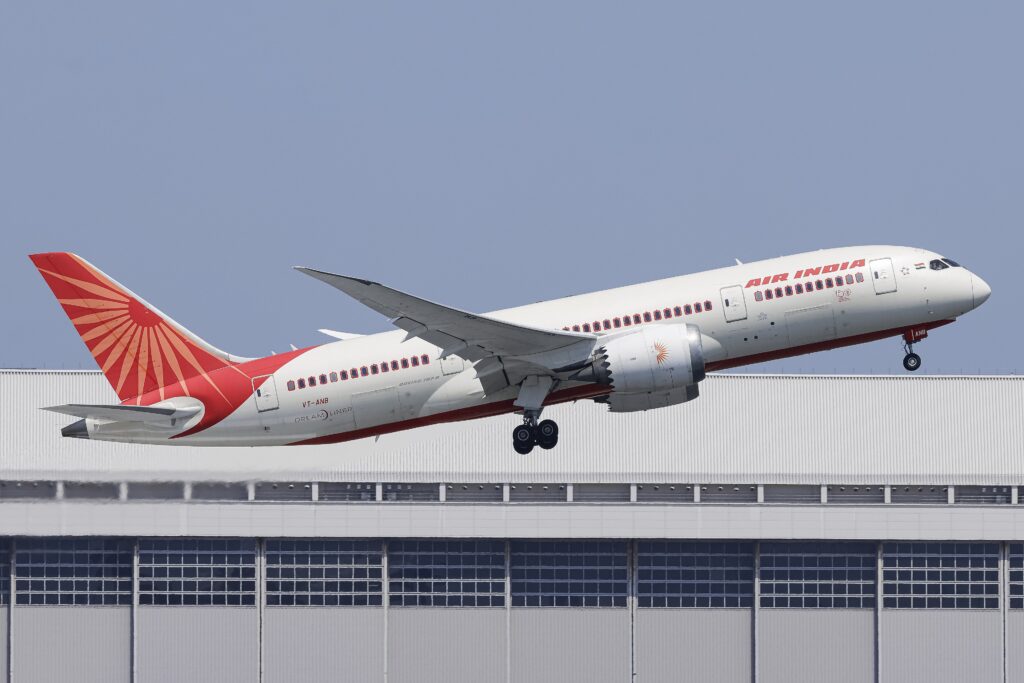
On 12 June 2025, Air India Flight 171, a Boeing 787-8 flying from Ahmedabad to London Gatwick, lost thrust on both engines moments after take-off and crashed into the hostel buildings of B. J. Medical College, about 1.7 km from the runway. Of the 242 people on board, one passenger survived. Nineteen people on the ground were also killed, making it the deadliest aviation accident in India in decades and the first fatal accident of a Boeing 787 since the type entered service in 2011.
Air India Flight 171 at a glance
- Date: 12 June 2025, 13:38 local time (08:08 UTC)
- Aircraft: Boeing 787-8 Dreamliner, registration VT-ANB, delivered to Air India in 2014
- Engines: two General Electric GEnx-1B
- Route: Ahmedabad (AMD), India, to London Gatwick (LGW), United Kingdom
- On board: 230 passengers and 12 crew (2 pilots, 10 cabin crew)
- Fatalities: 241 on board and 19 on the ground; one passenger survived
- Investigator: India’s Aircraft Accident Investigation Bureau (AAIB)
The flight
The aircraft was cleared for take-off from runway 23 at Sardar Vallabhbhai Patel International Airport in good weather, with light winds and clear visibility. It lifted off normally after a full-length take-off roll. The first officer was the pilot flying and the captain, who had about 15,600 flying hours, was monitoring.
Within seconds of lift-off, the aircraft stopped climbing. It reached only a few hundred feet before beginning to descend, and a “MAYDAY” call was transmitted to air traffic control. The aircraft was airborne for about 32 seconds. It struck trees and then the medical college campus, where it broke up and caught fire. Five buildings, including student and resident doctors’ accommodation, were badly damaged.
What the preliminary report found
The AAIB published its preliminary report on 12 July 2025, based mainly on the flight data recorder. Its key findings were:
- About three seconds after lift-off, the fuel control switches of both engines moved from RUN to CUTOFF, one after the other, about a second apart. With no fuel, both engines began to run down.
- On the cockpit voice recording, one pilot asks the other why he cut off the fuel, and the other replies that he did not.
- The ram air turbine deployed automatically to provide emergency power, as it is designed to do when both engines fail. You can read how it works in our glossary entry on the ram air turbine (RAT).
- Ten and fourteen seconds after the cut-off, the switches were returned to RUN and the engines began to relight, but at such a low height and speed the aircraft could not recover.
The preliminary report did not say why the switches moved, did not assign blame and made no safety recommendations to Boeing or GE at that stage. Fuel control switches on the 787 must be lifted over a detent before they can be moved, which is why the finding drew so much attention.
After the accident
India’s civil aviation regulator, the DGCA, ordered checks of the fuel control switch locking mechanism on Boeing aircraft operated by Indian airlines, and Air India carried out additional safety inspections across its 787 fleet. The airline retired the flight numbers AI171 and AI172 and later resumed the Ahmedabad–London route under new flight numbers.
The investigation, carried out under the rules of ICAO Annex 13 with the participation of the US NTSB and the UK AAIB, continued into 2026. In July 2026 the AAIB told India’s Supreme Court that a draft final report was expected around October 2026. This entry will be updated when the final report is published.
Why it matters
Flight 171 was the first hull loss of the Boeing 787 after more than a decade of service. Because the preliminary findings pointed to the fuel control switches rather than to a structural or engine failure, the final report is expected to be one of the most closely read accident reports of recent years, with possible lessons for cockpit design, crew procedures and flight recording. For background on the aircraft itself, see our article on the Boeing 787’s more-electric design.
More events from this month are in our Aviation History Calendar.
Sources
- Aircraft Accident Investigation Bureau (India), preliminary report on the accident to Boeing 787-8 VT-ANB, 12 July 2025
- NPR, Preliminary report says fuel switches were cut off before Air India Boeing 787 crash, 11 July 2025
- Gulf News, AAIB says investigation into AI171 still ongoing one year on, July 2026
- Live From A Lounge, AAIB tells Supreme Court draft AI171 report will be ready by October 2026, July 2026
Related Historical Aviation Accidents Events
More significant events from aviation history
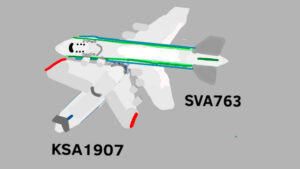
1996 Charkhi Dadri Collision: The Deadliest Mid-Air Crash
🗓 12 November, 1996 📍 Charkhi Dadri, Haryana, India, 28°33′38″N 76°18′15″E / 28.56056°N 76.30417°E / 28.56056; 76.30417 ★★★★☆ Read full story →
Assassination of Juvénal Habyarimana and Cyprien Ntaryamira: The 1994 Aircraft Shootdown in Rwanda
🗓 6 April, 1994 📍 Presidential Palace gardens, near Kigali International Airport, Kigali, Rwanda, 1°58′32″S 30°10′26″E / 1.9756°S 30.1739°E / -1.9756; 30.1739 ★★★★☆ Read full story →
United Airlines Flight 736: The Crash That Changed Aviation
🗓 21 April, 1958 📍 Clark County, Nevada, United States ★★★★☆ Read full story →
China Airlines Flight 140: The 1994 Airbus A300 Crash in Nagoya
🗓 26 April, 1994 📍 Nagoya Airport, Nagoya, Japan, 35°14′43″N 136°55′56″E / 35.2453°N 136.9323°E / 35.2453; 136.9323 ★★★☆☆ Read full story →