Air India Flight 855
Less than two minutes after take-off from Bombay on New Year's Day 1978, an Air India 747 rolled into the Arabian Sea. A faulty attitude indicator and a missed cross-check were to blame.
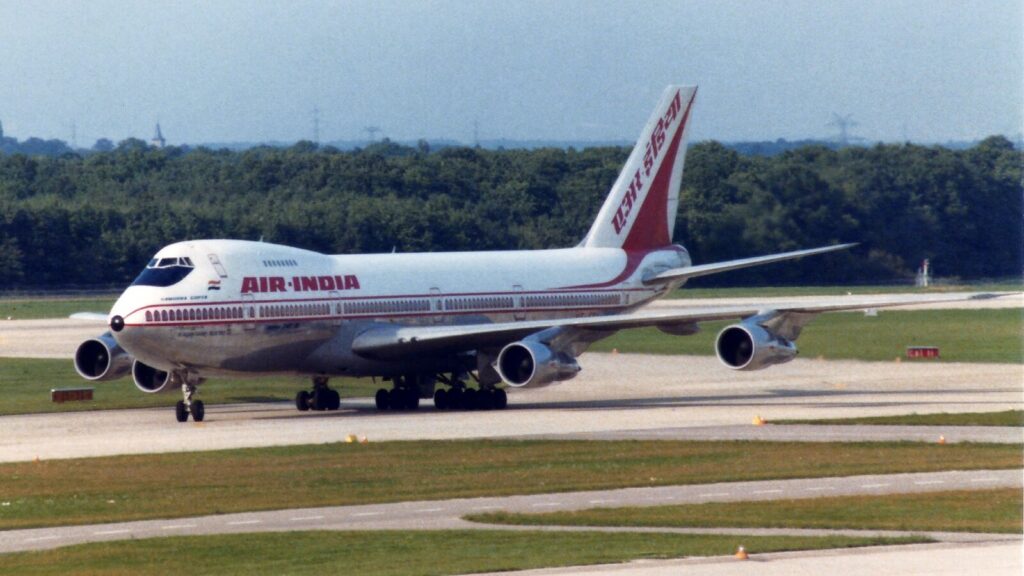
Air India Flight 855 was a Boeing 747 that crashed into the Arabian Sea off Bombay (now Mumbai) on 1 January 1978, less than two minutes after taking off for Dubai. All 213 people on board died. The investigation concluded that the captain’s attitude indicator had failed in the dark over the sea, that he became disoriented, and that the crew did not cross-check against the other instruments in time.
Flight 855 at a glance
- Date: 1 January 1978, shortly after 20:00 local time
- Aircraft: Boeing 747-237B, named “Emperor Ashoka”
- Route: Bombay Santacruz to Dubai
- On board: 190 passengers and 23 crew
- Fatalities: 213, with no survivors
- Place: Arabian Sea, about 3 km off the coast at Bandra, Bombay
- Investigation: Court of inquiry appointed by the Government of India
What happened
Flight 855 took off from Santacruz on New Year’s evening and climbed out over the sea. There was no moon and no visible horizon: just dark water below and dark sky above. Shortly after take-off the aircraft began a normal left turn, then rolled further and further to the left. The bank angle became extreme, the nose dropped, and the 747 struck the sea at high speed about 100 seconds after leaving the runway.
On a night like that, pilots have nothing outside the window to tell them which way is up. They rely completely on the attitude indicator, the instrument that shows the aircraft’s pitch and bank against an artificial horizon.
Why it happened
The court of inquiry concluded that the captain’s attitude indicator had malfunctioned, showing the aircraft in a bank when it was not, or failing to show the real bank as it developed. Trusting it, the captain applied control inputs that rolled the aircraft into a steep left bank. The first officer’s instrument and the standby horizon were available, and the flight engineer is heard on the recorder questioning the captain’s instrument, but the information was not acted on in time.
The finding highlighted a basic rule of instrument flying: when two instruments disagree, the crew must quickly establish which is correct by comparing them with a third. It is the purpose of the cross-check procedure that pilots practise from their first instrument lessons.
What changed after Flight 855
- Instrument cross-checking. Airlines reinforced training on recognising instrument failures and on calling out disagreements between the two pilots’ displays.
- Spatial disorientation. The crash became a standard case in teaching how quickly a pilot can be disoriented at night over water, with no outside references.
- Comparator warnings. Modern flight decks compare the attitude sources automatically and warn the crew when they disagree, so a single failed instrument is flagged within seconds.
At the time it was the deadliest air accident in India, a grim record that stood until the 1996 Charkhi Dadri mid-air collision.
Remembering the victims
Most of those on board were travelling to Dubai at the start of the new year. The crash took place within sight of the city’s shoreline, and it remains part of Mumbai’s memory of that New Year.
Sources
Report of the court of inquiry into the accident to Air India Boeing 747 VT-EBD; cockpit voice and flight data recorder findings published with the report.
Related Historical Aviation Accidents Events
More significant events from aviation history
Assassination of Juvénal Habyarimana and Cyprien Ntaryamira: The 1994 Aircraft Shootdown in Rwanda
🗓 6 April, 1994 📍 Presidential Palace gardens, near Kigali International Airport, Kigali, Rwanda, 1°58′32″S 30°10′26″E / 1.9756°S 30.1739°E / -1.9756; 30.1739 ★★★★☆ Read full story →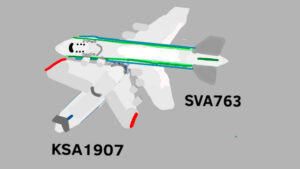
1996 Charkhi Dadri Collision: The Deadliest Mid-Air Crash
🗓 12 November, 1996 📍 Charkhi Dadri, Haryana, India, 28°33′38″N 76°18′15″E / 28.56056°N 76.30417°E / 28.56056; 76.30417 ★★★★☆ Read full story →
United Airlines Flight 736: The Crash That Changed Aviation
🗓 21 April, 1958 📍 Clark County, Nevada, United States ★★★★☆ Read full story →
The Tragedy of Lauda Air Flight 004
🗓 26 May, 1991 📍 Phu Toei National Park, Suphan Buri province, Thailand, 14°56′48″N 99°27′10″E / 14.94667°N 99.45278°E / 14.94667; 99.45278 ★★★☆☆ Read full story →