Launch of Magellan (Spacecraft)
Mapping the Veiled Planet: The Historic 1989 Launch of the Magellan Spacecraft
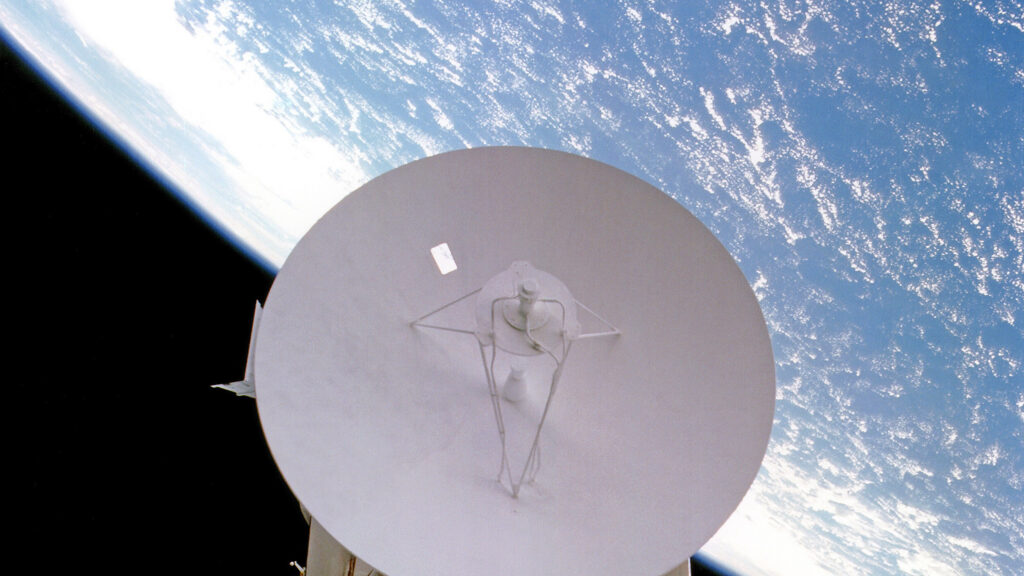
On May 4, 1989, a new chapter in planetary exploration began when the Space Shuttle Atlantis lifted off from Kennedy Space Center for mission STS-30. Tucked inside its cargo bay was a pioneer: the Magellan spacecraft. This mission wouldn’t just visit a neighbor; it would strip away the thick, poisonous clouds of Venus to reveal a world never seen before.
A Launch of “Firsts”
The launch of Magellan was a landmark event for NASA, marking several significant milestones in the late 1980s:
- First Shuttle-Launched Planetary Probe: Magellan was the first deep-space probe to be launched by a Space Shuttle. This proved the Shuttle’s versatility as more than just an orbital “truck”—it was a gateway to the solar system.
- The Return to Deep Space: After the tragic Challenger disaster in 1986, NASA’s planetary missions were grounded for years. Magellan was the first U.S. planetary mission launched in over a decade (since Pioneer Venus in 1978).
- A “Franken-Spacecraft”: To save costs, engineers built Magellan using spare parts from other legendary missions, including the Voyager, Galileo, and Mariner programs.
The Mission: Seeing Through the Unseeable
Venus is often called Earth’s “evil twin.” While similar in size, its surface is hidden by a dense atmosphere of sulfuric acid and carbon dioxide. Traditional cameras can’t see through it.
To solve this, Magellan was equipped with Synthetic Aperture Radar (SAR). Instead of taking photos with light, Magellan “saw” by bouncing radio waves off the surface and measuring how they returned.
Journey to the Morning Star
After being deployed from Atlantis, an Inertial Upper Stage (IUS) rocket booster fired, sending Magellan on a 15-month journey. It arrived at Venus in August 1990 and began a multi-year mapping project that exceeded all expectations.
Scientific Achievements: What Magellan Found
Before Magellan, our maps of Venus were blurry and incomplete. By the time the mission ended in 1994, Magellan had mapped 98% of the surface with incredible detail. Key discoveries included:
- Volcanic Dominance: Magellan revealed that 85% of Venus is covered by volcanic flows. It discovered massive “pancake” domes and lava channels longer than any found on Earth.
- A Young Surface: Unlike the Moon, which is covered in ancient craters, Venus appeared to have a relatively “young” surface (about 500 million years old), suggesting a massive, planet-wide volcanic resurfacing event in its past.
- Tectonic Activity: The radar imagery showed complex networks of faults and ridges, proving that while Venus may not have plate tectonics like Earth, it is far from a dead world.
- The “Highland” Continents: Magellan mapped Maxwell Montes, a mountain range higher than Mount Everest, and the continent-sized highlands of Aphrodite Terra.
The “Great Aerobraking” and Final Act
In its final years, Magellan pioneered a technique called aerobraking. By dipping into the upper atmosphere of Venus, the spacecraft used atmospheric drag to circularize its orbit. This maneuver is now a standard practice for Mars missions.
On October 12, 1994, Magellan was commanded to plunge into the Venusian atmosphere. It burned up like a meteor, but even in its final moments, it sent back data about the planet’s atmospheric density.
Why Magellan Matters Today
The Magellan mission remains the gold standard for radar mapping. Its data is still used by scientists today to plan upcoming missions like VERITAS and DAVINCI+. It taught us that a planet so similar to our own could take a drastically different path, turning into a runaway greenhouse pressure cooker.
Quick Stats: Magellan (1989-1994)
- Weight: 7,604 lbs (3,449 kg)
- Radar Resolution: 120 to 300 meters
- Total Images: Over 1,200 gigabits of data (more than all previous planetary missions combined at the time).
- Primary Goal: Topographic mapping of the Venusian surface.
Related Space History Events
More significant events from aviation history
Mercury-Redstone 3: America’s First Man in Space
🗓 5 May, 1961 📍 Cape Canaveral LC-5 ★★★★★ Read full story →
STS-1 Columbia Mission: The First Space Shuttle Flight
🗓 12 April, 1981 📍 Kennedy, LC-39A ★★★★☆ Read full story →
The Legacy of April 1, 1960: Launching the First Weather Satellite TIROS-1
🗓 1 April, 1960 📍 Cape Canaveral, LC-17A ★★★★☆ Read full story →
Auguste Piccard’s 1931 Stratospheric Balloon Flight
🗓 29 May, 1931 📍 Augsburg, Germany ★★★☆☆ Read full story →