Death of Bessie Coleman
The Tragic Final Flight of Bessie Coleman: A Legacy That Reached the Clouds
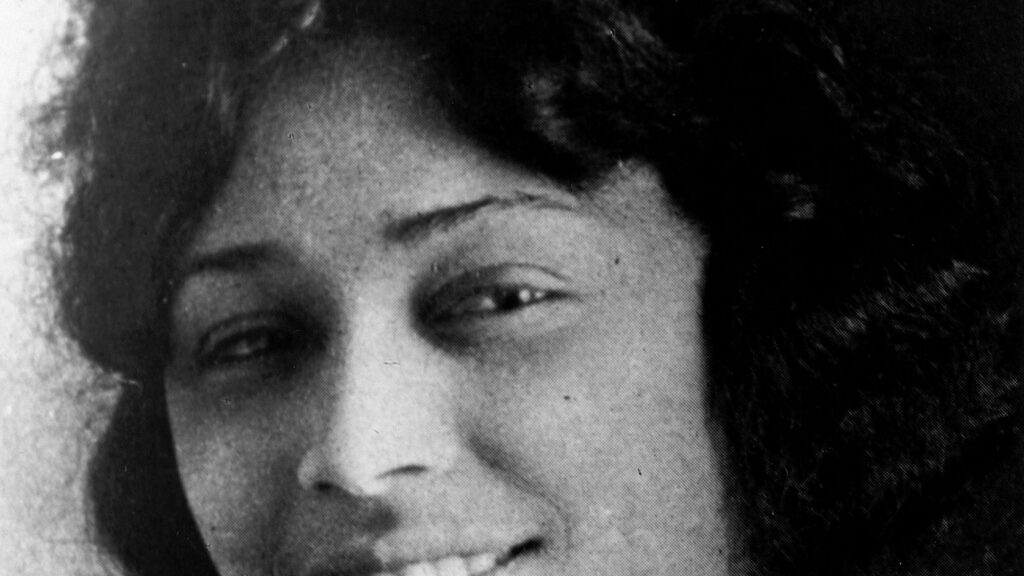
On April 30, 1926, the world of aviation lost one of its most courageous pioneers. Bessie Coleman, the first African American and Native American woman to earn a pilot’s license, died in a tragic plane crash in Jacksonville, Florida. Though her life was cut short at just 34 years old, her “brave” spirit ignited a path for generations of minority aviators.
Who Was “Brave Bessie”?
Born into a family of sharecroppers in Texas, Bessie Coleman faced a world of “no.” In the early 1920s, no flight school in the United States would admit a female, let alone a Black woman. Undeterred, Coleman learned French and traveled to Le Crotoy, France, where she earned her international pilot’s license from the Fédération Aéronautique Internationale in 1921.
Returning to America as a media sensation, she became a high-profile “barnstormer,” performing daring aerial maneuvers and parachute jumps under the nickname “Queen Bess.”
The Fatal Accident in Jacksonville
In April 1926, Coleman was in Jacksonville, Florida, preparing for a major airshow sponsored by the Negro Welfare League. She had recently purchased a Curtiss JN-4 “Jenny”—a surplus WWI military trainer known for being somewhat unreliable.
The Morning of April 30
Coleman and her mechanic, William D. Wills, took the aircraft up for a test flight to scout the terrain for a parachute jump scheduled for the following day.
- The Pilot: Wills was at the controls in the front seat.
- The Passenger: Coleman was in the rear seat. Critically, she was not wearing a seatbelt, as she wanted to lean over the edge of the cockpit to examine the ground for potential landing sites.
The Mechanical Failure
Approximately ten minutes into the flight, at an altitude of about 3,000 feet, the aircraft suddenly accelerated and entered a steep dive before flipping into an unexpected tailspin. At 500 feet, the plane snapped into an inverted position.
Because she was unsecured, Bessie Coleman was thrown from the cockpit and fell to her death. Wills remained with the plane but died upon impact when the aircraft crashed into a nearby field.
The Investigation: A Simple Tool with a Deadly Result
The post-crash investigation revealed a heartbreakingly simple cause for the tragedy. A service wrench used to maintain the engine had been left inside the cockpit. During the flight, the wrench slid into the gearbox, jamming the control gears and making it impossible for Wills to pull the plane out of its dive.
A Legacy That Never Landed
Bessie Coleman’s death was a profound shock to the nation. Thousands attended her memorial services in Jacksonville, Orlando, and Chicago, where the legendary Ida B. Wells-Barnett delivered her eulogy.
Why Her Story Matters Today
Bessie Coleman didn’t just fly for the thrill; she flew to prove that the “air is the only place free from prejudices.” Her impact on aviation history is immeasurable:
- The Bessie Coleman Aero Club: Shortly after her death, flight clubs bearing her name began appearing across the U.S., encouraging Black men and women to take to the skies.
- The Challenger Connection: Astronaut Mae Jemison, the first Black woman in space, carried a photo of Bessie Coleman with her on the Space Shuttle Endeavour, proving that Coleman’s legacy reached all the way to orbit.
Related Historical Aviation Accidents Events
More significant events from aviation history
1996 Charkhi Dadri Collision: The Deadliest Mid-Air Crash
🗓 12 November, 1996 📍 Charkhi Dadri, Haryana, India, 28°33′38″N 76°18′15″E / 28.56056°N 76.30417°E / 28.56056; 76.30417 ★★★★☆ Read full story →
Assassination of Juvénal Habyarimana and Cyprien Ntaryamira: The 1994 Aircraft Shootdown in Rwanda
🗓 6 April, 1994 📍 Presidential Palace gardens, near Kigali International Airport, Kigali, Rwanda, 1°58′32″S 30°10′26″E / 1.9756°S 30.1739°E / -1.9756; 30.1739 ★★★★☆ Read full story →
United Airlines Flight 736: The Crash That Changed Aviation
🗓 21 April, 1958 📍 Clark County, Nevada, United States ★★★★☆ Read full story →
China Airlines Flight 140: The 1994 Airbus A300 Crash in Nagoya
🗓 26 April, 1994 📍 Nagoya Airport, Nagoya, Japan, 35°14′43″N 136°55′56″E / 35.2453°N 136.9323°E / 35.2453; 136.9323 ★★★☆☆ Read full story →