Saudia Flight 163
A Saudia TriStar returned to Riyadh with a fire in its cargo hold on 19 August 1980 and landed. No evacuation began, and all 301 people on board died on the ground.
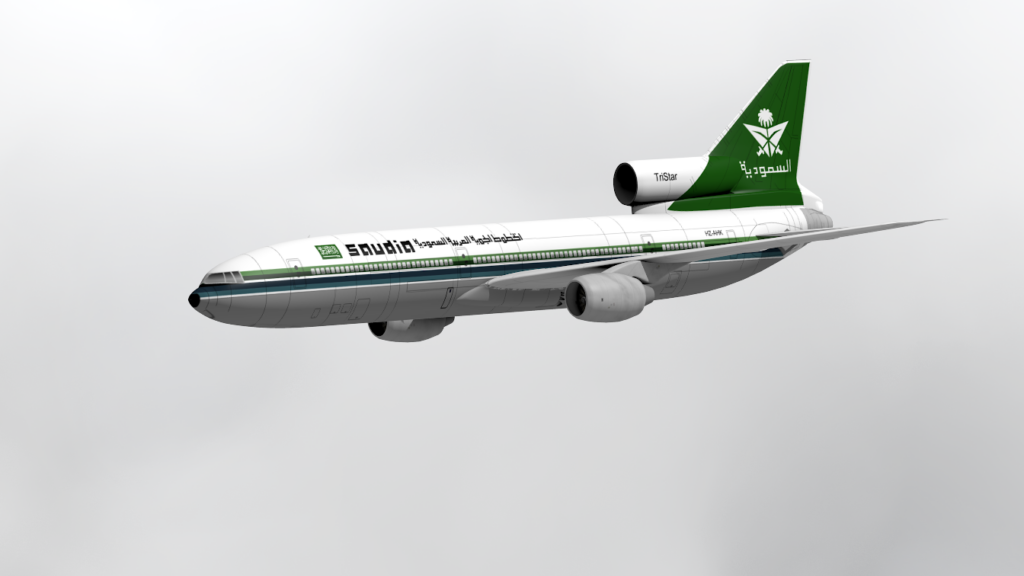
Saudia Flight 163 was a Lockheed L-1011 TriStar that caught fire shortly after taking off from Riyadh on 19 August 1980. The crew turned back and landed safely, but the aircraft was not evacuated. By the time rescuers opened a door, all 301 people on board had died from smoke and fire. It remains the deadliest accident involving a TriStar, and one of the most studied lessons in cabin safety.
Saudia 163 at a glance
- Date: 19 August 1980
- Aircraft: Lockheed L-1011-200 TriStar
- Route: Karachi to Jeddah, via Riyadh
- On board: 287 passengers and 14 crew
- Fatalities: 301, with no survivors
- Place: Riyadh International Airport, Saudi Arabia
- Investigation: Presidency of Civil Aviation of Saudi Arabia
What happened
The TriStar left Riyadh in the early evening for the second leg to Jeddah. About seven minutes after take-off, smoke warnings came on for the aft cargo compartment. The crew took several minutes to confirm the warnings and decide to return, and smoke was soon reported in the rear of the cabin, where passengers were trying to move forward.
The aircraft landed back at Riyadh about half an hour after departure. It did not stop on the runway: it rolled to the end, turned off onto a taxiway and came to a halt nearly three minutes after touchdown. The engines were not shut down at once, and no evacuation was ordered. None of the doors were opened from inside.
Airport fire crews reached the aircraft, but had trouble opening the doors from outside. When a door was finally opened, more than 20 minutes after the aircraft stopped, fire broke through the cabin. Investigators concluded that everyone on board had already been overcome by smoke and toxic gases.
Why so many died after a safe landing
The cause of the fire in the aft cargo hold was never established. Two butane camping stoves were found in the cabin wreckage, and passengers carrying such items was considered a possible source, but this could not be proved.
What turned a serious fire into a disaster was time. The investigation pointed to the delay in deciding to return, the slow and incomplete cabin assessment, the decision not to stop on the runway and evacuate immediately, and the failure to open the doors. Crew coordination on the flight deck was found to be weak, and the rescue services were not equipped or trained to open a TriStar’s doors quickly from outside.
What changed after Saudia 163
- Evacuate early. Saudia 163 is taught as the clearest case for stopping on the runway and evacuating as soon as possible when there is fire on board. Minutes matter: a cabin can become unsurvivable long before the fire is visible.
- Crew coordination. Like other accidents of its time, it fed into the development of crew resource management and cabin crew authority to start an evacuation.
- Airport rescue. Fire and rescue services worldwide trained to open aircraft doors from outside and to reach the cabin within minutes.
- Cargo fires. The accident added to the case for better detection and suppression of fires in cargo compartments.
Saudia later suffered a second disaster in the 1996 Charkhi Dadri mid-air collision over India.
Remembering the victims
Most of the passengers were travelling between Pakistan and Saudi Arabia, many on their way to Jeddah. The scale of the loss, after an aircraft that had landed intact, left a lasting mark on aviation safety thinking.
Sources
Presidency of Civil Aviation, Kingdom of Saudi Arabia, aircraft accident report on Saudi Arabian Airlines Lockheed L-1011 HZ-AHK.
Related Historical Aviation Accidents Events
More significant events from aviation history
Assassination of Juvénal Habyarimana and Cyprien Ntaryamira: The 1994 Aircraft Shootdown in Rwanda
🗓 6 April, 1994 📍 Presidential Palace gardens, near Kigali International Airport, Kigali, Rwanda, 1°58′32″S 30°10′26″E / 1.9756°S 30.1739°E / -1.9756; 30.1739 ★★★★☆ Read full story →
1996 Charkhi Dadri Collision: The Deadliest Mid-Air Crash
🗓 12 November, 1996 📍 Charkhi Dadri, Haryana, India, 28°33′38″N 76°18′15″E / 28.56056°N 76.30417°E / 28.56056; 76.30417 ★★★★☆ Read full story →
United Airlines Flight 736: The Crash That Changed Aviation
🗓 21 April, 1958 📍 Clark County, Nevada, United States ★★★★☆ Read full story →
The Tragedy of Lauda Air Flight 004
🗓 26 May, 1991 📍 Phu Toei National Park, Suphan Buri province, Thailand, 14°56′48″N 99°27′10″E / 14.94667°N 99.45278°E / 14.94667; 99.45278 ★★★☆☆ Read full story →